News Broadcasting
Smriti Irani tweets industry body advisory urging restraint by TV news channels


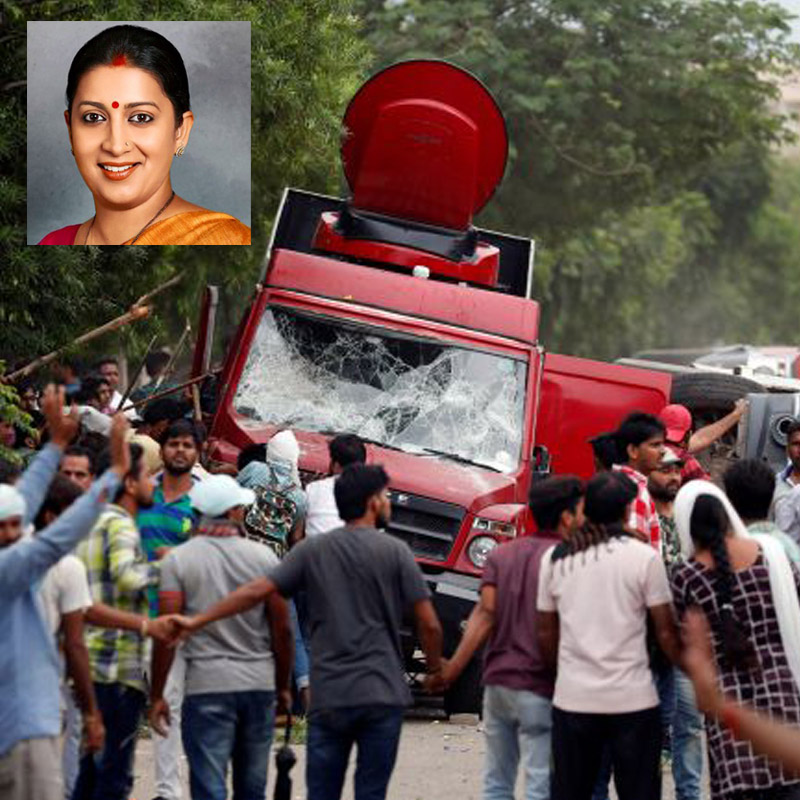
NEW DELHI: Minister for Information and Broadcasting Smriti Irani yesterday in tweets amplified advisories issued by news industry associations, which had cautioned TV news channels to exercise restraint while reporting on the violence unleashed in the states of Haryana, Punjab, parts of Uttar Pradesh and Delhi in the aftermath of self-styled godman Ram Rahim being convicted of rape charges by a local court on Friday.
At around 20.59 Irani tweeted: “Drawing attention of news channels to Clause B of Fundamental Std. of NBSA refraining channels from causing panic, distress &undue fear.”
As social media exploded questioning the minister’s tweet and intentions — some even supported her assertions, though, saying the media was reporting falsely on incidents of mob violence — she followed up her first tweet with another one stating: “Kindly note this advisory has been given by the offices of the National Broadcasters Association.” In another message she also condemned the attack on media and damage to property.
News Broadcasters Association (NBA)’s self-regulatory body News Broadcasting Standards Authority or NBSA had actually re-circulated among member-news channels the organisation’s ethics and codes that overall harp about restraint.
On reporting news involving armed conflicts, communal violence, public disorder and internal disturbances, the NBSA guidelines urge TV news channels that telecast of such incidents should be tested on the “touchstone of public interest”.
Broadcast Editors Association (BEA), an apex body of editors of national and regional television news channels in India, too issued an advisory on Friday cautioning TV news channels to “keep a careful eye on the content and views that can inflame people.”
“All editors should take utmost care while playing violence visuals of the coverage of Baba Ram Rahim case. Please verify the facts before putting them on air because lots of rumours are floating around,” the BEA statement said.
While NBA did issue a statement condemning the violence and attacks on the media (OB vans were damaged and some media people were assaulted), it urged “the chief ministers of Haryana and Punjab to take action urgently to bring the situation under control in order that the media/press are able to perform their duties without fear.”
For the records, NBSA does have extensive code of ethics and broadcasting standards. In the section Principles of Self-regulation, the code states: “Television news has greater reach, and more immediate impact than other forms of media, and this makes it all the more necessary that channels exercise restraint to ensure that any report or visuals broadcast do not induce, glorify, incite, or positively depict violence and its perpetrators, regardless of ideology or context. Specific care must be taken not to broadcast visuals that can be prejudicial or inflammatory…”.
Meanwhile, a Punjabi language news channel reporter received injuries in attacks allegedly by followers of the Dera Sacha Sauda chief Ram Rahim in Haryana while the video journalist accompanying him has gone missing after the assault.
Rakesh Kumar, a reporter with PTC News, said he and his video journalist Shipendar Happy were attacked near the Dera headquarters when they went there to report after Dera head Gurmeet Ram Rahim’s conviction in a rape case. “They thrashed us brutally leaving me with a fracture in my right hand. My cameraman Happy is still missing. They also torched our vehicle and equipment,” Rakesh told news agency PTI.
ALSO READ:
NBSA hauls up news channels; fines them, demands apology
BCCC gets more complaints on harm than sex, obscenity & nudity on TV