International
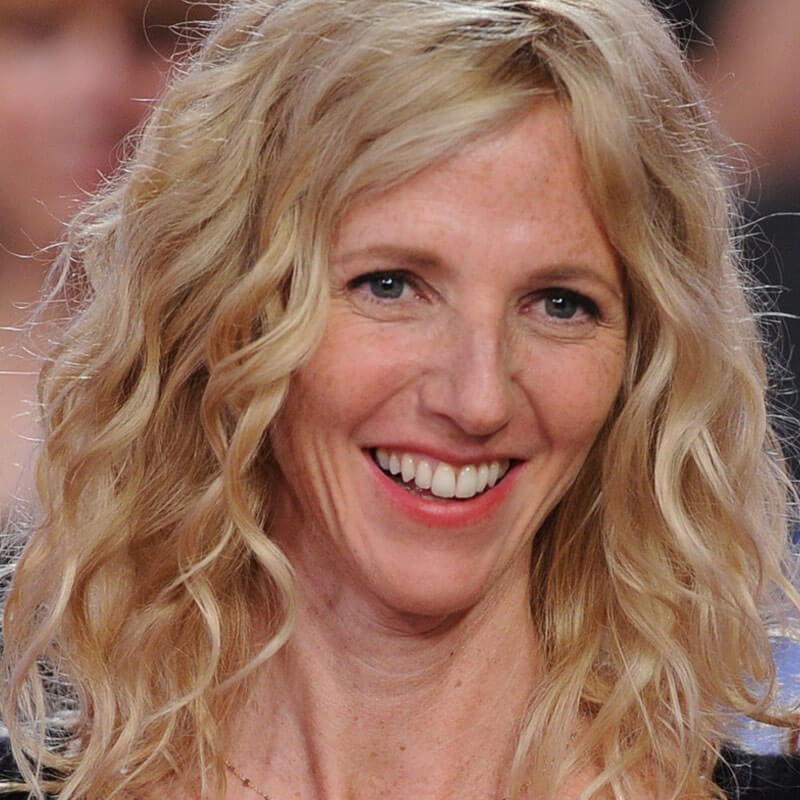
Sandrine Kiberlain to preside over Camera d’or jury at Cannes
NEW DELHI: Renowned French actress Sandrine Kiberlain is to preside over the jury for this year’s Caméra d’or – award for the at the 70th Cannes International Film Festival this year. Canera d’or is a prize to a director’s first work from the Official Selection, the Directors’ Fortnight or the Semaine de la Critique.
The Festival is being held from 17 to 27 May 2017 in the seaside resort in France.
In a career spanning 25 years and boasting around 40 films, the actress has made a simple and subtle but undeniable impression on the French filmmaking scene.
She first shot to prominence in The Patriots by Éric Rochant (winner of the Romy-Schneider prize), followed by En avoir (ou pas) by Laetitia Masson (César for Most Promising Actress).
Since then, she has continued to make an impact far and wide, taking risks in her stride and turning her hand with ease to dramas (Mademoiselle Chambon), quirky comedies (9 Month Stretch, César for Best Actress), arthouse films (False Servant) and mass-market films (Little Nicolas).
Following on from Wim Wenders, Tim Roth, Abbas Kiarostami and more recently Agnès Varda and Sabine Azéma, Sandrine Kiberlain and her jury members will award the Caméra d’or prize at the Closing Ceremony of the Festival de Cannes on Sunday 28 May.
Since 1978 the award has gone to Stranger than Paradise by Jim Jarmusch (1984), Suzaku by Naomi Kawase (1997), The White Balloon by Jafar Panahi (1995), Hunger by Steve McQueen (2008) and Beasts of the Southern Wild by Benh Zeitlin (2012). Last year, Houda Benyamina won the Caméra d’or for her film Divines screened in the Directors’ Fortnight.

International
Utopai Studios unveils 4K three-minute video generation for PAI platform
New Story Agent and editing tools aim to streamline AI-led filmmaking workflows
MUMBAI: Utopai Studios has announced a major upgrade to its PAI storytelling AI platform, introducing what it claims is an industry-first capability to generate three-minute videos in 4K resolution, alongside enhancements to its Story Agent feature.
The update, rolling out from April 15, expands the platform’s capabilities across the filmmaking process, from early concept development to post-production. The company said the new features are designed to help filmmakers maintain continuity across characters, scenes and visual styles, a key challenge in AI-driven storytelling.
At the heart of the release is a next-generation model that enables more structured narrative development, allowing creators to move more seamlessly from idea to execution. With tools such as multi-shot sequencing and multi-turn editing, the platform aims to give both studios and independent creators greater control over complex storytelling workflows.
Commenting on the launch, Utopai Studios co-founder and CTO Jie Yang said, “The next phase of AI in media will not be defined by isolated tools, but by systems that can carry story, continuity and collaboration across the full creative process.” He added that the update is a step towards enabling more practical, end-to-end narrative development at a professional level.
Echoing this, Utopai Studios co-founder and chief scientific officer Zijian He said, “Generative video is opening the door to a new production model, where creative ambition is less constrained by traditional cost and complexity.” He noted that the platform combines multimodal models with iterative editing to give creators more speed, control and consistency.
The company said PAI is already being used in professional film and television productions, particularly in Hollywood, for tasks such as pre-visualisation, scene design and post-production refinements. The latest update adds features including improved voice options, character consistency, unlimited editing and more flexible asset management.
Utopai also emphasised that its models are not trained on copyrighted material, positioning the platform as a cleaner alternative for creators and rights holders navigating the evolving AI landscape.
As AI continues to reshape content creation, Utopai’s latest push signals a shift from standalone tools to integrated systems, aiming to make high-quality filmmaking faster, more flexible and increasingly accessible.