Hindi
Sachin, Basu Chatterjee mourn A K Hangal’s death

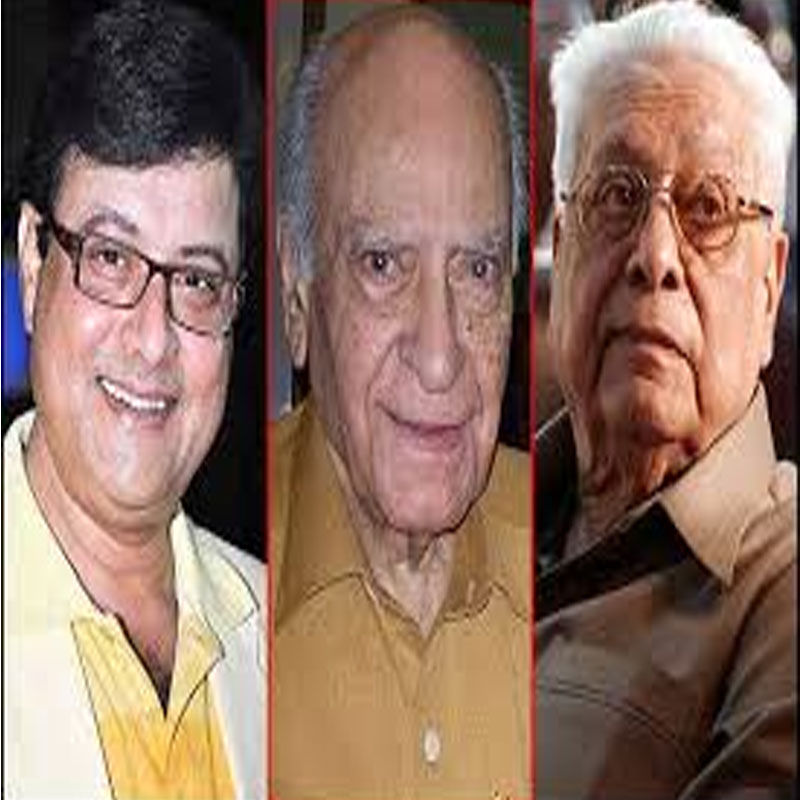
MUMBAI: The month of August has been really very bad for the film industry with several film stalwarts like Dara Singh, Rajesh Khanna and now A K Hangal passing away to eternity.
Having started in films with the Hindi adaptation of Nobel laurette Rabindranath Tagore‘s story ‘Post Office‘ titled Dakghar was back in the 60s, he went on to do more than 100 films, notable among them being his role as Ram Shastri in Aaina (1977), Inder Sen in Shaukeen, as Bipinlal Pandey in Namak Haraam, as Imaam Sa‘ab in Sholay and as Anokhelal in Manzil among others. Incidentally, he was the only character actor who did 17 films with the late Rajesh Khanna.
Reminisces actor-director Sachin, who played Ahmed to Hangal‘s Imaam Saheb, “The industry is indeed grieved at the passing away of Hangal saab as we dearly called him. His memory becomes all the more important to me because he started his career with me and Balraj Sahni in the Zul Vellani-directed children‘s film Dakghar in 1965.
Besides his association with IPTA then, he was actively involved in patriotism-related activities. It was for this, that the government of India conferred the Padma Bhushan to him in 2006. Known for his subtle performances, Hangal saab was loved by one and all.
After a long time, we both had the occasion of working together again in the Rajesh Khanna-Shabana Azmi film Avatar in which we both had important roles. Then we did Sholay together but after that I had no chance to work with him.
Once, I remember when he was reminiscing about his past, I asked him, “Hanagl saab, people know you as A K Hangal, but please tell what does A and K mean. That is when he said, “My name is Avtar Kishan Hangal.” With his demise, we have not only lost a great actor but also a good human being. May his soul rest in peace.”
If one may remember, Hangal played one of the three elderly gentlemen who decide to go away to Goa for a while to have some enjoyment in their late lifetime in Basu Chatterjee‘s 1982 film Shaukeen. While in Goa, the three men get in hilarious situations with Rati (Agnihotri) as they try to impress her and try to get lucky with her.
It was a kind of an offbeat role for Hangal saab and that too with seasoned artistes like Ashok Kumar and Utpal Dutt. Remembers Basu Chatterjee, “Never did he feel out of place acting with the two veterans and never did the two allowed him to feel out of place. All the three gelled as a unit and acting wise, all the three performed equally well.
Hangal saab was a versatile actor who did a variety of roles. He did many films with me. Hangal saab was very dear to me because it was me along with Basu Bhattacharya who picked him up from his tailoring shop in Crawford Market somewhere in 1862-63.
But it was a pity that the funeral of Hagal saab was barely attended by industry bigwigs. Hangal saab must have moaned from his pyre, “Itna sannata kyon hain bhai.”
Character actor AK Hangal, who had the rare ability to imbue the smallest and the most ordinary of roles with quality and dignity, passed away at a private hospital in Santa Cruz, Mumbai following health complications caused by a recent hip fracture. “He was not keeping well for quite some time,” his son Vijay told a news agency. He was 98.
Even in a crowded multi-starrer like ‘Sholay‘ (1975), Hangal‘s cameo of the blind Rahim chacha stood out. Many still remember his dialogue, Yeh itna sannata kyun hai bhai. His emotional speech, on learning that his son has been killed by the dacoits, is among the most moving moments in the film.
“He was a brilliant and versatile actor who could modulate his voice very effectively,” says director Basu Chatterjee, who gave the Sialkot-born actor his most shaded roles in films such as ‘Manzil‘ (1979) and ‘Shaukeen‘ (1982). In Manzil, Hangal played a suave crook and in Shaukeen, he was one of the three lecherous old men out to have adult fun. With his death, all the three protagonists- Ashok Kumar and Utpal Dutt being the other two – in the film are gone.
Recalls director Rahul Rawail, for whom Hangal acted in ‘Arjun‘ (1985) and ‘Dacait‘ (1987),” “He had a complex role in Arjun, where he played Sunny Deol‘s father. But he was brilliant in the role of a man in conflict amidst a rebellious son and a domineering wife.”
Hangal was 50 plus when he made his Hindi film debut playing the brief role of Raj Kapoor‘s elder brother in ‘Teesri Kasam‘ (1966). Another early role was that of a ruthless businessman who wants to build multi-storeys over jhuggi-jhopris and tries to lure a journalist to join his fold in KA Abbas‘ ‘Bambai Raat Ki Bahon Mein‘ (1967).
His best roles happened in the 1970s and 1980s when the actor was a regular fixture in dozens of movies. He played some of his more distinctly-etched characters in Hrishikesh Mukherjee movies such as ‘Bawarchi‘ (1972) where he played a clerk with a weakness for the evening tipple and ‘Namak Haraam‘ (1974) where he was an honest trade unionist. The actor is survived by his only son, Vijay.