eNews
Ross Video acquires ioversal to offer clients immersive experience solutions

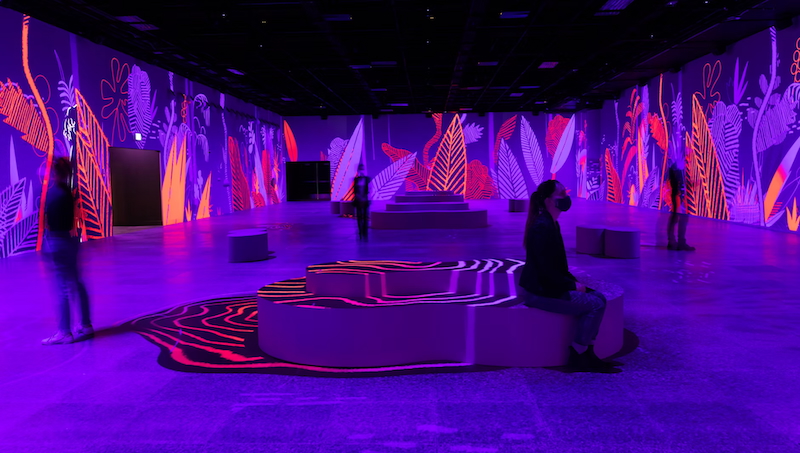
OTTAWA: Ross Video is buying ioversal, the German creator of Vertex, a platform for immersive audiovisual experiences that has powered interactive exhibits and large-scale productions worldwide. The deal, announced on Thursday, marks the Canadian firm’s first serious push into experiential technology, extending its reach beyond traditional broadcast and live sports production.
Vertex unifies video, audio, lighting and control systems into a single suite, allowing production teams to orchestrate complex installations—from projection mapping spectacles to interactive museum displays—without wrestling with multiple incompatible systems. The platform has earned its stripes through high-profile deployments, though Ross declined to disclose financial terms or specify which installations.
“Vertex gives our customers a powerful new way to tell their stories,” said David Ross, chief executive of Ross Video, the family-owned firm his father founded in 1974. “It extends our live production solutions into the experiential world, opening creative possibilities that inspire audiences everywhere.”
The acquisition fits Ross’s strategy of building an end-to-end production ecosystem that spans broadcast studios, sports venues, corporate events and cultural institutions. For customers already using Ross’s switchers, graphics systems and production control gear, Vertex offers a natural extension into permanent installations and experiential work—areas where margins can be fatter than in the commoditised broadcast kit business.
Jan Hüwel and Martin Kuhn, ioversal’s co-founders, will join Ross along with their team, bringing decades of expertise in media servers and interactive control systems. “Joining Ross Video is a natural next step in our journey,” said Hüwel. “Ross shares our passion for empowering customers and our belief that innovation should always serve creativity.”
Kuhn added that the tie-up would help Vertex reach a broader audience. “From the beginning, our mission has been to simplify complex audiovisual productions so creators can focus on storytelling,” he said. “Together, we’ll unlock incredible new possibilities for experiential media.”
Ross Video, headquartered in Ottawa, has been on an acquisition spree in recent years as it seeks to fend off competition from software-defined production tools and cloud-based workflows. The privately held company does not disclose revenues but is estimated to generate several hundred million dollars annually from sales of production switchers, graphics systems and robotics to broadcasters and live-event producers.
The firm plans to showcase Vertex through demonstrations and events in coming months, highlighting how the platform integrates with Ross’s existing production kit. Whether customers—many of whom are wrestling with tighter budgets—will embrace yet another platform remains to be seen. But Ross is betting that simplifying the chaos of experiential productions will prove irresistible to creative teams tired of duct-taping incompatible systems together.