International
Rome Fest to honour Tarantino with lifetime award
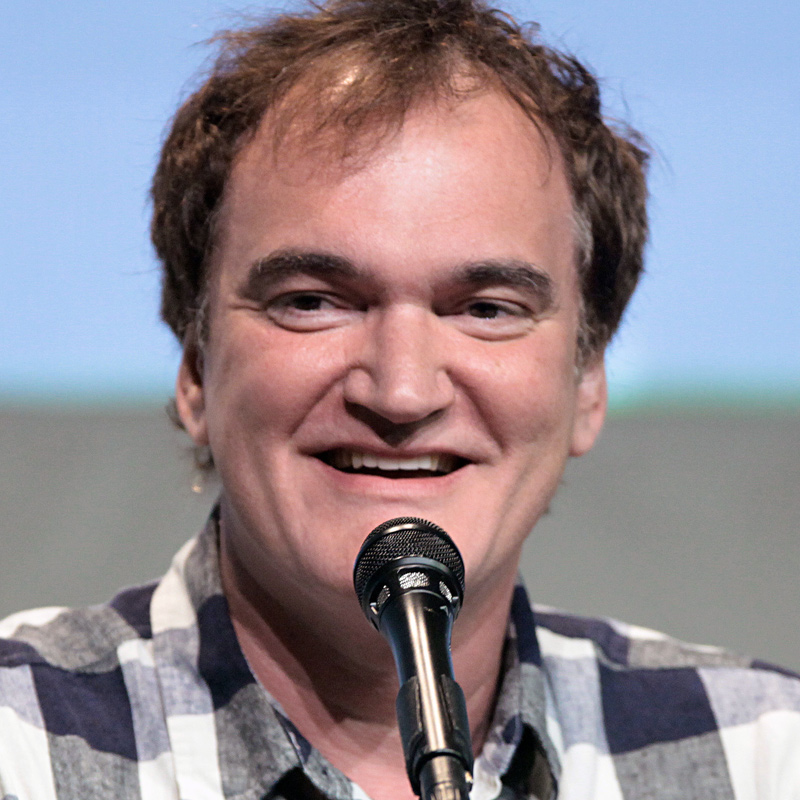
MUMBAI: The 7th Rome Film Festival has decided to confer its Lifetime Achievement Award on director Quentin Tarantino.
Tarantino will receive the award on 4 January at the hands of celebrated film-composer Ennio Morricone. The occasion will also mark the screening of his new film Django Unchained that stars Jamie Foxx, Leonardo Di Caprio, Christoph Waltz, Samuel L. Jackson and Kerry Washington.
The American director, screenwriter, actor, and producer, who has directed cult films such as Reservoir Dogs, Jackie Brown, Kill Bill:Vol.1, Kill Bill:Vol.2 and Inglourious Basterds, won an Oscar earlier for Pulp Fiction.
Said Rome Film Festival artistic director Marco Müller, "Quentin Tarantino‘s vision has radically influenced our collective imagery over the past twenty years . He is a profoundly American yet very European filmmaker, because the relationship he has established with cinema and its history is as analytical as it is passionate.
He has cultivated a coherent project of mise-en-scene, an authorial project that has grown richer thanks, to his experimentation with language and also to constant cinematic cross-references. As a result his films are both alive and vivacious to the extreme, they blast away the codes and conventions of film genres but each of them does express the spirit of his time."
In Quentin Tarantino‘s new film, Django Unchained, Jamie Foxx stars as Django, a plantation slave who partners with Christoph Waltz‘s (Inglourious Basterds) bounty hunter to seek vengeance on his former owners and rescue his wife (Kerry Washington.

International
Utopai Studios unveils 4K three-minute video generation for PAI platform
New Story Agent and editing tools aim to streamline AI-led filmmaking workflows
MUMBAI: Utopai Studios has announced a major upgrade to its PAI storytelling AI platform, introducing what it claims is an industry-first capability to generate three-minute videos in 4K resolution, alongside enhancements to its Story Agent feature.
The update, rolling out from April 15, expands the platform’s capabilities across the filmmaking process, from early concept development to post-production. The company said the new features are designed to help filmmakers maintain continuity across characters, scenes and visual styles, a key challenge in AI-driven storytelling.
At the heart of the release is a next-generation model that enables more structured narrative development, allowing creators to move more seamlessly from idea to execution. With tools such as multi-shot sequencing and multi-turn editing, the platform aims to give both studios and independent creators greater control over complex storytelling workflows.
Commenting on the launch, Utopai Studios co-founder and CTO Jie Yang said, “The next phase of AI in media will not be defined by isolated tools, but by systems that can carry story, continuity and collaboration across the full creative process.” He added that the update is a step towards enabling more practical, end-to-end narrative development at a professional level.
Echoing this, Utopai Studios co-founder and chief scientific officer Zijian He said, “Generative video is opening the door to a new production model, where creative ambition is less constrained by traditional cost and complexity.” He noted that the platform combines multimodal models with iterative editing to give creators more speed, control and consistency.
The company said PAI is already being used in professional film and television productions, particularly in Hollywood, for tasks such as pre-visualisation, scene design and post-production refinements. The latest update adds features including improved voice options, character consistency, unlimited editing and more flexible asset management.
Utopai also emphasised that its models are not trained on copyrighted material, positioning the platform as a cleaner alternative for creators and rights holders navigating the evolving AI landscape.
As AI continues to reshape content creation, Utopai’s latest push signals a shift from standalone tools to integrated systems, aiming to make high-quality filmmaking faster, more flexible and increasingly accessible.