News Headline
#Retrace2021: A look back at print ad campaigns that stood out in 2021


Mumbai: Reeling under the aftermath of the pandemic, the Indian print industry began its road to recovery in 2021. According to the latest Magna Global Forecasting Report released in December, overall, the print industry grew +12 per cent from a low base (2020: -40 per cent), despite the slowdown in business in 2021. Maximum growth came from Retail, Durables, Finance, Real Estate, and Government spending.
After witnessing a tumultuous period of plummeting circulation, and advertising revenue, the industry also began pivoting fast to strengthen its digital presence. The projections paint a heathier picture, with 2022 growth expected to be broad-based, with most categories increasing spends and elections in a few large states helping to drive an increase of +14 per cent. However, a rise in cases of the new Covid variant could prove to be dampener.
Nonetheless, Print remains one of the most trusted mediums to influence brand perceptions on critical factors like quality, price, and trust. This explains why 2021 saw the return of traditional, as well as newer brands, and advertisers to print to create some stand-out campaigns. As we begin 2022, we take a look back at some of these campaigns …

TRUECALLER
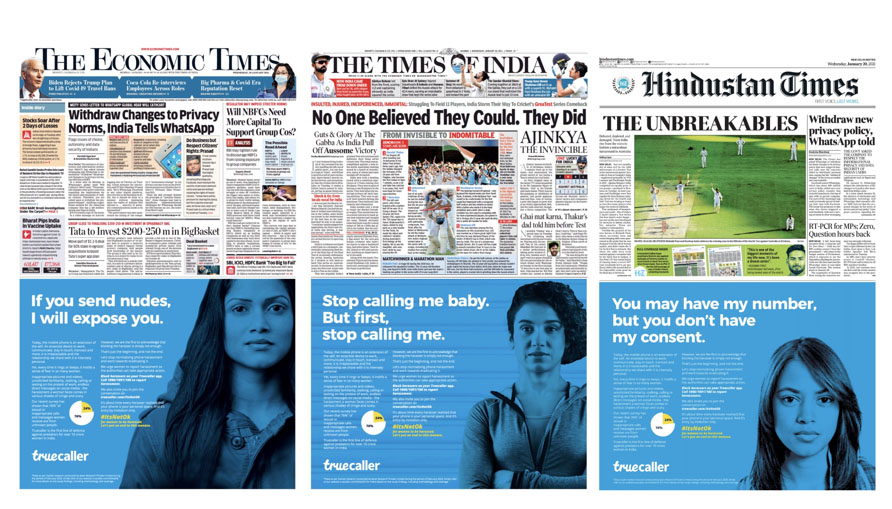
While the businesses were beginning to reopen, the Truecaller print ad in January 2021 set the tone for the rest of the year. The in-your-face, unmissable ad carried by the app on the front pages of leading national dailies, talked about the issue of phone harassment women face. It mentioned how women could block these numbers on the app and should step forward and report these callers. The campaign #ItsNotOk has been running for four years now. But it caught everyone’s attention, courtesy of the latest print ads. Thinkstr, the Gurgaon-based independent agency for the campaign said they were “a little jittery about spending money on print” because they “knew the circulation was down”. But the print ads outdid itself “more than any other medium we’ve advertised on.”
NESTLE
When in doubt, choosing ‘Print’ seems to be the mantra of marketers. Whenever there was a need to emphasise a brand’s credibility or build trust it was the go-to medium. Nestlé India’s print campaign launched in June 2021 did just that- reinforce the brand’s assurance of offering quality products, while talking about its long-standing legacy of 100 years and ‘family-like’ trust. The FMCG conglomerate switched to the damage control mode, coming out with the print ad campaign to rebuild consumers’ faith in the brand, only days after news reports questioning the ‘healthiness’ of the company’s products surfaced.

FORTUNE
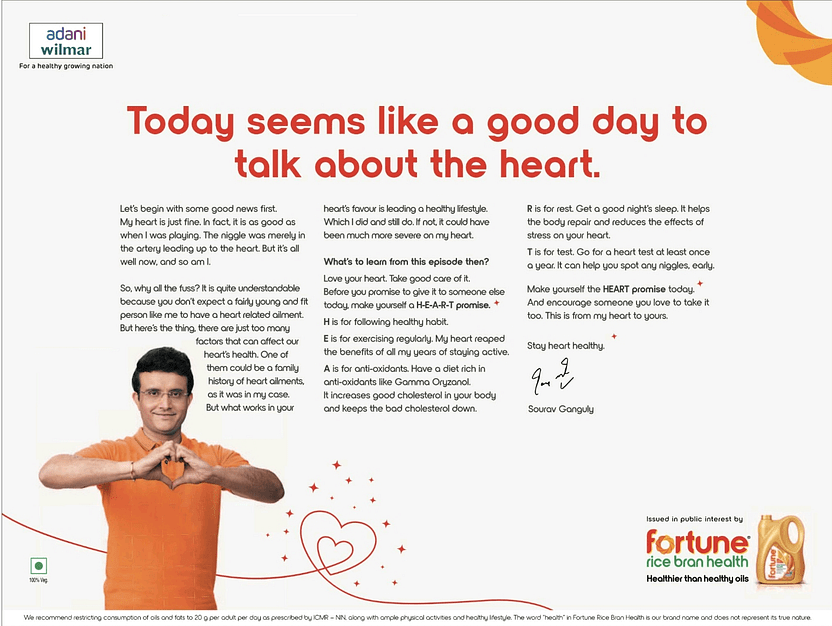
A similar approach was followed by the Adani Wilmar Group’s Fortune oil brand. The brand’s claims of ‘a healthy oil for a healthy heart’ suffered a beating after Sourav Ganguly, the brand’s endorser, suffered a heart attack. Prior to this, he was seen in an ad for the brand’s Rice Bran oil which promotes the oil’s heart health benefits. Fortune faced severe trolling on social media as netizens chose to highlight the irony of the situation. To salvage the situation, the brand came out with front-page ads across leading publications with the caption ‘Today seems to be a good day to talk about the heart’, which had a fit-looking Ganguly dismissing the talk about his ill-health and tackling the subject of heart health head-on. The long format copy presented as a signed letter from the former cricketer himself, pushed heart health conversation to the fore, was the brand’s comeback after the stretch of online trolling.
INDIAN OIL
Nothing beats the traditional medium when you want to create an impactful awareness about a social cause. Indian Oil wanted to create awareness around the ill effects of excessive honking ahead of World Environment Day 2021 (5 June). It came out with a creative print campaign, conceptualised and executed by Mumbai-based agency, Grey Group that showed the life-threatening impact honking had on other living creatures. The artwork by Vaibhav Bhilare replaced the body parts of various animals with sound waves to depict the hazardous effect the loud noise had on them.

MANFORCE
That Print media allows a brand to tell its brand story effectively with no excessive drama is a known fact. To simply and effectively convey its message of protected sex and to educate people to use condoms as against ‘messy’ scenarios related to the consequences of indulging in unprotected sex, the Condom brand come up with a campaign, #DontMessAround. The series of tongue-in-cheek ads which appeared in leading newspapers creatively nudged people not to engage in unprotected intercourse as it can come with bigger problems such as STDs and unwanted pregnancy, even as it drove its brand message through.

SEBAMED
After the famed Cola ad wars, this year saw the battle of the soaps, with major soap brands taking on one another, directly targeting their rival brands in their ads. Sebamed kickstarted the creative sledge-fest at the outset of 2021, going after other popular brands like Lux, Santoor, and Dove, by comparing them to a detergent bar. The German skincare brand made quite a splash launching a series of print ads in leading dailies, with shocking claims alleging that each of these leading soaps had pH factors (ranging from 7 to 10) that rivaled that of the detergent soap Rin, to highlight the harshness of these skincare products, as against its own which it claimed stood at ‘an ideal 5.5’.

The brand has launched another campaign ‘Conditions apply’ with print ads taking on other anti-hair loss shampoos. The campaign sought to discredit the ubiquitous disclaimer ‘Conditions apply’ used by these products while making tall claims. It has, however, refrained from naming any brand this time.
DOVE
The HUL brand of skincare, Dove chose to respond to Sebamed’s ‘pH’ allegations with a print campaign that reiterated its gentleness, falling back upon its familiar messaging –that the soap is mild and comprised of one fourth ‘moisturising milk’. The print ad seen in major newspapers Dove responded to the jabs that Sebamed’s ads have taken at it, coming hot on the heels of the Sebamed campaign. The ad copy in a prominent font stresses that ‘Dermatologists have put something strong in Dove’s bar – their trust’.

The beauty soap launched another print campaign titled ‘Stop The Beauty Test’ that attempts to call out the stereotypes associated with Indian matchmaking and goes against unrealistic stereotypes of beauty in our society. Conceptualised by Ogilvy India, the campaign urges one to look at the beautiful aspects of a person’s personality and not their shortcomings. “Khoobiyan dekho, khaamiyan nahin” says the ad released across print and other media. The print ad, written in a long format, tackles in-depth how a girl is subjected to these beauty stereotypes and biases right from childhood, only getting worse as she becomes of marriageable age.

And it is not just traditional categories that see the profit in the printed word. Newer advertiser categories like the edtech, crypto, and several digital-first brands are also opting for the mass medium, even going full-throttle with full pager, front-page displays in major dailies. For newer categories like crypto exchanges who are in their next phase of growth in India, it becomes even more crucial to target beyond the early adopters of this digital world by associating with traditional mediums like television and print, the study noted. Thus, making print a viable medium to build credibility and trust.
COINSWITCH KUBER

One such platform, which has been investing heavily in print is CoinSwitch Kuber. Building trust is key to the category as a lot of uncertainty and risk have been associated with cryptos in the past. The crypto brand came out with full front-page ads in leading newspapers in the last few days. “While digital media enables us to target a certain set of audiences, print has the accessibility to the most basic audience group which finds credibility in the print news,” said CoinSwitch Kuber chief business officer Sharan Nair explaining the brand’s decision to go aggressive on print advertising.
UpGRAD
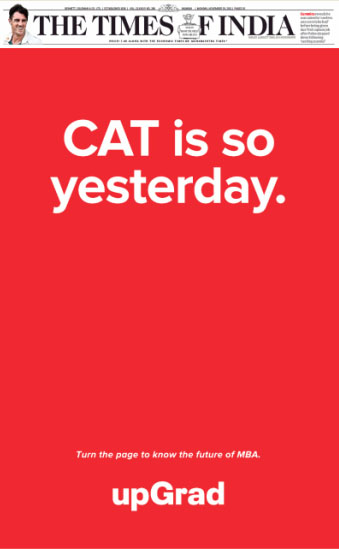
With eye-catching full-page ads in leading dailies, edtech brand, upGrad launched the campaign for its online MBA programs to ‘fast-forward your career’ because ‘CAT is so yesterday’. The two-page managed to grab eyeballs for the brand with its effective use of empty spaces and an attention-grabbing caption.
TINDER INDIA
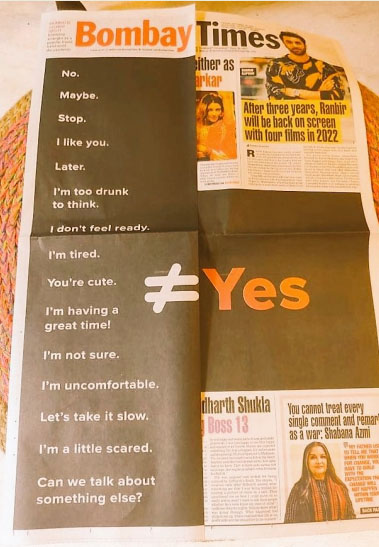
In another resounding endorsement, a millennial and Gen Z brand like Tinder released a series of print ads, acknowledging that print still carries ‘trust and maturity’ which digital is yet to achieve. The new age dating app’s ad is indicative of how serious it is about educating its existing and potential users about consent, serving as a lesson on how many times we misinterpret our partner’s words to consider it a ‘Yes’. Tinder India’s front page Bombay Times ad is a primer on consent and what all doesn’t equate to a ‘Yes’. This ad is the latest installment from the dating app’s ongoing campaign around consent, emphasising that only a ‘Yes’ means a ‘Yes’. Nothing more, nothing less.





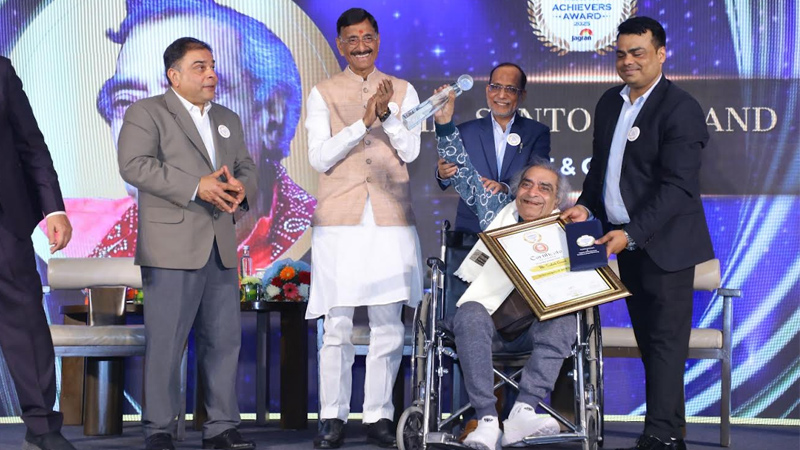
NEW DELHI: Hamdard Laboratories gathered a cross-section of India’s achievers in New Delhi on Friday, handing out the Hakeem Abdul Hameed Excellence Awards to figures who have left their mark across healthcare, education, sport, public service and the arts.
The ceremony, attended by minister of state for defence Sanjay Seth and senior officials from the ministry of Ayush, celebrated individuals whose work blends professional success with a sense of public purpose. It was as much a roll call of achievement as it was a reminder that influence is not measured only in profits or podiums, but in people reached and lives improved.
Among the headline awardees was Alakh Pandey, founder and chief executive of PhysicsWallah, recognised for turning affordable digital learning into a mass movement. On the sporting front, Arjuna Awardee and kabaddi player Sakshi Puniya was honoured for her contribution to the game and for pushing women’s participation onto bigger stages.
The cultural spotlight fell on veteran lyricist and poet Santosh Anand, whose songs have echoed across generations of Hindi cinema. At 97, Anand accepted the honour with characteristic humility, reflecting on a life shaped by perseverance and hope.
Healthcare honours spanned both modern and traditional systems. Manoj N. Nesari was recognised for strengthening Ayurveda’s place in national and global health frameworks. Padma shri Mohammed Abdul Waheed was honoured for his research-backed work in Unani medicine, while padma shri Mohsin Wali received recognition for his long-standing contribution to patient-centred care.
Education and social development also featured prominently. Padma shri Zahir Ishaq Kazi was honoured for decades of work in education, while former Meghalaya superintendent of Police T. C. Chacko was recognised for public service. Goonj founder Anshu Gupta received an award for his dignity-centred rural development initiatives, and the Hunar Shakti Foundation was honoured for empowering women and young girls through skill development.
The Lifetime Achievement Award went to former IAS officer Shailaja Chandra for her long career in public healthcare and governance, particularly in the traditional systems under Ayush.
Speaking at the event, Hamdard chairman Abdul Majeed said the awards were a tribute to those who combine excellence with empathy. “These awardees reflect Hakeem Sahib’s belief that healthcare, education and public service must ultimately serve humanity,” he said.
Minister Seth struck a forward-looking note, saying India’s young population gives the country a unique opportunity to become a global destination for learning, health and wellness by 2047.
The ceremony also featured the trailer launch of Unani Ki Kahaani, an upcoming documentary starring actor Jim Sarbh, set to premiere on Discovery on 11 February.
Instituted in memory of Unani scholar and educationist Hakeem Abdul Hameed, the awards have grown into a national platform that celebrates those building a more inclusive and resilient India. For one evening at least, the spotlight was not just on success, but on service with substance.







