News Broadcasting
Republic TV continues lead as genre ratings rise

BENGALURU:Two of weeks earlier, we had mentioned that the English News genre’s four week average ratings and weekly ratings have been falling since weeks 29 to 32 of 2017. The fall continued until week 47 of 2017 when the combined Broadcast Audience Research Council of India (BARC) weekly ratings of the top-five English News genre channels (All India (U+R) : NCCS AB : Males 22+ Individuals) fell to 1.877 million weekly impressions. The leader of the pack right from the week it launched–the Arnab Goswami-headed Republic TV–recorded the lowest ever ratings of 0.511 million weekly impressions in week 47 of 2017. The fortunes of the genre seem to have turned in week 48 of 2017 (Saturday, 25 November 2017 to Friday, 1 December 2017). The combined ratings of the top-five English News genre channels smartly increased to 2.116 million weekly impressions. However, this increase was not enough to avert the genre’s lowest four-week average ratings–1.893 million for weeks 45 to 48 of 2017 since the launch of Republic TV in week 19 of 2017.
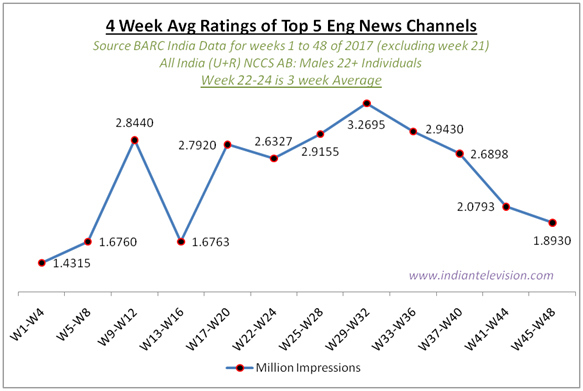
Refer to the chart below showing the four-week average of the top-five English News channels between weeks 1 to 48 of 2017. It may be noted that that the data for week 21 has not been considered in this report and, hence, the four-week average weekly impressions of 2.6327 million for the W22-24 period is actually a three-week average.
Revisiting what we had said earlier—with addition of data for weeks 47 and 48 of 2017—the combined ratings of the top-five English News channels for weeks 1 to 48 of 2017 increased from the lowest viewership to date of 1.179 million weekly impressions in week 2 to the highest viewership in week 11 of 4.987 million weekly impressions. The ratings then started to decline until week 19 of 2017 which saw the launch of Republic TV.

In week 19 of 2017, the genre witnessed its second highest combined weekly ratings of the top-five channels to date of 4.282 million weekly impressions. Republic TV has topped the genre right from the first week of its launch to date in 2017. Goswami’s channel helped increase the genre’s overall ratings but its eyeballs pull could only retard the slow decline that the genre has seen since then as can be seen from the chart above.
Since news is event driven, the above statements also are evident if one were to go by the four-week average weekly impressions of the combined ratings of the top-five English News genre rather than weekly numbers. As mentioned above, the data for week 21 has not been considered in this report and, hence, the four-week average weekly impressions of 2.6327 million for the W22-24 period is actually a three-week average.
In week 11 of 2017 (Weeks 9 to 12), elections results in five states of the country were announced and hence the ratings of news channels peaked. Weeks 13 to 16 saw a decline in the genre’s ratings, because week 14 of 2017 saw the launch of the Indian Premier League, which adversely affected the News genre’s ratings. Weeks 17 to 20 were Republic TV’s launch period and everyone wanted to see how Goswami would perform on his new English News channel, the genre’s ratings climbed to a four week average of 2.972 million. The four weeks (or rather 3 weeks’ average in this specific case) of weeks 22-24 was a small blip, and since the other English News channels withdrew themselves from BARC ratings, the data will not be discussed any further here.
Weeks 25 to 28 numbers for the top-five channels saw the four-week average ratings climb to 2.9155 million weekly impressions, followed by the highest four-week average of the genre in 2017 until now of 3.2695 million weekly impressions in weeks 29 to 32. As is evident from the figure above, the genre’s four-week average ratings have only declined since then.
Will the genre be able to garner improved ratings for the rest of weeks of 2017? Or will they slide, or remain stagnant? This is something that time will tell.
Data for week 48 of 2017
The top-five channels for week 48 of 2017 were the same as week 47 of 2017. The channels retained the same ranks during the week under review as compared to the trailing week, but at the cost of lower viewership.
As mentioned above, Republic TV held the top rank in the genre during week 48 of2017 with 0.709 million weekly impressions, followed by Times Now with 0.621 million weekly impressions at second place. India Today Television came in at third place with 0.294 million weekly impressions, lower than the 0.340 million weekly impressions it had garnered for week 47 of 2017. NDTV 24×7 was ranked fourth with 0.263 million impressions in week 48, slightly lower than the 0.289 million weekly impressions in week 47. At fifth place was CNN News 18 with 0.229 million weekly impressions in week 48 of 2017 as compared to the 0.25 million weekly impressions in week 47 of 2017.





News Broadcasting
CNN-News18 to host Fury in the Gulf conclave on West Asia crisis
Three-hour summit to unpack geopolitical fallout and impact on India
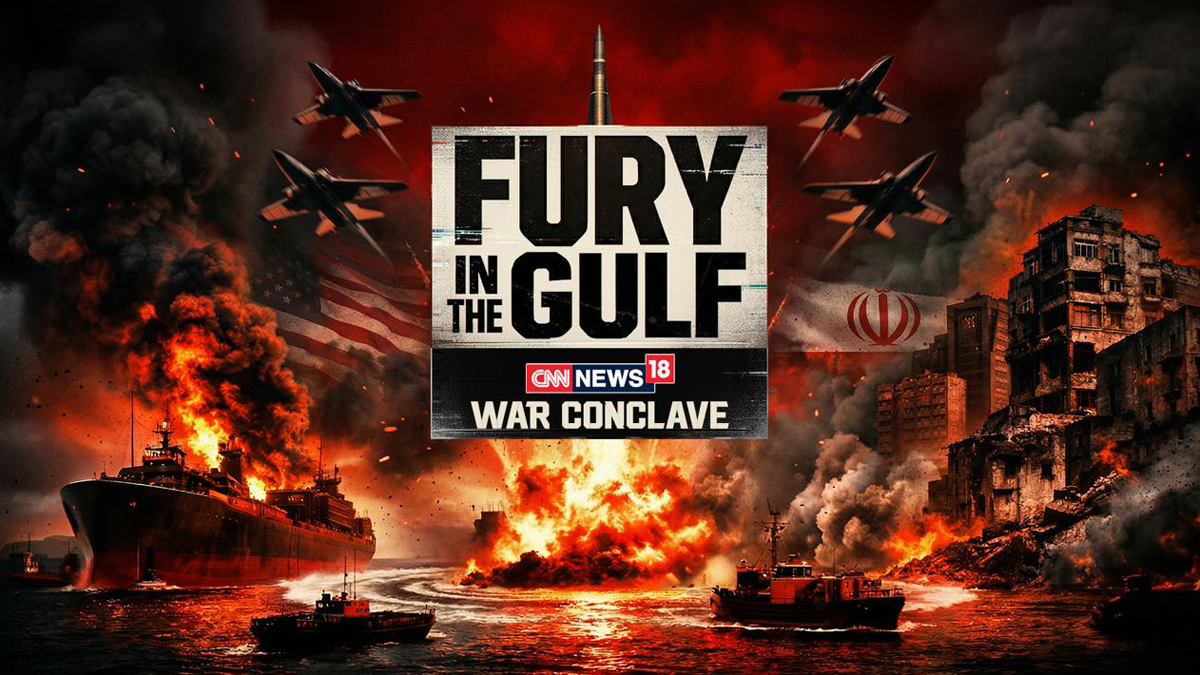
MUMBAI: CNN-News18 is set to host a special three-hour broadcast, Fury in the Gulf – War Conclave, on April 7, aiming to decode the escalating West Asia crisis and its far-reaching implications for India.
Scheduled from 4:00 PM to 7:00 PM, the conclave comes at a time when tensions between Iran and the United States are reshaping global geopolitics and triggering economic uncertainty. With India’s deep energy ties, trade links and large diaspora in the Gulf, the developments carry significant domestic relevance.
Built around the theme ‘Conflict, Consequences, and The Future,’ the programme will feature six curated sessions combining one-on-one interviews and panel discussions. The focus is to cut through the clutter and offer viewers a clearer understanding of the fast-evolving situation.
Key sessions include ‘Diplomacy in Times of War’ featuring Shashi Tharoor, and ‘World After the Iran Conflict’ with voices such as Ram Madhav, Reuven Azar, representatives from the European Union and the Iranian Deputy Envoy. Another session titled ‘Another Dunkirk?’ will bring together K. J. S. Dhillon and Jitin Prasada among others.
CNN-News18 editorial affairs director Rahul Shivshankar said, “In times of war, clarity becomes the most powerful tool. Fury in the Gulf – War Conclave brings together credible voices to address the questions and confusion that arise amid an overwhelming influx of information.”
He added that the initiative is aimed at delivering “facts, perspective, and insight” at a time when misinformation can easily cloud public understanding.
Echoing the sentiment, CNN-News18 CEO– English and business news Smriti Mehra said the conflict marks a defining global moment, with consequences that extend well beyond the region. She noted that the conclave seeks to present the crisis with “depth, nuance and responsibility” so audiences can better grasp its real-world impact.
As geopolitical tensions continue to dominate headlines, the conclave positions itself as an attempt to bring order to the noise, offering viewers a structured, insight-led look at a complex and rapidly shifting global situation.






