News Broadcasting
Relive Indias 80s with NGC

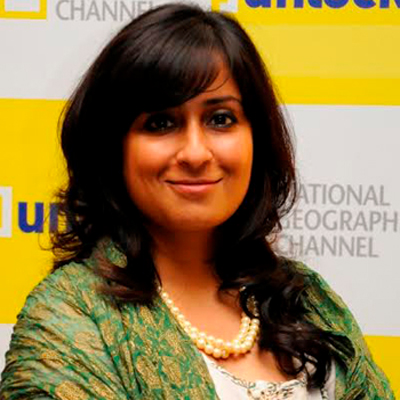
MUMBAI: The 1980s was one of the most ‘happening’ decades in the history of India. It wasn’t just in one segment that the country witnessed change. While Indira Gandhi’s assassination was one of the biggest events of the decade leading to communal violence and political turmoil, there were other interesting events like India’s victory in the Cricket World Cup. The introduction of national telecast and colour TV in 1982 was one of the biggest events of the country.
Now, National Geographic Channel as part of its series The 80s is giving its viewers an opportunity to revive the memories of the 80s with a special feature on India. So far, the series according to the channel officials has got a pretty good response. While the whole series has been received well, the episode titled Tear Down These Walls which focuses on the many literal and cultural walls brought down globally during the decade, has had the highest viewership.
NGC VP and Fox International, marketing Debarpita Banerjee says that across six weeks, the series has managed to revisit some of the most significant global events of the decade. “What I think genuinely worked was the fact that every viewer could relate to it, in their own personal way. Whether you were an 80s child or not, you are sure to have been left with some or the other lasting impression of the decade,” she says and adds that with a fairly good response to the series, it just made more sense to have one episode exclusively dedicated to India.
 |
|
Indira Gandhi and Kapil Dev after India won the cricket world cup
|
“The decisions, the tragedies, the fads…this was the decade that was responsible for paving the path ahead for a young, middle-class India, with a liberal perspective. This episode will give the viewer both an analytical, as well as a nostalgic viewpoint of the ‘80s,” she says.
To make the episode interesting and content-oriented, the channel has got on board many eminent people like established journalists, culturists, film-makers and eminent researchers, such as Vinod Dua, Anurag Kashyap, Mark Tully, Mahesh Bhatt, among others, whose anecdotes and commentary are strung in the feature to give the viewers a better perspective of the era.
However, since there was a time restriction of just one hour duration, the channel had to make some tough choices in terms of the topics that would be covered. It had to ensure that the focus remains on events that were frontrunners in changing the course of India’s history. “Keeping this in mind, we chose personalities, who are not only stalwarts in their own fields, but served as eye-witnesses, as well as fans of this fascinating decade. Once they got to know that it was the 80s they were to talk about, the rest was easy,” says Banerjee.
 |
|
Rajiv and Sonia Gandhi
|
Filmmaker Mahesh Bhatt, who was at the helm of his career during the 80s, recalls the era with a lot of fondness. Talking about the TV set, to which the Indian common man suddenly got an access to, he says: “Well, an Indian suddenly realised there was a way to amuse himself by staying at home…and community viewing – the family. India woke up to this thought that television was consumed by the entire family and that was the beginning of what is called ‘the great television revolution’ which was going to take place with the satellite age. I think the Indian loves to be at home with his family and listen to the stories which his father and grandfather told him, but nuanced in a modern way.”
However, Ogilvy & Mather executive chairman & national creative director India, Piyush Pandey explains it in a better way. He says: “It’s not that in the late 70’s, people were not watching Doordarshan, but with the coming of colour television and its availability in households, one was very clear that this medium was going to go a very long way. We are a very audio-visual country anyway, we love our movies, we love story telling and we love emotions. TV was the best medium that was just waiting to be unleashed. And, it got unleashed in ’82. I think everyone, every marketer; every advertiser knew that this was the medium that was going to be the most powerful one in the days ahead.”
 |
|
The Indian audience was introduced to colour TV in 1982
|
Since the episode is packed with many such info and interesting stories from the era, it made more sense for the channel to go all out to promote it and thus it has activated a digital campaign across Facebook and Twitter for the episode. “There is a radio campaign across Delhi, Mumbai and Bangalore as well taking the listeners on a retro ride of ad jingles from the 80s and Mile Sur Mera Tumhara…,” says Banerjee.
Nokia Lumia 1020 is the presenting partner and Hindware Italian Collection is the co-presenting partner of the series.