Hindi
Regional cinema is mainstay of Indian Cinema: Soni

NEW DELHI: Vice President M Hamid Ansari today said it was a matter of surprise that the number of regional films being dubbed or subtitled in Hindi was declining and had come down from 213 in 2001 to 147 in 2011 while the number of foreign films dubbed or subtitled had increased to 128 last year.
Noting that the two top winners of the 59th National Film Awards were regional films, he said “it is an under-appreciated fact that over 80 per cent of the films certified for public exhibition are regional films.”
Speaking after giving away the awards at a colourful function in the gaily decorated Vigyan Bhavan, he noted that Indian cinema had not remained unaffected by globalisation and it was fascinating to see how the industry has to face the challenge of continuing on the path of innovation, creativity, and technological upgradation even as it nurtures its umbilical chord with our heritage and culture.

Earlier, thespian Soumitra Chatterjee received the Dadasaheb Phalke award, the highest national honour for lifetime contribution to cinema, amidst a standing ovation and thunderous applause. Actor Vidya Balan for ‘The Dirty Picture’ and Girish Kulkarni for the Marathi film ‘Deeol’ also received loud cheers as they came to get the awards for best performance.
Ansari noted that popular culture is a site where “collective social understandings are created” and films play a significant role in this, more so given the linguistic and regional diversity they portray.
Over the years, these awards have recognised excellence as also propelled new or unknown talent to national and international limelight and provide encouragement and recognition to them, he said.
Applauding Chatterjee, Ansari said “his partnership with Satyajit Ray would indeed be counted as a memorable director-actor combination in the history of cinema.”
He said the award winners had proved that contrary to popular perception, Indian cinema is neither formulaic nor conforming to stereotypes. It has successfully adapted traditional Indian narrative and oral traditions to the requirements of technology and formats of new media.
Globalisation is also reflected in the nature and expectations of cinemagoers. “We have a growing middle class, and a younger generation of viewers; both are desirous and capable of spending on entertainment. The film viewers today, besides entertainment, seek to understand their society and their world, and to make sense of societal and personal evolution.”
The technology and format of film viewing is also changing with new gadgets including phones, Tablets, Pay-per-view and laptops and venues such as multiplexes. This is leading to an increasing demand for better cinematography, improved quality and digital formats. They impact on the distribution and marketing and, thus, on revenue generation possibilities.
“It is evident our films are one of the most potent elements of our soft power. They are ambassadors of our culture, tradition and society. They foster people-to-people relations and promote our image and interests in ways that are not readily apparent but are of enduring significance. As we improve our society and economy and empower our citizens, our films will continue to play a leading role within the country and abroad to further the effort.”
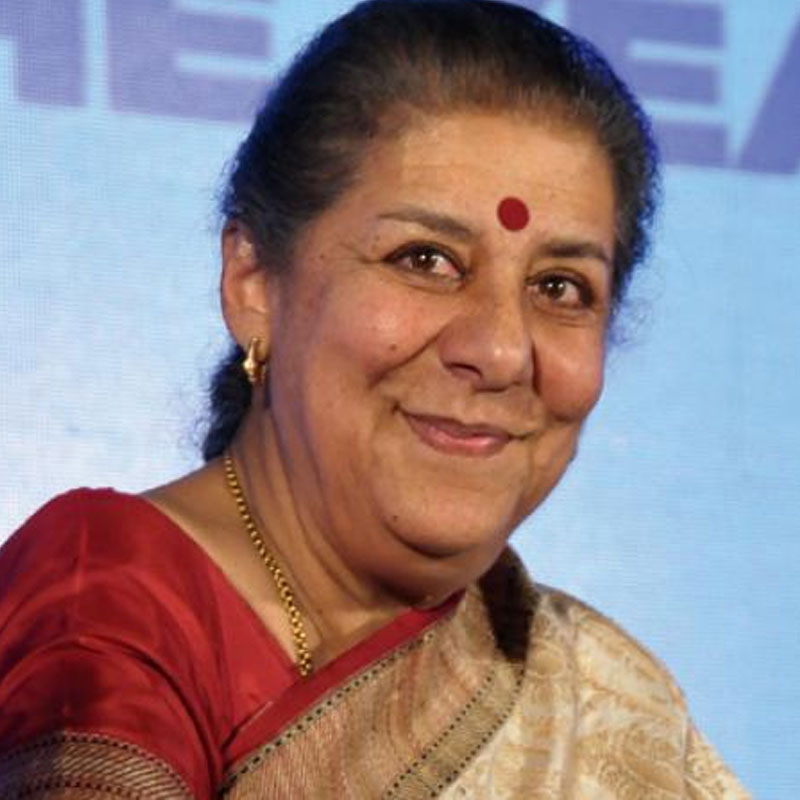
Information and Broadcasting Minister Ambika Soni said the awards this year marked the commencement of the celebrations of 100 years of cinema. Programmes being given a fillip during the year included the National Film Heritage Mission for which a sum of Rs five billion had been allocated in the current five-year plan.
She said that the year will see the opening of the Museum of the Moving Image in Mumbai in the premises of the Gulshan Mahal in the Films Division Complex.
She agreed with Ansari that the rich cultural heritage and film music had contributed in turning India into a soft power. Cinema was the social mirror of society and a catalyst for the plurality of Indian culture. Regional cinema remained the mainstay of Indian cinema.
I&B Secretary Uday Varma said Indian cinema celebrates life in all its glory and shares joys and sorrows, encapsulating life in all its colours. It was the finest tribute to human creativity.
Chatterjee said he had been plagued in his early years on whether he had chosen the right profession, but his fans had proved him right.
Chairpersons Rohini Hatthangady (features), Ramesh Sharma (non-features) and Vijaya Mulay (writing on cinema) presented their reports. Others present included the two Ministers of State for I&B, C M Jatua and R Jagathrakshkan, Film Federation of India president Vinod Lamba, and Dharmesh Tiwari of the All India Cine Employees Confederation.
The evening presented by actors Vinay Pathak and Soumya Tandon saw music performances by National film awardees Anand Bhate (for his song in ‘Balgandharva’), Roopa Ganguly (for her song in ‘Abhosheyshey’) and Amit Trivedi and Amitabh Bhattacharya for the song ‘Agar Zindagi’ in ‘I am’. A film with clips from the award-winning films by Ramesh Tekwani and another on Chatterjee by Films Division were also screened.




Hindi
Dhurandhar returns to theatres worldwide on March 13 ahead of Dhurandhar The Revenge release
Jio Studios re-releases blockbuster across 500 screens globally before sequel

MUMBAI: The spy saga of Dhurandhar is gearing up for a big-screen encore before its next chapter arrives.
Ahead of the release of Dhurandhar The Revenge on March 19, Jio Studios and B62 Studios are bringing the original Dhurandhar back to cinemas worldwide in a rare international theatrical re-release.
The global blockbuster is returning across nearly 500 screens, including around 250 in India from March 12 and another 250 overseas beginning March 13.
For fans of the franchise, the move offers a chance to revisit the film that ignited the high-octane spy-action universe just days before the sequel lands in theatres. It also sets up a rare back-to-back big-screen experience, allowing audiences to relive the original before diving straight into the next chapter.
While re-releases of popular films are occasionally seen in India, international re-runs of Hindi films remain uncommon. The scale of the rollout reflects the growing global appetite for the franchise.
In North America alone, Dhurandhar will return to theatres across nearly 185 screens, highlighting the strong anticipation surrounding the upcoming sequel.
The excitement is set to build further with special Wednesday premiere shows of Dhurandhar The Revenge scheduled across the US and Canada on March 18, a day ahead of its global release. Many of these premieres will be hosted on premium large format screens, featuring wall-to-wall displays, immersive sound systems such as Dolby Atmos, enhanced projection and luxury seating.
These formats are typically reserved for major Hollywood event films, and early bookings suggest strong demand with several shows already sold out.
The recently released trailer of Dhurandhar The Revenge has also sparked buzz among exhibitors and trade circles, with expectations running high for the film’s international performance.
Dhurandhar The Revenge is written, directed and produced by Aditya Dhar. The film is produced by Jyoti Deshpande and Lokesh Dhar.
Jio Studios presents a B62 Studios production, an Aditya Dhar film.
The spy-action thriller will release worldwide on March 19, 2026, in five languages including Hindi, Tamil, Telugu, Malayalam and Kannada.
The film arrives in theatres globally on the occasion of Gudi Padwa and Ugadi, just ahead of Eid, setting the stage for a festive box office run.