Legal and Policies
RBI breaks its long freeze on repo rate, drops it to 5.25 per cent
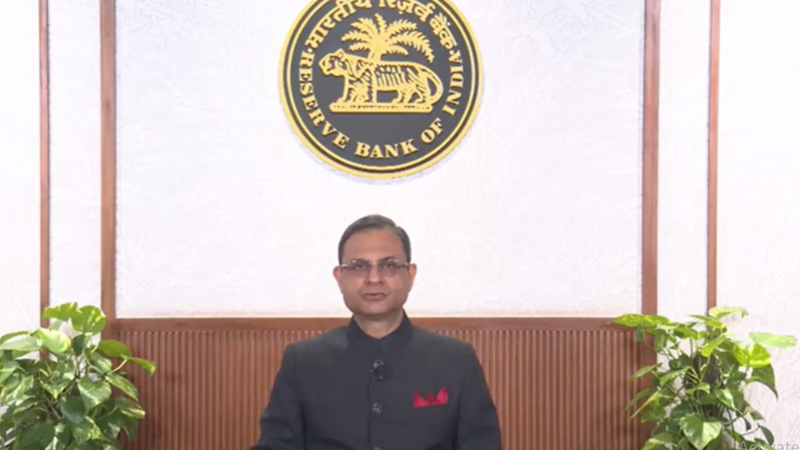
MUMBAI: The Reserve Bank of India has cut its repo rate by 25 basis points to 5.25 per cent, with governor Sanjay Malhotra signalling a clear tilt towards growth as the central bank downplayed concerns over the rupee’s recent slide.
The rate move, decided unanimously after a three-day meeting of the monetary policy committee (MPC), follows June’s reduction from 6 per cent to 5.5 per cent. The RBI expects banks to pass on the cheaper money, easing housing and vehicle loan costs for borrowers.
Inflation remains subdued. The bank has pared its retail-inflation forecast for FY2025-26 to 2 per cent, citing softer underlying pressures. For the first quarter of FY2026-27, Consumer Price Index (CPI) is projected at 3.9 per cent, down from an earlier 4.5 per cent, though rising precious-metal prices could nudge the headline figure higher.
Growth, meanwhile, is accelerating. The RBI now pegs GDP expansion for the current financial year at 7.3 per cent, up from 6.8 per cent, after the economy logged an 8.2 per cent leap last quarter: the fastest in six quarters. The forecast for the October–December period has also been revised upwards to 6.7 per cent.
Alongside the repo cut, the MPC lowered the standing deposit facility rate to 5 per cent and the marginal standing facility to 5.5 per cent. The RBI will also conduct forex swaps and buy Rs 1 lakh crore of bonds via open-market operations to smooth liquidity and aid transmission.
Malhotra said 2025 had delivered “robust growth and benign inflation” despite geopolitical and trade headwinds. With a neutral stance, the RBI enters 2026, he said, with “hope, vigour and determination”, buoyed by firm bank balance-sheets and steady retail credit growth.

Legal and Policies
India’s new income tax law and higher F&O levies take effect from 1st April
A sweeping overhaul of the tax code, stiffer securities transaction taxes and relief for travellers and tech firms all land at once
NEW DELHI: India’s tax landscape shifts gears on Tuesday. The Income-tax Act, 2025, which replaces the Income-tax Act, 1961, comes into force from April 1, 2026, alongside a clutch of budgetary measures that will be felt by traders, tourists, technology firms and ordinary taxpayers alike.
The new Act is not a reinvention of tax policy so much as a tidying up of it. Gone is the unwieldy distinction between the assessment year and the previous year; in its place comes a single “tax year” framework designed to be more logical and reader-friendly. Taxpayers will also, for the first time, be able to claim tax deducted at source refunds even when income tax returns are filed after the deadline, without incurring penal charges.
For those who trade derivatives, however, the news is less comfortable. Securities transaction tax on futures contracts rises to 0.05 per cent from 0.02 per cent, while STT on options premiums and the exercise of options is hiked to 0.15 per cent from 0.1 per cent and 0.125 per cent respectively. The government has made no secret of its intent: the higher levy is aimed squarely at curbing speculative bets in the futures and options segment and shielding retail investors from ruinous losses. The numbers tell a grim story. The number of individual investors active in the F&O segment fell from 1.06 crore in FY25 to about 75.43 lakh by December 2025. A Sebi study found that individual investors had racked up net losses of more than Rs 1.05 lakh crore in FY25 alone.
Overseas travellers and those remitting money abroad for medical and education purposes get some relief. Tax collected at source on overseas tour packages has been slashed to 2 per cent from 20 per cent, while TCS on Liberalised Remittance Scheme transfers for medical and educational purposes drops to 2 per cent from 5 per cent.
The data centre industry, too, has reason to cheer. Any foreign company procuring data centre services in India will enjoy a 20-year tax holiday stretching to 2047, shielding its global income from Indian tax authorities. Whether a global firm sets up its own facility or simply buys services from an Indian data centre, the tax treatment will be identical, ensuring a level playing field. India’s effective corporate tax rate stands at 25.17 per cent.
Software companies get a further fillip: the safe harbour threshold for IT services has been raised sharply from Rs 300 crore to Rs 2,000 crore, a move designed to reduce litigation and give the sector greater certainty.
On the transition, the income tax department has confirmed that its e-filing portal will handle compliance under both the old and new Acts during the switchover period. Taxpayers filing returns for assessment year 2026-27, which covers the period governed by the old Act, will do so in July 2026 using the old forms. Advance tax payments for tax year 2026-27, commencing from June 2026, will follow the new Act.
One sweeping law, several sharp edges, and a deadline that waits for no one.