Hindi
Ra.One lacks in the script department

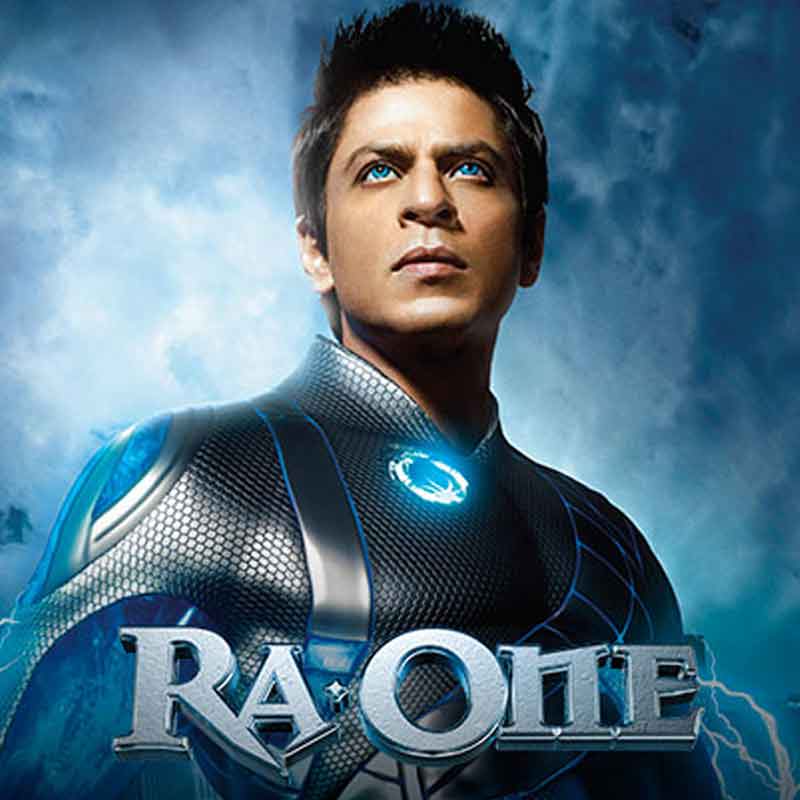
MUMBAI: When you have done just about everything and still find yourself at a stage where you want one box office blockbuster to retain the top spot, you want to do something different. So here we have Ra.One, which is purported to serve that purpose.
 |
|
Producer: Gauri Khan. |
TheThe intentions are noble enough. It is the execution and the content which don’t comply! A few reels into the film and you wonder “where is this all leading?”

We have had a few films about super human – Mr X, Mr India, Krrish– but Ra.One is about bringing a videogame superhero to life.
Shah Rukh Khan is a computer geek. He and his team are asked to develop a blockbuster video game since the company’s last one flopped badly. If he fails, the office will be converted into a restaurant and Khan and his team will be waiting on the guests; so much for being wizards of the virtual world.
Shah Rukh plays a docile, meek man whose cute and almost-whiz kid son, Armaan, does not think much of his father, while his wife, Kareena Kapoor, just loves him for what he is.
The thinking is that to be a computer nerd one has to be a South Indian, so that is what Shah Rukh is cast as while Kareena is supposed to be a Punjabi, for whatever reason.
The son thinks super heroes are not cool anymore and wants the super villain to be more powerful. With this idea, Shah Rukh begins work on his next video game where the villain is all powerful. This is Ra.One, ArjunRampal, in his final avatar (there being many since he can morph in to anyone’s identity). The hero is a good-hearted G.One, who stands a 0.01 per cent chance of survival against the villain. It is here that the film begins to sag.
The process of developing the video game and computer lab gizmos make for tedious watching and accounts for almost the entire first half. When the programme is eventually ready and being launched in a grand ceremony, things start going haywire elsewhere as Armaan tries his hand at the game in the lab. He is forced to leave it halfway, which drives Ra.One mad and he decides to emerge out of the virtual world into the real world to destroy Lucifer, Armaan’s video game ID.
The villain is out on the loose and kills Shah Rukh Khan, who designed him. The mother-son duo go on the run with Ra.One chasing them, first on the trot and later on the bike. One wonders why a villain who can almost fly, leap miles or materialise anywhere out of thin air needs to chase them like a normal human being. But then, this helps provide some thrill, destroying a few cars in the name of entertainment. Meanwhile, Armaan has also managed to bring out G.One to life in the shape and size of Shah Rukh Khan, a protector for the pair. In the end, as it should be, even with 0.01 per cent odds, good wins against the evil. It is a shame that you are too mentally fatigued to understand the intricacies of how and why.
Ra.One is a technical and special-effects treat if you care for that sort of thing as entertainment. But the fact that it is carried a bit too far is a deterrent. Also, in the absence of decent contribution from the script department, this technical triumph eventually comes to nothing. Dialogue is routine and funnier lines are mostly of the below-the-belt variety. Musically, while, Chhammak Chhalo… has been much hyped, the pick of the lot is Dildaara dildaara. Action is well choreographed but gets repetitive after a point, thereby losing its novelty. Direction is average with many scenes stretched beyond utility point.
As for performances, Shah Rukh does what he has been doing all along. He is cute and playful when in normal role but when he enacts the video game character, the ghost of My Name Is Khan seems to possess him and he acts as if he is affected by Aspergers syndrome again. Kareena Kapoor is good. Master Armaan steals the show. Rest have limited scope.
On the whole, Ra.One opened to below expectations response due to wrong release day (Diwali). Having picked up handsomely on second day, it started its slide on third day. The appreciation being poor, the film’s box office potential stand hugely challenged.
Tell Me O Khuda is a good idea treated in an old- fashioned way
Tell Me O Khuda is meant to be a re-launch vehicle for the almost forgotten Esha Deol. Mother Hema Malini is the one to do the needful. In what seems like a wise move, the story chosen needs three veteran actors, all stars to reckon with in their own heydays, in Dharmendra, Vinod Khanna and Rishi Kapoor.
 |
|
Producer: Hema Malini. |
Hema Malini herself puts in a cameo along with some critically acclaimed oldtimers such as Faroooq Sheikh, Deepti Naval and Madhu. Further, to make it pleasant to the movie watchers‘ eyes, this three episode drama is shot in three of the most picturesque locations, Rajasthan, Turkey and Goa. The packaging is near perfect.
Esha Deol is a writer who has been brought up by Farooq Sheikh and Deepti Naval with all the love and affection in the world, until one day she finds out that she is their adopted child.
Esha decides not to rest until she finds her real parents and discovers why they deserted her.
It has been 24 years and the municipal hospital is not sure it has all the records since a day after Esha was born; the hospital had caught a major fire. Esha‘s search leads her first to Vinod Khanna, a Rajasthani royal whose wife had a baby girl (though one wonders why a Rajasthan royal‘s wife should be delivering a baby in a Mumbai‘s municipal hospital!). She died in child birth but instructed her maid not to take the baby girl home since the thakur, Vinod Khanna, believed in and wanted only a male heir.
This section of the film also has some interesting behind-the-scene royal politics between Vinod Khanna‘s nephew and heir apparent. Esha wins over Vinod Khanna while proving she can do anything as well as or better than any son and makes him change his steadfast beliefs about a girl child. But then the maid who was a witness to the child‘s birth 24 years back reveals that it is not Esha but the girl she has brought up as her own who is his daughter.
Back to square one, Esha pays another visit to the municipal hospital‘s records department. This is quite enjoyable as Johny Lever is the clerk in charge (so what if his desk sports a symbol of Ashok Chakra!). The clerk has another father for Esha to visit, this time in Turkey, where Rishi Kapoor has shifted from his Bandra residence. Rishi Kapoor‘s wife, Turkish actor Meltem Cumbul, has taken her newborn‘s death in the hospital fire badly and gone into a shell ever since. When he sees that his wife is warming up to Esha, Rishi Kapoor goes along with her belief that finally she had found her parents. Meltem Cumbul is cured and Esha realises that these are not her parents but she was only used by Rishi Kapoor for his wife‘s sake.
It is third time lucky for Esha when her beau, Arjan Bajwa, finds out that there was one more possibility, Dharmendra, who is now a don in Goa. A love child of Dharmendra and Hema Malini, she had been abandoned by the latter to keep her away from her lover‘s illegal ways. Hema Malini herself became a nun!
Dharmendra‘s being a don also offers scope for an action climax. It all ends happily as all her ‘four fathers‘ are present for her wedding with Arjan Bajwa.
Tell Me O Khuda swings between the story of a girl in search of her antecedents and a do-gooder, a girl always in hurry to call every next person she traces as daddy.
It is a good idea treated in an old- fashioned way. The absence of a single director‘s vision is obvious. The film never touches you as nowhere does it make you feel sympathetic towards Esha‘s plight or cause. Esha Deol is as much to blame as is the treatment as both fall short of delivering. Music is of little help. Rest of the aspects are routine. Tell Me O Khuda is a poor contender at the box office.






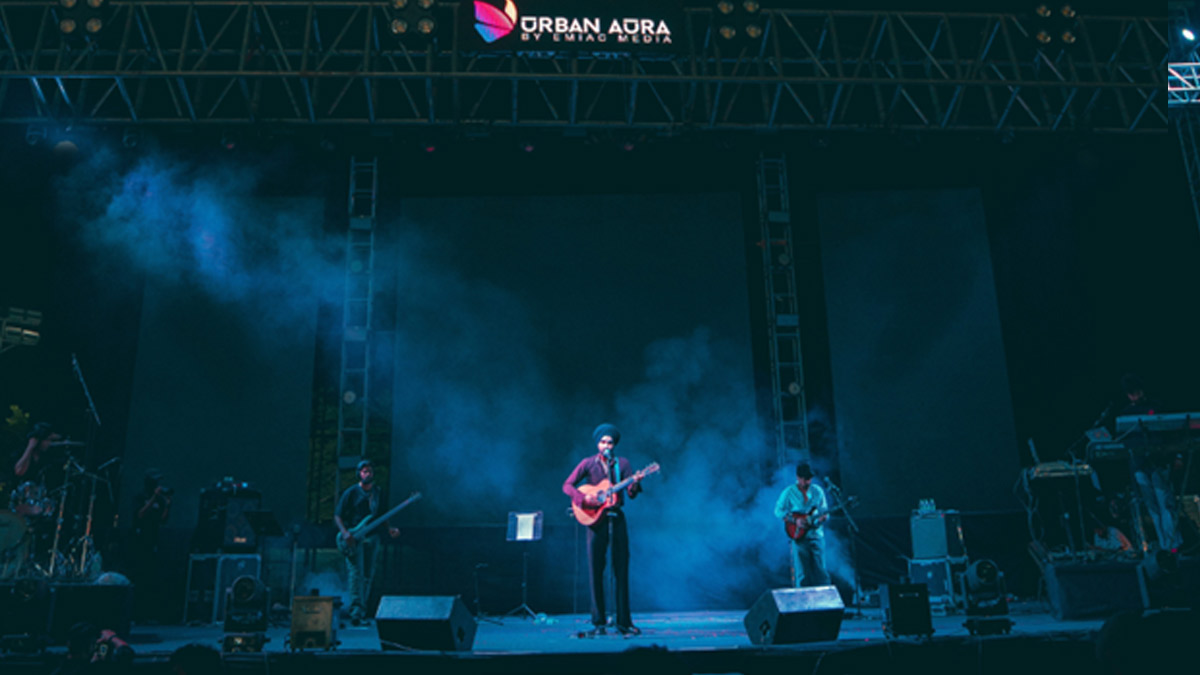
In a music industry that often rewards speed, spectacle, and instant recall, Navjot Ahuja’s journey feels refreshingly different. His story is not built on noise. It is built on patience, discipline, emotional honesty, and a quiet commitment to becoming better with every passing year. After 14 years of struggle, learning, performing, and writing, Navjot stands today as an artist whose success has not changed his centre. If anything, it has only made his purpose clearer.
For Navjot, music has never been about chasing fame alone. It has always been about expression. It is about writing more truthfully, singing more skillfully, understanding himself more deeply, and becoming a kinder human being in the process. That rare clarity is what gives his journey its beauty.
Where It All Began: A Writer Before a Singer
Indian singer and songwriter Navjot Ahuja’s musical journey began in the most familiar of places: school assemblies. But even then, what was growing inside him was not only the desire to sing. It was the need to write.
Long before he saw himself as a performer, he had already discovered the emotional release that writing offered him. For Navjot, words became the first true channel for feeling. Songwriting came before singing because writing was the only way he could let emotions flow through him fully. That inner pull shaped his artistic identity early on.
Like many young musicians, he sharpened his craft by creating renditions of popular songs.
Those experiments became his training ground. But the turning point came in 2012, when he wrote his first original song. That moment did not just mark the beginning of songwriting. It marked the beginning of self-definition.
A Calling He Did Not Chase, But Accepted
What makes the latest Indian singer-songwriter Navjot’s story especially compelling is the way he describes his relationship with music. He does not frame it as a career he aggressively pursued. In his own understanding, music was not something he chose. It was something that chose him.
There was a time when he imagined a very different future for himself. He wanted to become a successful engineer, like many young people shaped by ambition and conventional expectations. But life had a different script waiting for him. During his college years, around 2021, music entered his life professionally and began taking a firmer shape.
That shift was not driven by image-building or industry ambition. It came from acceptance. Navjot embraced the fact that music had claimed him in a way no other path could. That sense of surrender continues to define the artist he is today.
An Artist Guided by Instinct, Not Influence
Unlike many singers who speak openly about idols, icons, and musical role models, Navjot’s creative world is built differently. He does not believe his music comes from imitation or inherited influence. He listens inward.
He has never considered himself shaped by ideals in the traditional sense. In fact, he admits that he does not particularly enjoy listening to songs, especially his own. His decisions as a songwriter and singer come from instinct. He writes what feels right. He trusts what his inner voice tells him. He positions his music according to what he honestly believes in, not what trends demand.
That creative independence gives his work a distinct emotional sincerity. His songs do not feel calculated. They feel alive.
The Long Years of Invisible Struggle
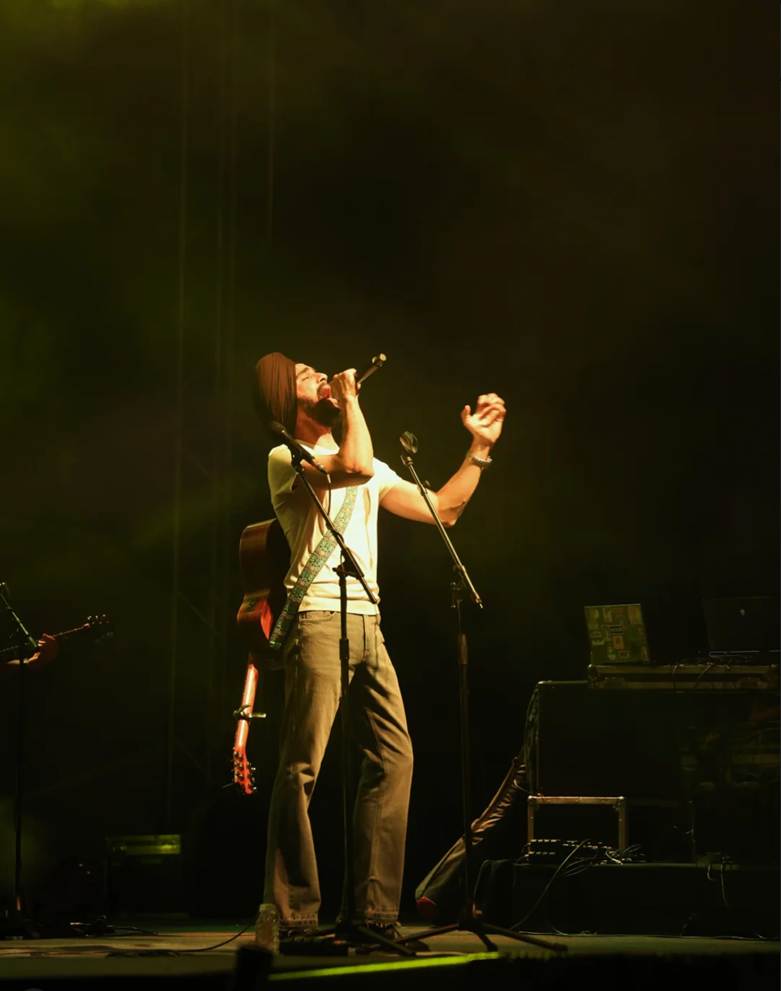
Every artist carries a chapter of struggle, and Navjot’s was long, demanding, and deeply formative. One of the biggest challenges he faced was building continuity as the best new indian singer songwriter in an era where musical collaboration is increasingly fluid.
For emerging singers, especially those trying to build with a band, consistency can be difficult. Instrumentalists today have more opportunities than ever to freelance and perform with multiple artists. While that growth is positive and well deserved, it can make things harder for singers who are still trying to establish a steady team and sound around their work.
For Navjot, one of the most difficult phases came during 2021 and 2022, when he was doing club shows almost every day. It was a period of relentless performance, but not always personal fulfillment. He was largely singing covers because clubs were not open to original songs that audiences did not yet know.
For a new Indian singer and songwriter, that can be a painful compromise. To perform constantly and still not have the freedom to share your own voice requires not just resilience, but restraint.
“Khat” and the Grace of Staying Unchanged
After 14 years of effort, Navjot’s new love song Khat became a defining milestone. Professionally, he acknowledges that the song changed how society viewed him as a musician. It strengthened his place in the public eye and altered his standing in meaningful ways.
Yet personally, he remains unchanged.
That is perhaps the most striking part of his story. Navjot says his routine is still the same. His calm is still the same. His writing process is still the same. He does not want success or failure to interfere with the purity of his art. For him, emotional detachment from public outcomes is essential because the moment an artist becomes too attached to validation, the writing begins to shift.
His joy comes not from numbers, but from the attempt. If he has tried to improve his skill today, if he has written his heart out more honestly than before, then he is at peace.
Growth, Not Glory, Remains the Real Goal
Even now, Navjot is not consumed by labels such as singles artist, performer, or digital success story. His focus remains deeply personal. He wants to sing better. He wants to play instruments better. He wants to understand himself more. And he wants to become a kinder person.
That is what makes Navjot Ahuja’s journey so moving. It is not simply the story of a musician finding recognition. It is the story of an artist who continues to grow inward, even as the world begins to look outward at him. In an age obsessed with applause, Navjot reminds us that the most meaningful success often begins in silence, honesty, and the courage to remain true to oneself.






