iWorld
Puneet Gupt on Times Internet’s performance post-Covid


KOLKATA: Given the sudden uncertainties, digital publishers were fretting about the downturn in business at the beginning of Covid2019 crisis. Anticipating a very troublesome period, the publishers prepared to counter the worst situation. Fortunately, the industry has witnessed a better-than-expected state of business post Covid, Times Internet Ltd (TIL) COO Puneet Gupt said.
In a virtual fireside chat with Indiantelevision.com founder, CEO and editor-in-chief Anil Wanvari, Gupt spoke about the overall sentiment in the industry which is turning out to be brighter with each passing month. According to him, TIL, as well as other publications, are now gaining momentum across all metrics. While there was a huge slump in ad spend in the first couple of months when physical movements were curtailed and the market was down, there has been a gradual growth month-on-month basis since things have started opening up, especially in the last four-five months.
“As I say, it is a culmination of sequential growth that we are seeing month-on-month in our businesses. Maybe from July onwards revenue has picked up. I would be slightly worried about Q4 but at least with Diwali and going up to December I see that there is possible traction to build,” Gupt said.

Despite the pessimism around festive spend in the industry, TIL has witnessed good business during Diwali compared to the last year. Categories like ed-tech, OTT, gaming and digital-only products were the big spenders this festive season. These categories have picked up the overall ad spend, leading the way while other categories are following.
Amid the Covid crisis, several brands have moved their budgets to digital. Gupt acknowledged that the re-allocation of funds has helped them. “I personally think it’s a short term move and will be more even for a slight shift on digital and not the 30-40 per cent shift that we are seeing right now. But it may stay back at 10 per cent higher shift and rest goes back to the mediums where it came from,” Gupt noted. He added that TIL has witnessed significant growth in native advertising and video segment but display advertising has stayed under pressure.
“We are doubling down on what we are doing. As an organisation, we have always said that programmatic is good as it gets us revenue and gives transparency to the buyer, but a one-on-one relationship with the buyer is important. Hence, we have a large sales team when some of the publishers were scaling down their sales teams and doubling programmatic. We were saying that we welcome programmatic but we want to double down on our sales team, relationships, people-to-people connect,” Gupt elaborated on the measures that have helped TIL to stay on the growth track.
In terms of user engagement, there has been a huge spike on MX Player. The over-the-top (OTT) platform has seen 5X growth on time spent post-Covid. But the audio segment has not been to catch up with the growth of the video segment. TIL’s news properties have seen 40-50 per cent growth both in terms of engagement and visitors.
While TIL has built a strong business on the back of ad revenue over the years, it still has a long way to go on subscription side, with a base of two million subscribers. “I don't think that 2 million subscribers is a challenge. It is a big success. We started this journey a few years ago and it’s something that all of us are learning. We are experimenting, learning and building it out. I think the next level of growth is just ahead of us. We think that in four-five years of time, about three-five per cent of our users would be paying in some form or the other. We are building for the long haul and creating consumer products across the ecosystem,” Gupt commented. He hopes TIL to maintain an average revenue per user between Rs 500-1000 per annum for that large subscriber base.”







e-commerce
Instamart gold dig event at Hussain Sagar goes viral
Hyderabad activation ties to gold price lock offer ahead of Akshaya Tritiya
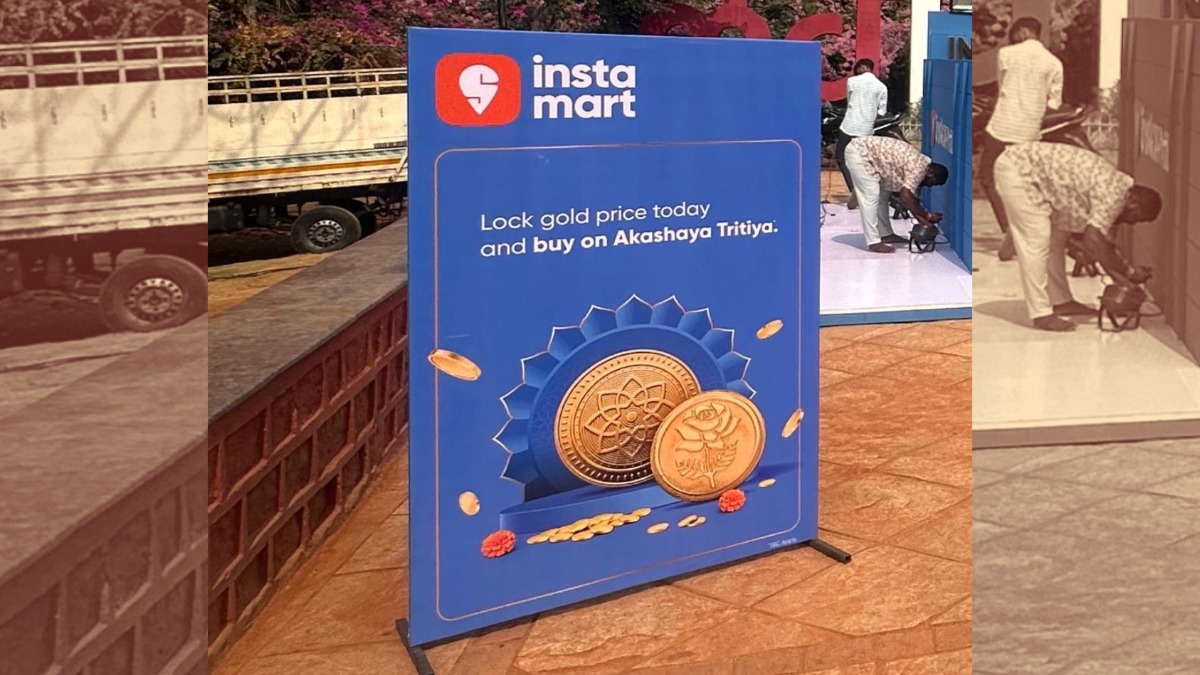
MUMBAI: All that glitters isn’t just gold, it’s also great marketing. A quirky on-ground activation by Instamart at Hussain Sagar Lake has turned into a viral spectacle, with videos of people digging for gold coins flooding social media feeds this week. The campaign, executed in collaboration with Moms, transformed a patch of the city’s iconic lakefront into what online users quickly dubbed a “mini gold rush”. Armed with spades, participants dug through a mud-filled pit in search of hidden gold coins, an activity that drew crowds, cameras and plenty of commentary online, ranging from amused disbelief to outright fascination.
At the heart of the frenzy was a promotional push for Instamart’s ‘Gold Price Lock’ feature, which allows users to secure prevailing gold rates between April 10 and April 16 and complete their purchase later during Akshaya Tritiya, a period traditionally associated with high gold buying. The mechanic cleverly blended physical participation with digital conversion, turning curiosity into a potential transaction.
Branded as ‘Gold Diggers’, the activation leaned into gamified engagement. Those who struck lucky walked away with coins, those who didn’t were nudged with a simple message: lock the price now, buy later. The result was a steady stream of footfall and a surge in user-generated content, as onlookers and participants alike documented the spectacle.
The timing is significant. India remains one of the world’s largest consumers of gold, with demand peaking around Akshaya Tritiya. Data from the World Gold Council suggests the festival alone accounts for roughly 25–30 tonnes of gold purchases annually, making it a high-stakes window for brands looking to tap into consumer sentiment.
As the ‘Gold Price Lock’ feature remains live until April 16, the campaign has already done its job turning a simple product feature into a citywide moment. Because sometimes, the quickest way to get people talking about gold isn’t to sell it, it’s to make them dig for it.







