News Broadcasting
PubNation: The ink shall never dry

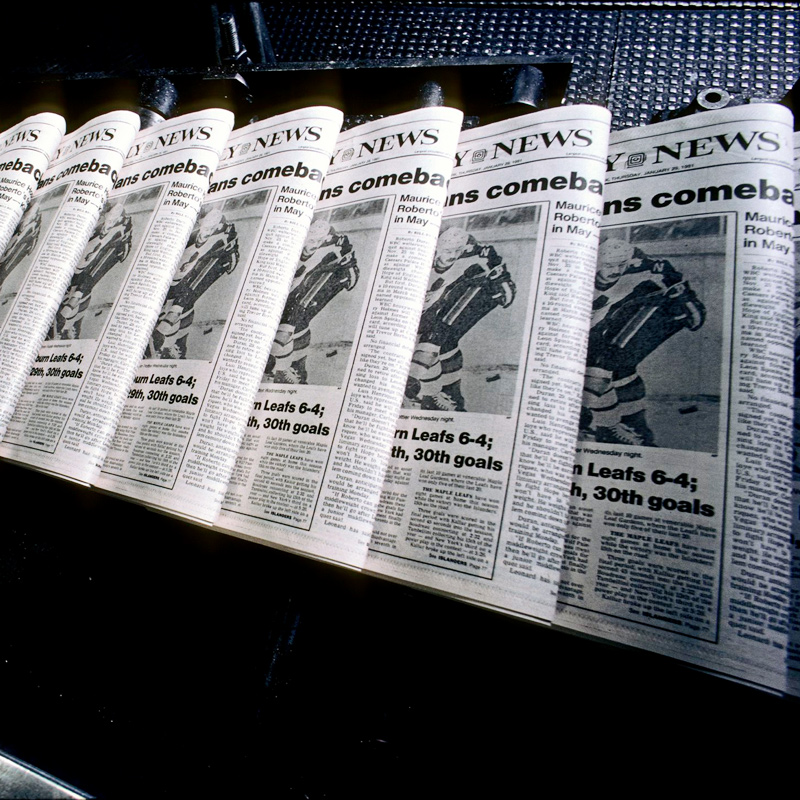
NEW DELHI: Newspapers in the developed world have long lost their sheen in the face of alternative media. Print businesses, both in terms of readership and ad revenues, continue to decline there. However, the scenario in India is quite different. Despite many challenges that loomed on the horizon for print players here, the media has only continued to grow and is expected to reach Rs 338 billion by 2021 (FICCI 2019 report).
It definitely wobbled on its feet a little in 2020 because of the pandemic and the speculations around papers being a carrier of the virus, but if experts are to be believed, things have started going back to pre-Covid days, both in terms of subscriptions and ad revenues. The prime reason: the credibility of print media.
The point was raised by a distinguished panel of experts speaking on the topic of “Advertising on Ink & Its Future” on day two of the recently concluded PubNation (print & digital) virtual conference. Moderated by Bennet Coleman & Co Ltd SVP & head – creative strategy & planning, trade marketing & innovations Malcolm Raphael, the panel was graced by Dentsu Impact Pvt Ltd president Amit Wadhwa, Zenith India COO Jai Lala, VLCC Personal Care Ltd CBO Manish Jha, and Forevermark India director – marketing Toranj Mehta.
Starting off, Raphael pointed out that the low of early 2020 had filled the entire print industry with doubt and uncertainty. Their approach was of cautious speculation in dealing with the situation. However, the past three months have pushed the medium on a path of accelerated recovery.
Lala noted, “These were absolutely unprecedented times and very challenging. But we realised that there were a lot of opportunities too. Personally, for us, we hosted a number of internal forums with the editors of these newspapers and started understanding the market. Secondly, the willingness to innovate and look beyond things helped us.”
He illustrated with an example: “One of our clients Hero has always maintained print as the bedrock of their marketing strategies. And we researched a lot for them to find out how to turn print from an insertion medium to an engagement medium. Because brands today are willing to buy more engagement and not more media space.”
However, another important factor that remains at the heart of media planning for any brand, is the credibility of the medium.
Mehta stated that Forevermark is always very careful in picking the media they want their brand to be present on. “The credibility of the media also impacts how the consumer perceives your brand.”
She insisted that digital media still hasn’t been able to create that amount of credibility and trustworthiness. That’s why the brand sticks to advertising on print media. “Starting Akshay Tritya and all the way through Diwali, we advertised on print media and are continuing to do so. We had to negotiate hard for the ad rates, but we are very much present on the print.”
As per an Ormax Media research report, print remains the most credible medium of information for Indians, scoring 62 per cent on the news credibility index, followed by radio with 57 per cent and TV news with 56 per cent.
Wadhwa reflected that credibility for print was never an issue, but it got highlighted very recently with all the fake news gaining traction because of “dangerous level of consumption on the digital medium.”
Now, it is the responsibility of the brands and marketers to make better use out of this information, he stressed. “The medium will stay here for a long time. People trust every word that is written in print. The industry has to let go of the set notions and mindset that they have towards print that it is only good for a big announcement or a launch and use the medium more effectively.”
Jha agreed and added that it is never about print versus digital, but using both mediums cautiously and smartly with a focus on ROI. No brand would want to be present on a medium that doesn’t deliver good ROI. “My observation is very clear — that ink shall never dry.”
Raphael highlighted that Times Group is already working on a number of solutions with their in-house teams to make print a more ROI-driven advertising instrument, and technology like QR codes are helping achieve that. “With our in-house teams, we have also inspired many brands to change or modify their piece of communication and helped them achieved better results.”