I&B Ministry
Prima facie, no problem in Space TV: I&B ministry

NEW DELHI: The Department of Company Affairs (DCA) willing, Space TV may finally see some light at the end of the long bureaucratic tunnel.
The information and broadcasting ministry now is of the opinion that if DCA clears the legal and technical aspects of the Space TV application, seeking a nod for a DTH licence for over a year now, it would not have any problems in issuing a letter of intent.
A senior I&B ministry official today indicated that DCA is examining the Space TV application sent to it and it’s “only a matter of time” when it will revert with its comments that would decide the fate of the Tata-Star joint venture.
“Since we are not equipped to examine the technical and legal aspects of a corporate entity in entirety, DCA’s help has been sought,” the official added.

Asked whether the I&B ministry feels that Space TV’s application complies more or less with the DTH guidelines after changes had been incorporated by the company, as suggested by the government, the ministry official shot back, On the face of it, everything looks satisfying.
However, the official, while admitting that a note had been readied on the issue for minister’s comments, refused to give a time frame to final issuance of an LoI to Space TV. Government procedure takes it own time, was about all he would say.
Space TV’s quest of a DTH licence began in 2002. In between, the application had to be made afresh in 2003 as the government felt that in the earlier version of Space TV, the Indian partnership was more of a dummy.
The project cost is estimated to be Rs 16 billion ($350 million).
The government had announced a set of DTH guidelines towards the end of 2001 by which time quite a few interested players had already got frustrated and abandoned their plans to make forays into the DTH segment.




I&B Ministry
Government sets up AI governance group to steer policy
AIGEG to align ministries, assess jobs impact, guide AI deployment.
MUMBAI: If artificial intelligence is the engine, the government is now building the dashboard and making sure everyone reads from the same screen. The Centre has constituted a new inter-ministerial body to coordinate India’s approach to AI, formalising a key recommendation from its governance framework and the Economic Survey. The AI Governance and Economic Group (AIGEG), set up by the Ministry of Electronics and Information Technology, will act as the central platform to align AI-related policy across ministries, regulators and departments, an attempt to bring coherence to what has so far been a fragmented and fast-evolving landscape.
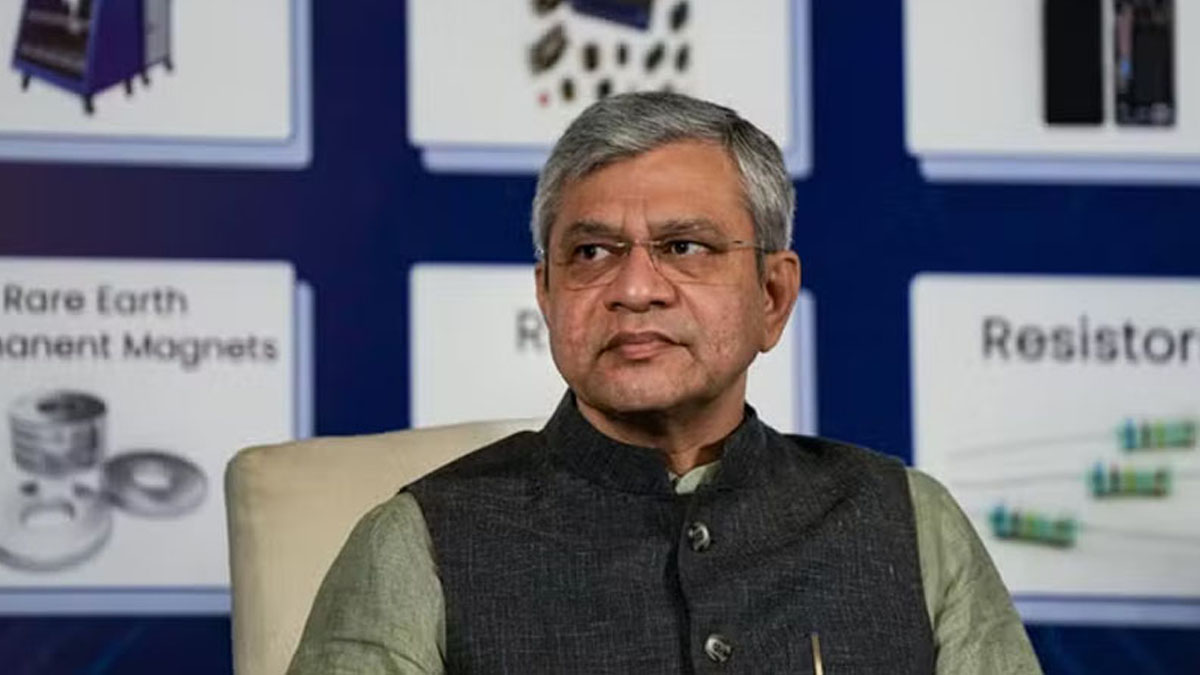
The group will be chaired by union minister Ashwini Vaishnaw, with minister of state Jitin Prasada as vice chairperson. Its composition reflects both technological and economic priorities, bringing together the principal scientific adviser, the chief economic adviser, and the CEO of NITI Aayog, alongside key secretaries from telecommunications, economic affairs and science and technology. A representative from the National Security Council Secretariat is also part of the group, while the MeitY secretary will serve as member convenor.
At its core, AIGEG is designed to do two things: coordinate and anticipate. On the policy front, it will review existing regulatory mechanisms, issue guidance across sectors and ensure companies remain compliant with evolving legal frameworks. Beyond that, it will oversee national initiatives on AI governance, with a focus on enabling responsible innovation rather than merely regulating it.
The economic dimension is equally central. The group has been tasked with assessing how AI-driven automation could reshape jobs identifying which roles are most at risk, where those impacts may be geographically concentrated, and whether technology will augment or replace human labour. Based on these assessments, it will develop mitigation strategies and transition plans, signalling a more proactive stance on workforce disruption.
In parallel, AIGEG will work with industry stakeholders to chart a long-term roadmap for AI adoption, categorising use cases into “deploy”, “pilot” or “defer” buckets depending on readiness factors such as data availability, skill levels and regulatory clarity. The aim is to move from broad ambition to structured execution deciding not just what can be built, but what should be built now.
The group will function as the apex layer in India’s AI governance architecture, supported by a Technology and Policy Expert Committee that will track global developments, emerging risks and regulatory priorities. Together, the two bodies are expected to shape both the pace and direction of AI adoption in the country.
In a landscape where technology often outruns policy, the creation of AIGEG signals an attempt to close that gap ensuring that India’s AI journey is not just rapid, but also coordinated, accountable and economically grounded.