iWorld
Preventing content piracy in the cloud era


Sacred Games Season 2, an original Indian series by Netflix, ended up being one of the many victims of rampant content piracy in India. The series was available on illicit websites and other digital mediums on the internet even before the original content was made available.
The online TV and movie revenue lost to piracy in India is expected to reach USD 3.08 billion by 2022. This is a development we’ve seen not just India; revenue losses and lost monetisation opportunities by virtue of content theft and piracy continue to plague the global media & entertainment industry today. The cost of global online streaming piracy will hit $52 billion by the year 2022, according to a report by Digital TV Research. Nearly 190-billion visits were made to illegal piracy websites in 2018, of which 17.4 Billion were from the US, followed by the Russian Federation (14.5 Billion), Brazil (10.3 Billion); with India (9.6 Billion) and the United Kingdom (5.75 Billion) as the other top nations affected by online piracy. In terms of the type of content pirated, almost 50 percent of the visits to pirated websites were for television shows, and 20 percent of visitors were looking for the latest movies.
The widespread availability of online video content, instigated by factors like ubiquitous high-speed data connectivity, hyper-connected devices and living room experiences – are all playing their part in the explosion of video content consumption online, making it lucrative for pirates to steal a portion of the pie. As more and more viewers are moving to mediums and platforms that are digitally native, circumvention of subscriptions and geo-based restrictions to access premium content with no loss in experience or quality, motivates end-users to embrace pirated means of consuming content.
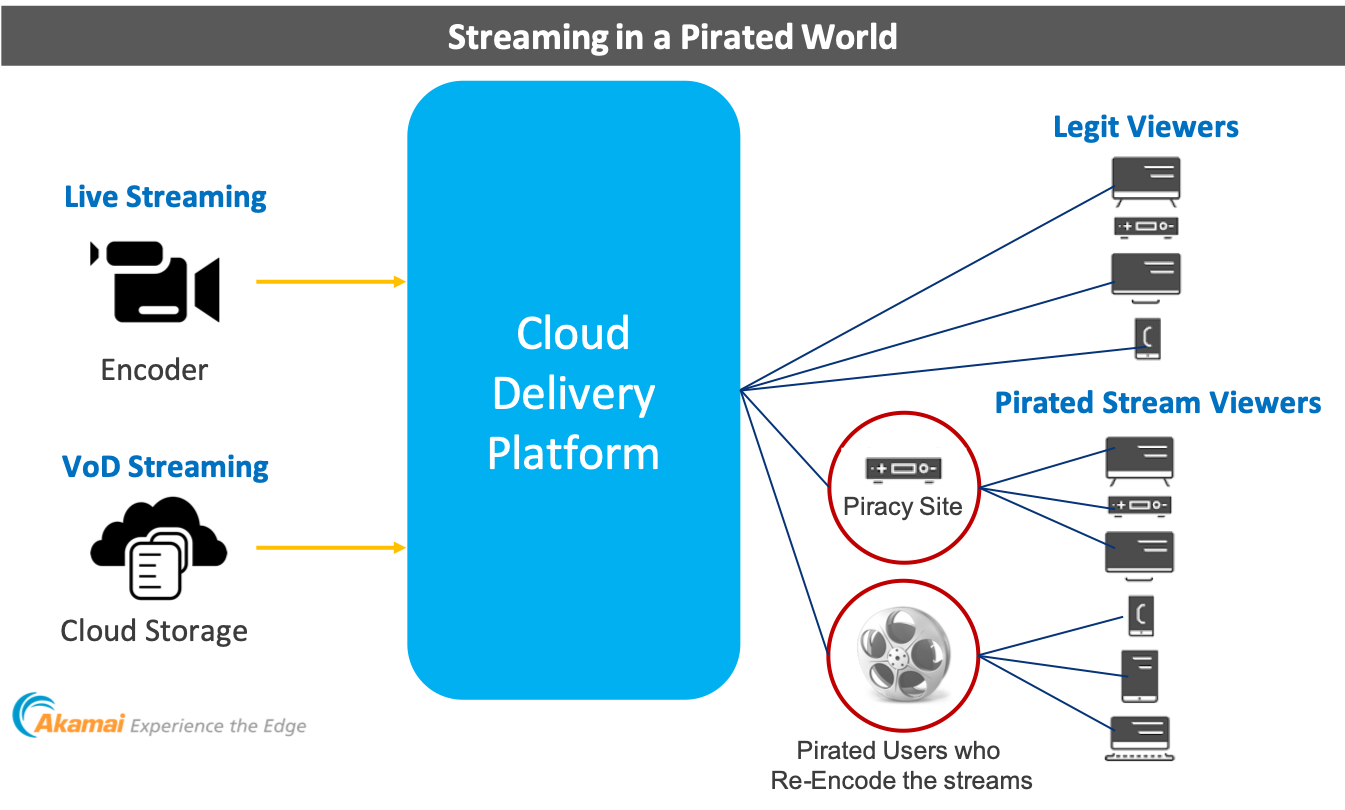
There are multiple ways in which digital content piracy exists today. There might be genuine users who are paying for the content but start sharing their credentials with other users. Pirate sites might sign up with content providers in a single-user model but then start re-distributing content. There are sophisticated piracy tools like re-encoders or stream ripping tools being used to grab content and redistribute it. Another popular content piracy technique is circumventing geo-restriction by using Virtual Private Networks (VPNs) and proxy servers to mask unauthorized IP addresses to make it look like an authorized IP which might lead to media companies breaching contractual obligations with their rights' holders due to content viewership from unauthorised regions.
According to a survey of almost 200 media technology influencers and decision-makers conducted by Akamai in 2018, attacks on media organisations are widespread and of different types. Service downtime, caused by DNS based attacks or DDoS attacks were listed as an important area of concern, the second most important was protecting premium video content.

For media & entertainment organisations, monetising premium video content and protecting it against unauthorised usage and distribution is key to a successful video strategy. Based on the survey, organisations face a few challenges in implementing technologies to prevent content piracy.
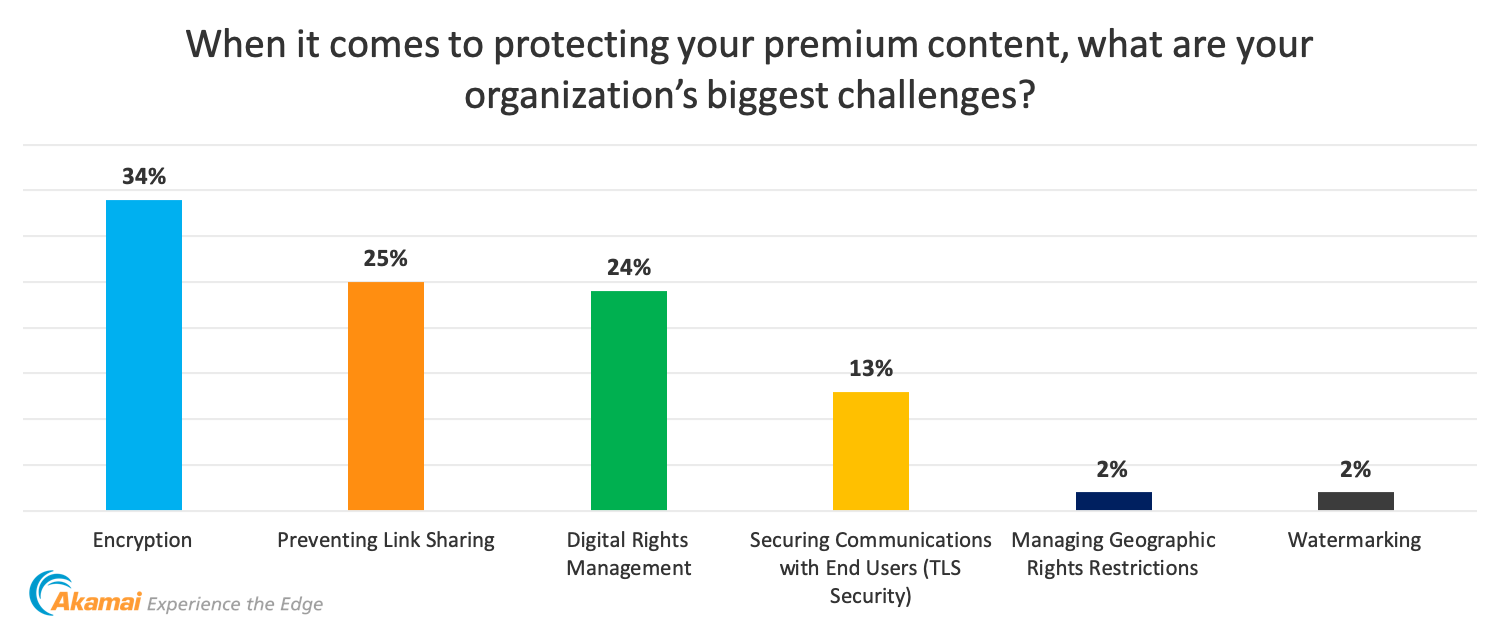
The Akamai content protection portfolio is designed in a way to help media organisations defend themselves against critical threat vectors so that organisations can focus on their core, which is creating and managing content; while offloading content distribution and the threats related to safeguarding it. The portfolio aims at helping organisations prevent content piracy, unauthorised access and maximise monetisation opportunities. The portfolio provides a few key capabilities including user authentication, access revocation, geo-restrictions, encryption, watermarking and securing last mile delivery using Standard TLS.
Security in the media & entertainment industry means securing the entire content delivery path from the content provider to the viewer – adopting a holistic approach to security. Any media company that wants to serve or distribute its content to these end-users or viewers needs to protect itself from attacks that can originate at multiple points across the content delivery path. Content consumption has changed over the last few years, and in that, it has shaped the next wave of technology, and how we interact with it. If viewers believe that Content is King, companies should invest well to protect it.
(The author is product marketing manager, media and entertainment, APJ, Akamai. The views expressed are his own and Indiantelevision.com may not subscribe to them.)