iWorld
Parminder follows Jaitly, unfollows Twitter; Maya new MD
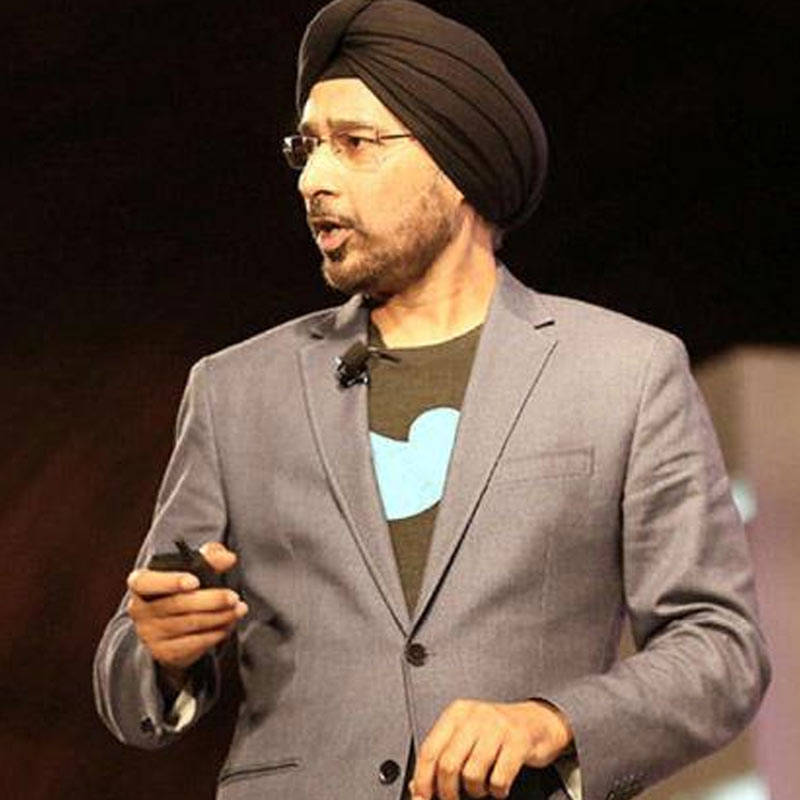
MUMBAI: Another top-level executive has quit. Twitter‘s MD for its south Asia, India and MENA markets, Parminder Singh, has called it a day at the social media company. In a tweet this morning, Singh announced that he will move on from his current role in Twitter to chase ‘new passions.’
“An update. After leading Twitter in Asia’s most exciting markets (India/SEA/MENA) for 3 yrs, time to move on to new passions #BeenAPrivilege,” his tweet read.
Interestingly, this is the second high profile exit from Twitter almost within a week. Twitter Asia Pacific & Middle East North Africa-VP Rishi Jaitley had recently quit from the microblogging site. Given the proximity of the two exits, one can’t help but wonder if Jaitley and Singh share the same ‘new passion.’
Also known as Parry endearingly by his peers, Singh had joined Twitter in November 2013. Prior to this he was Google APAC display solutions – MD. He had previous stints with Apple and IBM.
Singh’s subsequent tweets also shed light on the restructuring of management of the markets post his exit. The INSEA/MENA region is now split with MENA aligned to EMEA and INSEA aligned to APAC region, he said.
Singh named senior executive Maya Hari as the new in-charge of south Asia and India, while Benjamin Ampen will be her EMEA counterpart. Hari has been elevated to the managing director role for SE Asia & India.
“INSEA will be managed by @maya_hari and MENA by @bampen. Both great professionals, have worked with me closely & well suited to drive growth,” Singh shared in the tweet.
“Fortunate to have worked with amazing clients & partners driving innovation, setting the agenda. Treasure the partnership & friendship,” he added in parting.

iWorld
Meta plans 8,000 layoffs in new AI-led restructuring wave
First phase from May 20 may cut 10 per cent workforce amid AI pivot.
MUMBAI: At Meta, the future may be artificial but the cuts are very real. The social media giant is reportedly preparing a fresh round of layoffs, with an initial wave expected to impact around 8,000 employees as it doubles down on its artificial intelligence ambitions. According to a Reuters report, the first phase of job cuts is slated to begin on May 20, targeting roughly 10 per cent of Meta’s global workforce. With nearly 79,000 employees on its rolls as of December 31, the move marks one of the company’s most significant workforce reductions in recent years.
And this may only be the beginning. Sources indicate that additional layoffs are being planned for the second half of the year, although the scale and timing remain fluid, likely to be shaped by how Meta’s AI capabilities evolve in the coming months. Earlier reports had suggested that total cuts in 2026 could reach 20 per cent or more of its workforce.
The restructuring comes as chief executive Mark Zuckerberg continues to steer the company towards an AI-first operating model, committing hundreds of billions of dollars to the transition. Internally, this shift is already visible: teams within Reality Labs have been reorganised, engineers have been moved into a newly formed Applied AI unit, and a Meta Small Business division has been created to align with broader structural changes.
The trend is hardly isolated. Across the tech sector, companies are trimming headcount while investing aggressively in automation. Amazon, for instance, has reportedly cut around 30,000 corporate roles nearly 10 per cent of its white-collar workforce citing efficiency gains driven by AI. Data from Layoffs.fyi shows over 73,000 tech employees have already lost jobs this year, compared with 153,000 in all of 2024.
For Meta, the move echoes its earlier “year of efficiency” in 2022–23, when about 21,000 roles were eliminated amid slowing growth and market pressures. This time, however, the backdrop is different. The company is financially stronger, generating over $200 billion in revenue and $60 billion in profit last year, with shares up 3.68 per cent year-to-date though still below last summer’s peak.
That contrast underlines the shift underway. These layoffs are less about survival and more about reinvention. As Meta restructures itself around AI from autonomous coding agents to advanced machine learning systems, the question is no longer whether the company will change, but how many roles will be left unchanged when it does.