I&B Ministry
Parliamentary Standing Committee to look into TRP gaming scandal: PTI
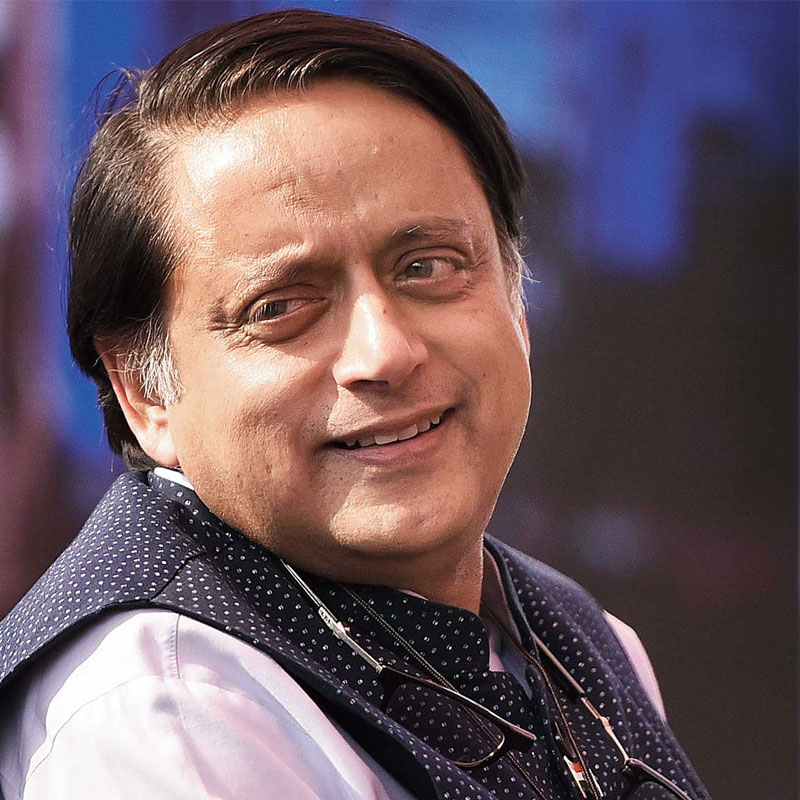
NEW DELHI: The Parliamentary Standing Committee on Information Technology chaired by Congress MP Shashi Tharoor will be taking up the issue of alleged manipulation of TV Rating Points (TRP) by some channels, PTI reported citing some sources.
The committee has asked representatives of the News Broadcasters Association, Press Council of India and Prasar Bharati to depose on the subject of 'ethical standards in media coverage'.
This comes on the back of Congress MP and member of the panel Karti Chidambaram’s request to take-up the matter and call the officials of the ministry of information and broadcasting (MIB) before the committee to seek clarification and remedial measures.
He had said that the government's advertising expenditure depends on this system, and public spending should not be based on flawed data. “Flawed or manipulated TRP cannot be the basis of ad spend. TV companies also base their valuations on TRP. Those valuations are questionable now,” Karti further said.
Governments (Centre & State) and Businesses (Public & Private) base their advertising allocations to TV channels based on TRPs, so flawed or manipulated TRP cannot be the basis of ad spend. TV cos also base their valuations on TRP. Those valuations are questionable now. https://t.co/sRLX9zwCxY
— Karti P Chidambaram (@KartiPC) October 9, 2020
The Congress leader’s demand that the parliamentary panel takes up the issue came a day after the Mumbai Police claimed to have busted a TRP manipulation racket and arrested four people.
"The recent issues surrounding TRPs of television channels have cast doubts on the legitimacy and reliability of the system. TRPs produce essential data on television audiences in India and have become the primary basis for advertising decisions," Karti said in a letter to panel chairman Tharoor.
"There is a need for further understanding this situation. In light of this, it is important that the standing committee take up this issue. Therefore, I request you to call before the Committee concerned officials of the responsible ministry, MIB to seek necessary clarification on the current situation and remedial measures," he said.

I&B Ministry
Prasar Bharati opens AIR to private content under new policy
NIPP introduces revenue share, sponsored and gratis models
MUMBAI: Radio may be the oldest voice in the room, but it’s learning some very modern tricks. In a bid to stay tuned to changing listener habits, Prasar Bharati has opened the doors of All India Radio to private players under a newly rolled-out content framework. The initiative, titled Notice Inviting Programme Proposals (NIPP), marks a significant shift in how the public broadcaster approaches programming moving from a largely in-house model to a more collaborative, market-aligned ecosystem. Issued by Akashvani’s Directorate General in April 2026, the policy invites private producers, content owners and aggregators to pitch programmes across formats, from radio dramas and documentaries to quiz shows, storytelling and music-led content.
At the heart of the framework lies a three-pronged participation model designed to balance creative freedom with commercial viability. The most prominent route is revenue sharing, where advertising and sponsorship income generated by a programme is split between the producer and the broadcaster. The structure tilts in favour of creators offering a 70:30 split when producers bring in advertising, and 65:35 when monetisation is handled by Prasar Bharati.
Alongside this sits the sponsored model, where producers fully fund and monetise their content, subject to compliance with advertising norms and the AIR Broadcast Code. For those less commercially inclined, a gratis route allows content to be submitted free of cost, with Prasar Bharati retaining all monetisation rights effectively turning the platform into a national distribution channel for diverse voices.
The move comes as legacy media grapples with intensifying competition from private FM networks, streaming platforms and digital audio ecosystems. By repositioning AIR as both a public service broadcaster and a content marketplace, Prasar Bharati appears to be recalibrating its role in a rapidly evolving media landscape.
Importantly, the framework does not dilute editorial control. All submissions must adhere to the AIR Broadcast Code, and proposals are evaluated through a layered process that weighs storytelling quality, production capability, audience appeal and revenue potential. Only proposals crossing a defined threshold move forward, signalling that while access has widened, the bar remains firmly in place.
Operational discipline is another cornerstone of the policy. Producers are required to maintain broadcast-ready content, deliver episode banks in advance and navigate a structured approval process. Crucially, all production costs are borne by the content provider, reinforcing Prasar Bharati’s positioning as a distribution and oversight platform rather than a commissioning entity.
What elevates the initiative further is its scale. The framework spans multiple clusters and stations across India, covering both metro and regional markets, with specific language mandates and submission channels. This not only expands the content pipeline but also deepens linguistic and cultural representation, an area where AIR has historically held an advantage.
In effect, NIPP signals a quiet but meaningful transformation. AIR is no longer just broadcasting to the nation, it is inviting the nation to broadcast with it, blending legacy reach with contemporary content economics in a bid to stay relevant in an increasingly fragmented audio universe.