News Headline
Pak bans Indian TV content, films from being screened


NEW DELHI: Even as Pakistani theatres decided not to show Indian films in the wake of the current tensions between the two countries, that country’s media regulator has asked all channels in the country to “immediately” stop broadcast of illegal Indian content amid theongoing tension between the two nations.
Pakistan Electronic Media Regulatory Authority (PEMRA) in a statement said it has been receiving complaints that several local private channels were showing Indian talk shows, reality programmes and dramas without permission.
“The complaints have shown serious concerns on this issue (illegal Indian content) in the wake of current situation between India and Pakistan. Complainants have urged PEMRA to impose immediate ban on broadcast and distribution of illegal Indian channels and illegal Indian DTH,” PEMRA said in a statement.

PEMRA said that it had already taken steps to stop illegal broadcast of Indian channels and warned that all distribution networks and TV channels should follow the laws and “immediately” stop the broadcasting of Indian contents.
“This will send a positive signal to the public about the satellite TV channels and distribution networks’ commitment with rule of law and the country – about which a huge number of talk shows preach daily,” it said.
According to PEMRA rules, local channels can only show five per cent foreign content but it has been seen that several channels mostly rely on foreign contents, mostly Indian, Turkish, American and European.
Interestingly, the only Indian general entertainment channel which was showing Pakistani content, Zee’s Zindagi, has also decided to stop such broadcasts from 2 October.
Last week, Raj Thackeray-led MNS issued an ultimatum to Pakistani artistes and actors, including Fawad Khan and Ali Zafar, to leave India by 25 September or else they would be “pushed out”. Concerts of Pakistani singers Shafqat Amanat Ali and Atif Aslam scheduled in Bengaluru and Gurgaon, respectively, were also cancelled.
And though actor Salman Khan backed Pakistan artistes following the ban on them by the Indian Motion Pictures Producers Association, Pakistani cinemas have stopped screening Indian films in “solidarity” with the country’s armed forces.
“We have stopped screening Indian movies at our cinemas from Friday till the situation improves and normalcy returns,” said Nadeem Mandviwalla, whose Mandviwalla Entertainment runs eight cinemas in Karachi and the capital, Islamabad, according to a report in a New York-based Indian newspaper. Indian films had been popular both at the cinema and on pirated DVDs in Pakistan.
Pakistan’s domestic film industry has seen a revival in recent years, but is dwarfed by India’s Bollywood. Pakistani actors have increasingly been appearing in big budget Bollywood films in the last few years.
Super Cinemas General Manager Khurram Gultasab confirmed his group would also not be screening Indian films. He said the move had been made by cinema owners themselves, rather than on government directions. The group runs ten cinemas in cities across Pakistan’s Punjab province.
Other Pakistani cinemas posted on social media saying they would not be showing Indian films after Thursday’s violence.







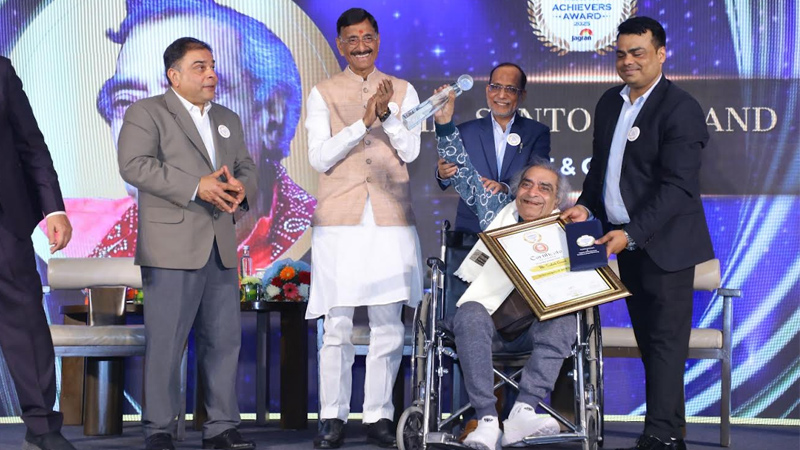
NEW DELHI: Hamdard Laboratories gathered a cross-section of India’s achievers in New Delhi on Friday, handing out the Hakeem Abdul Hameed Excellence Awards to figures who have left their mark across healthcare, education, sport, public service and the arts.
The ceremony, attended by minister of state for defence Sanjay Seth and senior officials from the ministry of Ayush, celebrated individuals whose work blends professional success with a sense of public purpose. It was as much a roll call of achievement as it was a reminder that influence is not measured only in profits or podiums, but in people reached and lives improved.
Among the headline awardees was Alakh Pandey, founder and chief executive of PhysicsWallah, recognised for turning affordable digital learning into a mass movement. On the sporting front, Arjuna Awardee and kabaddi player Sakshi Puniya was honoured for her contribution to the game and for pushing women’s participation onto bigger stages.
The cultural spotlight fell on veteran lyricist and poet Santosh Anand, whose songs have echoed across generations of Hindi cinema. At 97, Anand accepted the honour with characteristic humility, reflecting on a life shaped by perseverance and hope.
Healthcare honours spanned both modern and traditional systems. Manoj N. Nesari was recognised for strengthening Ayurveda’s place in national and global health frameworks. Padma shri Mohammed Abdul Waheed was honoured for his research-backed work in Unani medicine, while padma shri Mohsin Wali received recognition for his long-standing contribution to patient-centred care.
Education and social development also featured prominently. Padma shri Zahir Ishaq Kazi was honoured for decades of work in education, while former Meghalaya superintendent of Police T. C. Chacko was recognised for public service. Goonj founder Anshu Gupta received an award for his dignity-centred rural development initiatives, and the Hunar Shakti Foundation was honoured for empowering women and young girls through skill development.
The Lifetime Achievement Award went to former IAS officer Shailaja Chandra for her long career in public healthcare and governance, particularly in the traditional systems under Ayush.
Speaking at the event, Hamdard chairman Abdul Majeed said the awards were a tribute to those who combine excellence with empathy. “These awardees reflect Hakeem Sahib’s belief that healthcare, education and public service must ultimately serve humanity,” he said.
Minister Seth struck a forward-looking note, saying India’s young population gives the country a unique opportunity to become a global destination for learning, health and wellness by 2047.
The ceremony also featured the trailer launch of Unani Ki Kahaani, an upcoming documentary starring actor Jim Sarbh, set to premiere on Discovery on 11 February.
Instituted in memory of Unani scholar and educationist Hakeem Abdul Hameed, the awards have grown into a national platform that celebrates those building a more inclusive and resilient India. For one evening at least, the spotlight was not just on success, but on service with substance.






