Cable TV
Pacenet moots open connectivity deals between LMOs, MSOs

MUMBAI: The implementation of the conditional access system (CAS) rollout could have created several opportunities for the cable trade and made life easier for the consumers.
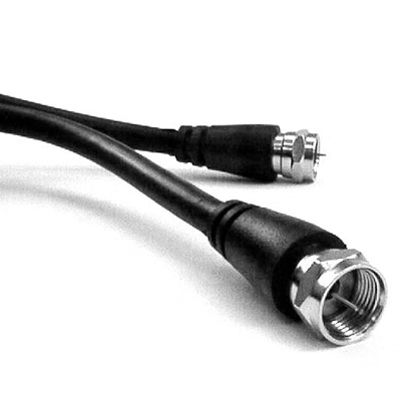
Certain fallouts of the current policies could have been avoided and these issues affecting the Indian consumer and entrepreneur has been totally ignored by the decision makers. Consider two examples: As per the current CAS guidelines, consumers who shift their houses have to surrender their set top boxes (STBs) if they move to an area that is serviced by another multi system operator (MSO). Secondly, the government has wasted a wonderful opportunity to give a stimulus to local manufacturers who could indigenously manufacture set top boxes (STBs) and sell them in the global markets.
At a CAS seminar organised by ETC Networks in Mumbai, Broadband Pacenet India CEO S Ravindran and chairman Jagjit Singh Kohli (also ETC Networks director) stated that these problems could have been averted and newer opportunities could have been created by adopting remedial measures.
BPI CEO S Ravindran explains: “The government should have allowed open source or open standards rather than permitting MSOs to have proprietary technology in the set top boxes. Rather than treating it merely as a box, the government should have treated it as an appliance. Due to this fallacy, it is possible that CAS might not spread as fast as the Internet did!”
Experts say that governments have some reservations about open architecture. Consider the recent example wherein it was alleged that broadcaster Al Jazeera was sending hidden cryptic messages to terrorist networks. Ravindran argues: “Agreed that the government had some issues about open end architecture. But If you allow free import of hardware, you should also allow open source and open standards. Linux has become so popular due to its open-ended nature. When China adopted CAS some years back, it asked the CAS solution providers and encryption companies to open up. This was the origin of China crypt.”
Ravindran also opines: “There was a great opportunity for local manufacturers to indigenously manufacture STBs with open source or open standards and sell them in the world markets. However, most of the boxes that come in will be containing technology that has become outdated in many developed countries. India will become a dumping ground for boxes that have been discarded by those countries.” Ravindran says that several Indian MSOs have fallen prey to the nexus of the major CAS companies (Nagravision, Conax, Canal Plus, Iredeto, NDS and Viax) who support the major headend providers (Harmonic, Scopus, Motorola and Scientific Atlanta) and the five-six major subscriber management system (SMS) providers.
In the US, several households still own set top boxes that had been created many years back. The recent computer revolution has rendered several boxes redundant and outdated and the consumers in the US have been looking for contemporary replacements.
Ravindran adds: “Indian MSOs have partnered foreign companies that are hand in glove and the boxes that will enter India will be plain vanilla entry level low-end boxes. The Indian consumer shouldn’t be made to pay for outdated technology. None of these above mentioned companies offer guarantees against hacking. If the MSO wants any changes or replacements, this nexus will ensure that the MSO will have to pay each link in the CAS chain. The MSOs will eventually have to pass on the brunt to the consumers.”
Experts say that several Indian MSOs have paid the encryption companies something like: a one time fee of $2.5 million; $ 3 per smart card; and $10 royalty. All these costs will be eventually passed on to the Indian consumers who opt to buy STBs.
Ravindran goes on to add: “Pacenet is the only company to produce and supply Indian made STBs. Our ‘home genies’ will have elements such as RSA 1024-bit; DES (Digital Encryption System) and AES (advanced encryption systems); with peoplemeter facilities. We have plans to get these STBs certified by companies such as Business Proton and Tata Consultancy Services and then sell them in the global markets.” He adds that the Pacenet boxes will have the ability to provide value added services and can be upgraded at low costs and will also offer exchange facilities that several other MSOs have promised.
Kohli adds to the argument by saying that the government should also have allowed last mile operators (LMOs) to obtain feeds from different MSOs at the same time. “The need of the hour is open connectivity agreements between the LMOs with the MSOs; and open content distribution deals between the MSOs and the broadcasters,” Kohli points out.
While speaking to indiantelevision, Kohli emphatically stated: “The media has carried a lot of rubbish and has blown up irrelevant issues because the journalists have been speaking to the same group of people over and over again. Real issues pertaining to the technology and business aspects of CAS have been totally ignored.”
Are the various affected parties listening?