iWorld
Over 66% of CTV users subscribe to more than one OTT app says new report


Mumbai: India is undergoing digital transformation and consumers are steadily moving away from traditional linear TV to Connected TV and OTTs – a change that presents an untapped advertising opportunity for brands and advertisers. As many as 78 per cent of people own a Smart TV and 93 per cent of these smart TV users access internet-based content found mediasmart- an Affle company in its latest report.
The survey – ‘India CTV Report 2021 – Mapping Connected TV (CTV) Viewership in India and the Opportunities for Brands’ released this week documented this changing media consumption patterns of the Indian consumer with an expert view on the possible advertising potential of the CTV medium. According to the report, mobile-first, active, and aware CTV consumers are young, urban adults who are already mobile-first and are actively engaging with diverse apps.
Nearly 89 per cent of the respondents are social media users, and 82 per cent are e-commerce, 44 per cent are gamers and more. Over 59 per cent of respondents prefer downloading apps via Smart TV App Store, while 26 per cent respondents primarily consume content via pre-installed apps and a small section (15 per cent respondents) use the dongle to stream content on TV.

Close to 70 per cent of respondents spend between one to four hours on CTV watching movies (91 per cent), streaming music (64 per cent), playing games (47 per cent) or watching news (64 per cent).

In terms of the pending ability and OTT preferences, over 65 per cent of respondents subscribe to more than one OTT app. There is over 40 per cent adoption for the leading eight OTT apps in India: Disney+Hotstar, Amazon’s Prime Video, Netflix, Zee5, MXPlayer, Sony LIV, VOOT , and Alt Balaji. The inclination on app usage is also heavily dependent on seasonality and timing
There are limited barriers to viewership and adoption. Unlike mobile usage of the internet, which requires literacy levels, CTV consumption cuts across age, language, and city barriers. By going vernacular, advertisers can engage with users in ads of their language
Mediasmart, senior director, Nikhil Kumar said, “The world is moving towards immersive watching experiences and CTV is an exciting space to be at. It is interesting to see leading advertisers in the country adopt CTV advertising as a critical new addition to their media mix. CTV advertising is here to stay and with evolutionary solutions provided by mediasmart on Household Sync technology, we are powering brands to engage with relevant consumers across the connected devices.”
India is a young market with tremendous potential for CTV adoption. CTV inherently is more engaging than traditional TVs and brings together the twin strengths of (a) engaging storytelling associated with CTV advertising and (b) targeting associated with Programmatic & Digital advertising.
According to Interactive Avenue CEO Amardeep Singh advertisers globally – and in India – are lapping up the CTV opportunity as it continues to grow as an exciting medium for digital advertising. “We have seen great results and ROI for some of our top clients who are already using the CTV ad technology from mediasmart. This research is a step in the right direction to build standard industry metrics, even as technologies like Household Sync make CTV more measurable and impactful,” said Singh.




Gaming
India’s broadcasters say no to Fifa World Cup 2026
Fifa has slashed its asking price by 65 per cent but India’s broadcasters are still not buying
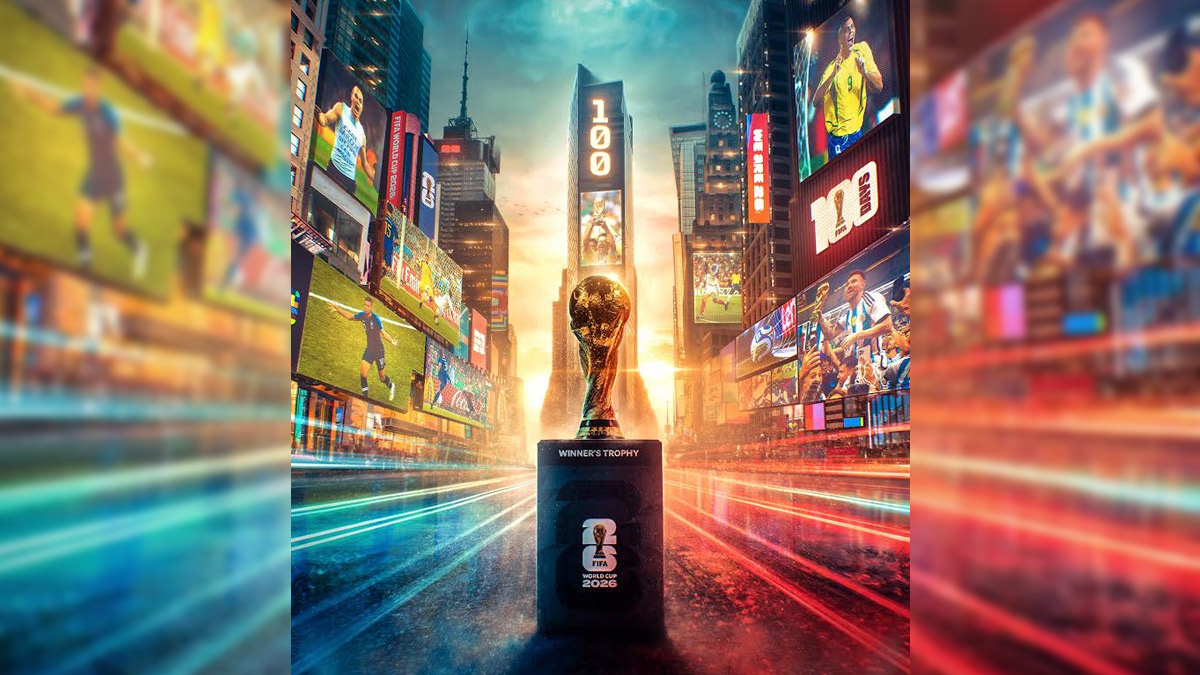
MUMBAI: The world’s biggest sporting event cannot find a single taker in the world’s most sports-mad nation. Fifa’s television rights for the 2026 World Cup remain unsold in India, and the clock is ticking loudly.
To shift the property, world football’s governing body has already swallowed hard and cut its asking price from $100m to $35m, bundling in the 2030 edition as a sweetener. It has not worked. Indian broadcasters have looked at the offer, done the sums and quietly walked away.
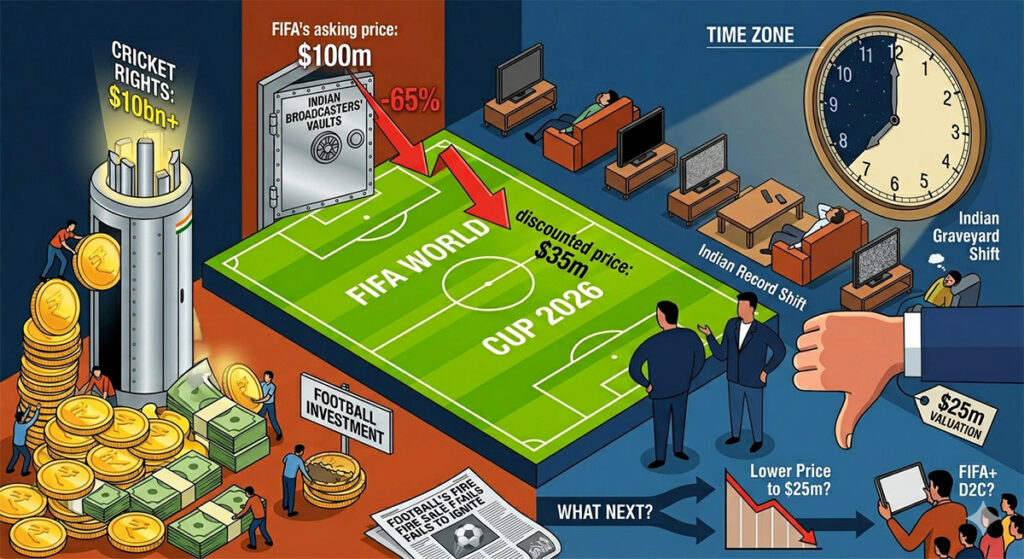
The reasons are brutally simple. The 2026 tournament, co-hosted by the United States, Canada and Mexico, kicks off in a time zone that turns India’s primetime into a graveyard shift. Most matches will air between midnight and 7am IST, a scheduling catastrophe for advertisers chasing mass reach. The 2022 Qatar edition was a gift by comparison, with matches dropping neatly into Indian evenings. North America offers no such luxury.
The market itself has also changed beyond recognition. The merger of Star India and Viacom18 into JioStar has gutted the competitive tension that once sent sports rights prices soaring. Where rival bidders once slugged it out, there is now a single dominant buyer, and it is in no hurry. JioStar has valued the rights at roughly $25m, a full $10m below Fifa’s already-discounted floor price. That gap has so far proved unbridgeable.
Broadcasters are also nursing a ferocious cricket hangover. Between 2022 and 2023, Indian media houses committed well over $10bn to cricket rights alone, covering IPL, ICC events and BCCI domestic fixtures combined. After a binge of that scale, appetite for a football package that delivers a fraction of the ratings, in the dead of night, is close to zero.
The economics of football broadcasting make the maths even harder. Cricket, with its natural breaks every few overs, is an advertiser’s paradise. Football offers a 15-minute halftime and precious little else. Recovering a nine-figure rights fee from a single half-hour ad window is a stretch at the best of times. These are not the best of times: the Indian government’s tightening grip on real-money gaming and gambling advertising has vaporised a category that once underwrote the economics of big sporting events.
Nor is the World Cup an anomaly. Indian Super League valuations have cratered. English Premier League rights have softened across successive cycles. The cooling of football as a broadcast commodity in India is structural, not cyclical.
With the tournament opening on 11th June, Fifa is running out of road. It may yet blink and meet JioStar at $25m. Or it may go direct, streaming the entire tournament on its own platform, Fifa+, or cutting a digital deal with YouTube, and hoping that a generation of Indian football fans finds its way there without a broadcaster to guide them.
Either way, the beautiful game’s Indian chapter is looking decidedly ugly.







