Connect with us

iWorld

OTTV 2017: Co-existence with traditional TV predicted, scope for OTT kids content

Published

on

MUMBAI: “Can OTT TV challenge traditional TV?” was the session on OTTV Summit 2017, as industry experts shared their views with regards to the future of the traditional TV consumption and OTTV consumption. Will traditional TV die soon? Will OTT take over traditional TV?

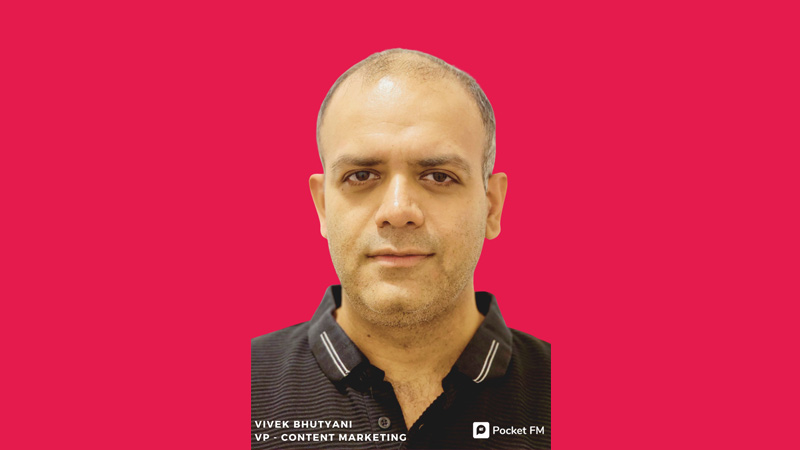
Moderated by Dveo Media CEO Deepak Ramsurrun, the session saw Alt Balaji COO Sunil Nair, Sony Pictures Network India head of marketing and analytics digital business Abhishek Joshi, Lattu Media founder and CEO Vivek Bhutyani and News Corp VC Circle’s Shreyas Rao expressing their views..

The session started by Nair stating that every platform has its audience so the whole assumption that, at any point of time, OTT is going to impact traditional television, is not going to happen. “I think OTT and television will co-exist for a long time. The audience will not go away easily. There might be 100m users of Jio, but still the number is small as compared to this huge animal. So, we should accept this and co-exist with them.”

Advertisement

Sharing his view, Joshi mentioned, “Fortunately, I am from the organisation which has a strong presence in traditional TV and in OTT space as well. We strongly believe that content is democratic. We treat other platforms as distribution partners to increase the reach of the content on TV and OTT service as well. How do we differentiate the OTT digital content and traditional TV content? I firmly believe that whatever content works on TV will work on OTT. There are 30 OTT platforms in India — the strategy is not how to distribute it but how to monetise it. As a digital platform, we have not been able to crack that code yet. We all are doing Freemium, SVoD, TVoD whereas traditional television have been existing since 30 years.”

Having a different point of view, Bhutyani who founded Lattu Kids, India’s first kids’ only platform which aims to become the safest destination for kids and parents to view content, compared the consumer on traditional TV and the one on digital, he likened traditional TV to Rajasthani Thali and Gujarati Thali. What he actually meant was that, “in a thali”, the consumer gets so many options but, s/he may not want a few of the items that are offered. In digital, it gives the consumer the power to have that choice. Content is very important. The viewership in kids genre has been on a decline. Globally, in top 10 YouTube channels, there are 2-3 kids channel. Parents informed us that they are not happy with the kind of content broadcasters have been showing.”

Advertisement
Click to comment

Leave a Reply

Your email address will not be published. Required fields are marked *

Gaming

Bluestone FY26 revenue rises to Rs 2,436 crore, turns profitable

Q4 profit at Rs 31 crore, full-year profit at Rs 13 crore vs loss last year.

Published

on

MUMBAI: From sparkle to numbers, Bluestone seems to be polishing more than just jewellery this year. Bluestone Jewellery and Lifestyle Limited reported a sharp turnaround in FY26, with revenue from operations rising to Rs 2,436 crore (Rs 24,364 million), up from Rs 1,770 crore (Rs 17,700 million) in FY25. The company posted a full-year profit of Rs 13 crore (Rs 131.79 million), a significant recovery from a loss of Rs 222 crore (Rs 2,218 million) a year ago.

Total income for the year stood at Rs 2,486 crore (Rs 24,860 million), compared to Rs 1,830 crore (Rs 18,300 million) in the previous year, reflecting both topline growth and improved operational momentum.

The March quarter, however, told a more nuanced story. Revenue from operations came in at Rs 681 crore (Rs 6,814 million), down from Rs 748 crore (Rs 7,486 million) in the year-ago period, though higher than Rs 461 crore (Rs 4,613 million) in the preceding December quarter. Net profit for Q4 stood at Rs 31 crore (Rs 311.81 million), compared to Rs 68 crore (Rs 688 million) a year earlier, but a clear reversal from a loss of Rs 51 crore (Rs 512 million) in Q3.

Advertisement

Margins were shaped by higher input costs, with raw material consumption rising to Rs 2,204 crore (Rs 22,043 million) for the full year, alongside employee benefit expenses of Rs 282 crore (Rs 2,824 million) and finance costs of Rs 210 crore (Rs 2,104 million). Other expenses came in at Rs 371 crore (Rs 3,715 million), slightly lower than Rs 393 crore (Rs 3,938 million) in FY25.

On the balance sheet front, total assets expanded to Rs 4,961 crore (Rs 49,610 million) as of March 31, 2026, from Rs 3,532 crore (Rs 35,322 million) a year earlier, driven largely by a surge in inventories to Rs 2,672 crore (Rs 26,718 million). Equity also strengthened to Rs 1,803 crore (Rs 18,030 million), nearly doubling from Rs 911 crore (Rs 9,107 million).

Cash flows reflected the cost of growth. Net cash used in operating activities stood at Rs 199 crore (Rs 1,990 million), while investing activities saw an outflow of Rs 239 crore (Rs 2,392 million). Financing activities, however, generated Rs 497 crore (Rs 4,971 million), helping the company end the year with cash and cash equivalents of Rs 108 crore (Rs 1,075 million), up from Rs 49 crore (Rs 487 million).

Advertisement

Earnings per share for FY26 came in at Rs 1.10, a sharp improvement from a negative Rs 79.74 in FY25, underlining the shift from losses to profitability.

With revenue scaling up, costs still glittering on the higher side, and profitability finally back in the black, BlueStone’s FY26 performance suggests a business mid-transition less about shine alone, and more about sustaining it.

Advertisement
Continue Reading

Advertisement News18
Advertisement
Advertisement
Advertisement
Advertisement Whtasapp
Advertisement Year Enders

Indian Television Dot Com Pvt Ltd

Signup for news and special offers!

Copyright © 2026 Indian Television Dot Com PVT LTD

This will close in 10 seconds