iWorld
OTT series’ directors, editors share experiences, learning at Vidnet 2019’s Masterclasses

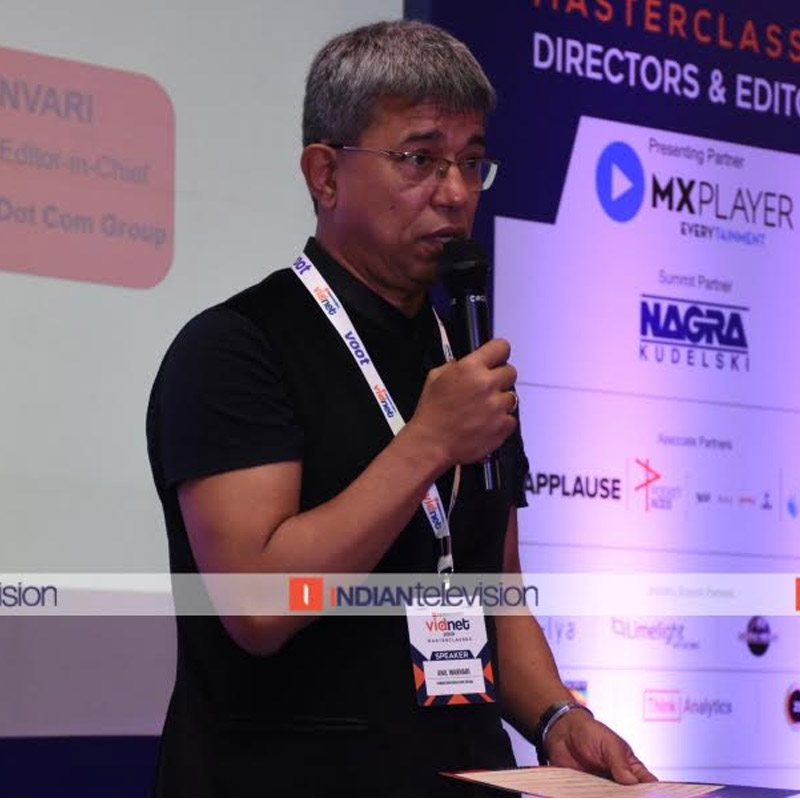
MUMBAI: Indiantelevision.com’s Vidnet 2019, for the first time, conducted Masterclasses for aspiring directors and editors of the OTT space. Masterclasses brought directors and editors of successful series like Ghoul, Gullak, Rangbaaz, Kota Factory, It’s Not That Simple, Criminal Justice and Delhi Crime to share their experiences and learning as creators.
The initiative is an attempt to help the audience learn from the OTT industry’s best creators on creating successful web series. In the opening remark, Indiatelevision.com founder and CEO Anil Wanvari said, “This is the first time that we have organised Masterclasses and our vision is to create a platform and to build a community for aspiring creators."
The first Masterclass was held by the makers of Netflix’s Ghoul. Creator, writer and director Patrick Graham shared insights on the process of making Ghoul which was initially written as a film and later converted to three-episode original premium content for Netflix. Graham also revealed that he took six months to write and research on the script of Ghoul and the post-production took three to four months. He said that horror is the most untapped genre in India and the concept of military horror was never attempted. Ghoul editor Nitin Baid briefed the audience on how he started working on the psychological horror-thriller and his experience while working with Graham on the project.
The next Masterclass was conducted by Sachin Pathak, director of Rangbaaz S-2 who shared his experience on how he started his journey in the industry and how he got the opportunity to direct Rangbaaz S-2 for ZEE5. Pathak said that experience is the best teacher on shooting-related challenges.
Another interesting Masterclass was on SonyLIV’s Gullak. Amrit Raj Gupta who directed Gullak began his journey in 2013 as an intern in TVF. He also directed TVF Bachelors season one and two. Amit Kulkarni editor of Gullak, Tripling S-2 and TVF Bachelors shared his two pence with the audiences. The duo said that the major challenge while creating content for OTT is to deliver satisfactory shots within a limited time span.
Kota Factory director Raghav Subbu and editor Gourav Gopal Jha enlightened the audience on their recent success. TVF's Kota Factory premiered on YouTube this year and the show grabbed attention for being the first black and white web series. Subbu revealed that the idea of doing black and white web series hit him two weeks before the shoot and the team was slightly sceptical about it. They shot the show with two cameras- one for black and white series and another for colour series so that they have a backup if the concept didn’t work. They also explained motives behind having excessive aerial shots in the show and creating characters which resonate with the viewers. Subbu said that it is the responsibility of the director to turn the script into live characters on the screen. He said, “I follow the thought which says there is no good or bad film, there is a good or bad director and I come from that school. It’s important that the association with the script and directors works well.”
At the Masterclass, Danish Aslam who directed It’s Not That Simple for VOOT touched the practical aspect of directing a show for an OTT platform. He explained the differences between shooting a film and a web series. He said, “The storytelling format is a crucial differentiating factor – episodic versus long-form storytelling. India has more daily soaps which stretch beyond 100 episodes. The concept of seasons is completely new in our country.”
Aslam also explained how to keep the spark alive between episodes. He also gave some examples from his experience in addressing the challenges one faces while working on the limited budget and time constraints on OTT platforms.
Vishal Furia, director of Criminal Justice and Lapachhapi, a Marathi Film, threw light on the concept and making of Criminal Justice and the research he conducted to bring the actual story from paper to screen. He too commented that the horror genre is not so evolved in India.
The last and the most interesting Masterclass was taken by Delhi Crime’s writer, director and creator Richie Mehta who informed that he took four years to research on the subject and connected with most of the characters to understand their views. Mehta answered the audience's questions like how much fiction was added to the show, realism of the scene, deciding the point to start and stop the story, and psychological impact while researching and writing for Delhi Crime.