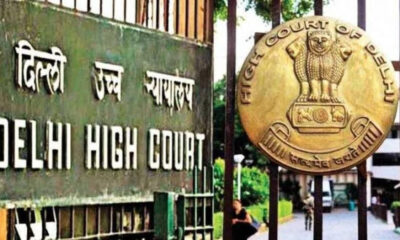
High Court
Orders on Red FM participation in Phase III e-auction on 26 July; Delhi HC stresses incongruity


NEW DELHI: The Delhi High Court, which had earlier permitted Digital Radio Broadcasting Ltd that runs Red FM to take part in the mock e-auction, today reserved its orders on the application for taking part in the main e-auction for FM Phase III commencing on 27 July.
In view of the urgency of the matter, Justices Badar Durrez Ahmed and Sanjeev Sachdeva said they would pronounce the order tomorrow (26 July) at 11.30 am.
Before reserving its orders, the court heard Red FM counsel Kapil Sibal for Red FM and Government standing counsel Sanjiv Narula.
It was pointed out by Sibal that the Madras High Court had already permitted three sister companies to take part in the main e-auction. However, Narula said the Madras High Court’s single judge order was not binding upon the division bench of Delhi High Court.
In a brief hearing yesterday, which could not be concluded as the Red FM counsel was not present in view of the lawyers’ strike, the Court had termed as “incongruent” the denial of security clearance to Red FM to participate in the Stage III FM auction due to its association with the Sun TV Group, while Madras High Court had allowed it to take part.
The bench said while the Madras HC has allowed the Sun TV Group to participate in the auction, the Centre has denied the same relief to Digital Radio Broadcasting Ltd, due to its association with the Maran-run group.
The Madras High Court while passing orders on 23 July asked that the results of the auction be kept in a sealed cover till further orders and said that it would be subject to the result of the main writ petition filed by the group, which has sought a direction to quash the order passed by the Information and Broadcasting Ministry.
The Ministry had filed an affidavit in the Delhi High Court stating that Red FM’s plea for security clearance to participate in stage III of FM auctions was not maintainable as it is seeking judicial review of a ‘policy decision.’
Earlier on 22 July, the Delhi High Court had allowed Red FM to take part in mock auctions for the third phase of e-auctions after Narula told the Court that it was not possible for the Ministry to postpone the main FM auctions. He said the entire process had been lined and any postponement will have a cascading effect.
Red FM is among the prime bidders in the phase III of FM auctions covering 135 radio channels in 69 cities.
The Ministry had last week issued a list of 21 bidders, which did not include the Group’s Red FM, and then sent a formal communication to the Group on 15 July that it had been denied permission.
Red FM has pleaded to the Court that the Centre should permit Sun Group to migrate to the Phase-III regime by allowing it to resubmit the application of 20 March 2015 to participate in the e-auction.
The petitions also said the company was not involved in any dispute with the nation’s security, nor had it broadcast anything that affected the security of the nation.
Apart from the denial to participate in Phase III FM auctions, the order also implied that the sister companies of the Sun Group would be compelled to close down FM radio stations, totalling 45 across the nation, the petitioners said.