iWorld
Olympic Gold Quest and Twitter together share the journey of Indian Olympians


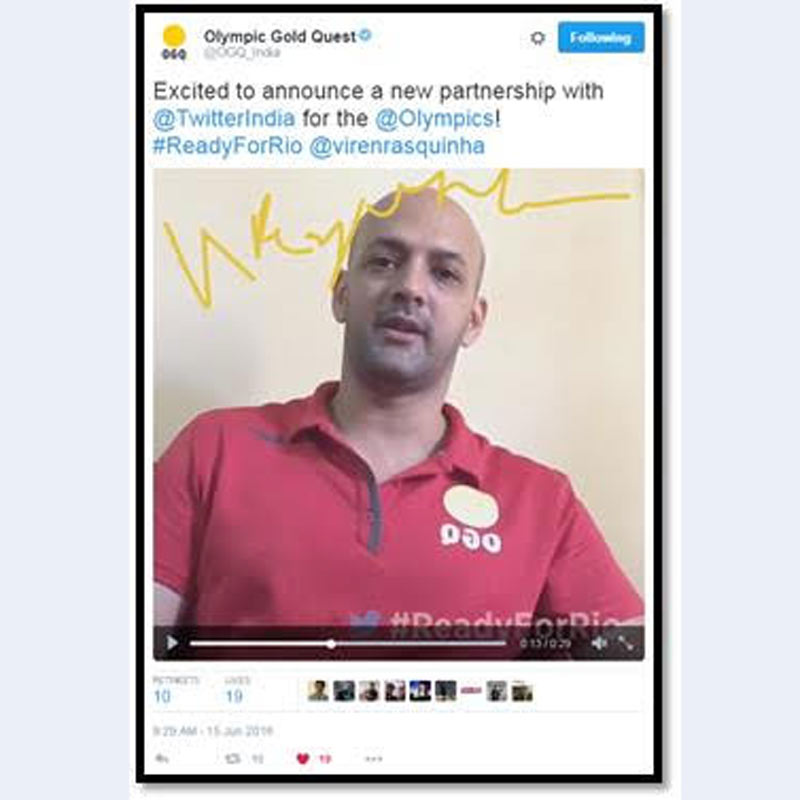
MUMBAI: Olympic Gold Quest, a not-for-profit foundation supporting the training and preparation of India’s top athletes, has joined forces with Twitter to let Indian fans be part of journey with the Olympians and Olympic sports they support. Throughout the lead up to, during and after the Rio Olympics, Indian fans will be able to immerse themselves in the Rio experiences of their favourite Olympians across Twitter, Vine and Periscope
#ReadyForRio Periscope Series
Starting 23 June, Olympic Gold Quest will be taking fans into the world of Indian Olympics with a regular #ReadyForRio Periscope series from the Twitter India Blue Room leading up to the Games and from Rio during the Olympics, where Viren Rasquinha will host Twitter chats with athletes and other guests.
#KnowYourStar Video Series with Athletes
Athletes supported by Olympic Gold Quest will be answering fun and interesting questions in a rapid fire video quiz series on Twitter.
#TrainWithOGQ on Vine
The Olympic Gold Quest Vine account will take fans into the inside world of Indian Olympic training with a regular series of six second Vine videos. These looping videos will highlight the Olympian training experience like never before, from the intensity of athlete training to the fun behind-the-scene moments.
Olympians on Twitter
Each of the athletes supported by Olympic Gold Quest be active on Twitter in the lead up to the Olympics. Fans can follow their journey by subscribing to this Twitter List that also includes the accounts of the Olympic Gold Quest founders, board, management and more.
Olympic Gold Quest CEO Viren Rasquinha said, “Our mission is to build a movement for Olympic sports in India. We are excited to partner with Twitter to ensure that well-wishers of Indian Olympics anywhere in the world will have the best access to the team with interactive video experiences.”
Twitter head of sports partnerships Aneesh Madani said, “Twitter has democratized sport and is the best place for fans to see what’s happening in the lead up to the Olympics. There has been a 400 percent growth in video consumption across Twitter, Vine and Periscope over the past year and Olympic Gold Quest’s commitment to bringing the story of Indian Olympians to life with Twitter video is great to see.”