Broadband
Obama wants FCC to remove roadblocks on internet, private sector disagrees
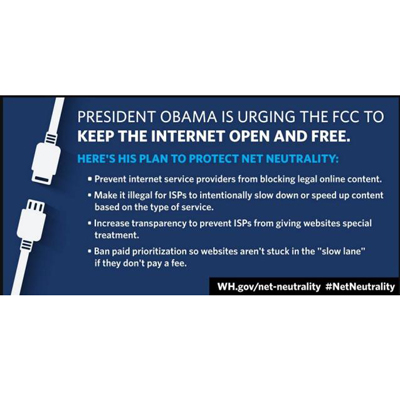
NEW DELHI: President Barack Obama has urged the American telecom regulator Federal Communications Commission (FCC) to keep the internet open and free.
But this plea will give a blow to top US wireless carriers who are looking to control price and quality of internet services.
The FCC is already in the process of considering new rules for how to safeguard competition and user choice. “Ensuring a free and open internet is the only way we can preserve the internet’s power to connect our world,” Obama said.
“We cannot allow internet service providers (ISPs) to restrict the best access or to pick winners and losers in the online marketplace for services and ideas. I am asking the FCC to answer the call of 4 million public comments, and implement the strongest possible rules to protect net neutrality,” said Obama.
However, the Telecommunications Industry Association (TIA), an association representing the manufacturers and suppliers of high-tech communications networks, said: “We are concerned over President Obama’s endorsement of reclassifying the internet as a Title II utility-like telecom service. Such a move would set the industry back decades, and threaten the private sector investment that is critically needed to ensure that the network can meet surging demand.”
“We saw a significant negative impact on investment the last time restrictive Title II regulation was in place, and no one will benefit from returning to that failed policy. As manufacturers and suppliers who build the internet backbone and supply the devices and services that ride over it, our companies strongly urge regulators to refrain from reclassification that will guarantee harm to consumers, the economy, and the very technologies we’re trying to protect,” said TIA CEO Scott Belcher.
Four years ago, the FCC tried to implement rules that would protect net neutrality with little to no impact on the telecommunications companies that make important investments in the economy.
Earlier, the court reviewing the rules agreed with the FCC that net neutrality was essential for preserving an environment that encourages new investment in the network. The court ultimately struck down the rules because it believed the FCC had taken the wrong legal approach.
Obama said there should be no blocking and throttling by ISPs. There should be more increased transparency. Some sites should not get more treatment.
Some companies should not enjoy paid prioritisation. Wireless carriers should not keep some services in “slow lane” because it does not pay a fee. “That kind of gatekeeping would undermine the level playing field essential to the internet’s growth. I am asking for an explicit ban on paid prioritisation and any other restriction that has a similar effect,” Obama said. FCC should reclassify consumer broadband service under Title II of the Telecommunications Act — while at the same time forbearing from rate regulation and other provisions less relevant to broadband services.
Referring to the White House proposal, AT&T senior executive VP, external & legislative affairs Jim Cicconi said, “If the FCC puts such rules in place, we would expect to participate in a legal challenge to such action.”
Time Warner Cable, a top cable company, remains committed to an open internet, but disagrees with President Obama’s statement that an open internet can only be achieved by reclassifying broadband as a public utility.
“Regulating broadband service under Title II, as the President proposes, will create uncertainty, lead to years of litigation and threaten the continued growth and development of the internet. The FCC has sufficient tools without reclassifying broadband to protect the openness of the internet, while at the same time encouraging continued investment and innovation in the internet ecosystem,” said Time Warner Cable chairman and CEO Rob Marcus.

Broadband
Tejas Networks names Arnob Roy as MD and CEO, overhauls top leadership team
The Bengaluru-based telecom gear maker reshuffles its entire top team even as quarterly revenue collapses by 83 per cent
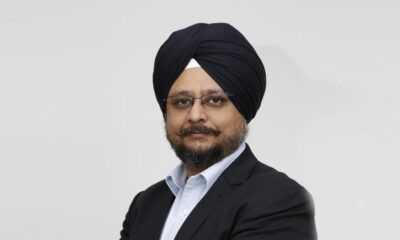
BENGALURU: Tejas Networks is changing the guard at the top, and doing so at speed. The Bengaluru-headquartered telecom equipment maker has elevated Arnob Roy as managing director and chief executive officer, effective April 15, 2026, for a term running through to August 3, 2028, and in the same breath announced new appointments across operations and finance. The timing is pointed: the company is navigating one of the roughest patches in its recent history.
Roy steps up from his role as executive director and chief operating officer, a position he has held since March 2019. He brings more than three decades of experience in the high-technology sector across research and development, operations, and sales. His predecessor, Anand Athreya, resigned last year citing personal reasons and was relieved on June 20, 2025, leaving a gap at the top that has now been formally filled.
The numbers Roy inherits are sobering. Tejas posted a net loss of Rs 211.3 crore in the fourth quarter of fiscal year 2026, a near-194 per cent widening year on year from Rs 71.8 crore in the same period a year earlier. Revenue for the quarter collapsed 82.6 per cent year on year to Rs 333 crore, down from Rs 1,907 crore. EBITDA swung to a loss of Rs 118.2 crore against a profit of Rs 121.5 crore a year ago. The culprit is not hard to identify: Tejas has derived the bulk of its revenue from BSNL’s fourth-generation network project, delivered as part of a Tata Consultancy Services-driven consortium, and that roll-out is now winding down.
Roy, speaking during a post-earnings conference call with analysts, was candid about where the company has been. “The BSNL 4G network went live across 100,000 sites. We deployed our largest indigenous router networks in the country through the BSNL MAN network, as well as in the BharatNet Phase 3 network,” he said, adding that Tejas had also successfully rolled out its 400G and 800G DWDM equipment in domestic and international markets, and continued the deployment of what it describes as the world’s largest satellite IoT network through its vehicle tracking system solution.
The pivot to new revenue streams is already under way. Tejas has partnered with Japan’s Rakuten Symphony and NEC Corporation to push deeper into international markets, with several Open Radio Access Network trials ongoing, one of which concluded recently. The company is also diversifying across equipment categories and geographies to sustain momentum as the BSNL chapter closes.
To prosecute that strategy, Roy needs a full team around him. Preetham Uthaiah has been appointed chief operating officer, moving up from his current role as vice president of product management for wireless products at Tejas Networks. Uthaiah brings nearly 30 years of global experience spanning engineering, product management, and business development across India and the United States. Before joining Tejas Networks, he served as executive vice president of product management, marketing, and strategy at Saankhya Labs, and held senior roles at Tech Mahindra on both sides of the Atlantic. He holds an MBA from Arizona State University and a degree in electronics and communications from Karnatak University.
On the finance front, AVS Prasad has been approved as chief financial officer, effective May 16, 2026, succeeding Sumit Dhingra, who has resigned. Prasad, currently serving as finance controller at Tejas Networks, brings over 27 years of experience within the Tata Group across telecom, aerostructures, and defence. A company secretary and cost and management accountant by training, he has spent more than 15 years in senior finance roles including CFO and financial controller positions, with expertise spanning corporate finance, treasury management, regulatory compliance, internal audit, and governance.
New chief executive, new chief operating officer, new chief financial officer — all installed in a single move, at a moment when the company’s largest revenue source is drying up and the next chapter remains unwritten. Tejas Networks has placed its bets. Now it has to deliver.