DTH
Now Dish TV opts to dish out channel reach data

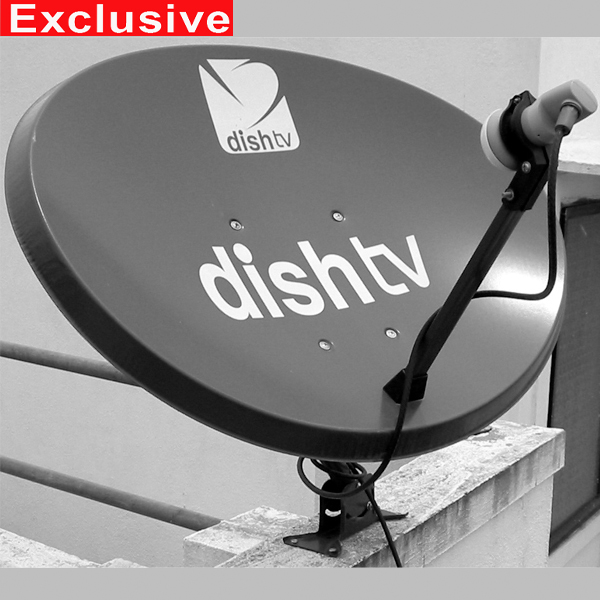
MUMBAI: It is taking transparency and openness to a totally different level. First it prised open the bundled channels that IndiaCast was offering and it started selling them to subscribers a la carte. Now, India’s oldest DTH operator, Dish TV,with a subscriber base of nearly 12 million says that it is planning to open up crucial subscriber information to media agencies and advertisers.
The DTH provider says it is looking at providing reach data of various channels on its platform every month to advertisers and media buyers from February 2014 onwards to enhance their understanding of how viewers are watching it. The data which is scheduled to be released in February will be for the month of January.

“We have been approached by media planners and advertisers often to share our data to enable them to get a better handle on the performance of various channels and since this data is universe data and not based on a small sample, it could prove to be a very valuable addition to the existing published data for eg from TAM and or other rating agencies,” says Dish TV CEO RC Venkateish.
The data given out will be as percentages. “We would provide the reach of each channel as a percentage of the total platform reach. So if a particular channel is in all packs it would reach 100 per cent of the platform, however if it is only in the top tier pack or is an a la carte then the reach would obviously be a fraction of the platform reach,” adds Venkateish. This means that if channel X is available in two packs whose subscriber base put together is 3 million that means its reach will be 25 per cent.
Media planners have welcomed Dish TV’s openness with open arms. Madison Media COO Karthik Lakshminarayanan says: “It is a welcome move for advertisers. The data will be more robust and it will also help us in planning and taking better decisions. We will be aware of the strong markets of Dish TV and if our client wants then they can advertise on its landing pages.” He also added that it could also help Dish TV to rake in more revenue.
On the other hand ZenithOptimedia CEO Satyajit Sen has a slightly different point of view. Although he does agree that the move is a good one, he feels it won’t help Dish TV get more revenue neither will it help in targeting better for advertisers. “Several times, channels oscillate due to uneven distribution and this transparency will help us understand the fluctuations better,” he says.
In November last year, the daddy of the DTH community had introduced a special scheme called ‘on request channels’ through which people could subscribe to channels only if they wanted to, and remove unnecessary ones. This had started a round of fisticuffs between it and IndiaCast, which was renewing its channel deal with the platform. Both IndiaCast and Dish TV knocked on the doors of the Telecom Disputes Settlement Appellate Tribunal (TDSAT).The latter was ordered by the tribunal not to charge carriage fees and even call the scheme a la carte, while the former was told to discontinue the ads that were being carried on TV and in print, which were potentially inciting subscribers to go to other platforms. From 1 January, 22 IndiaCast channels are available on a la carte on Dish TV and another 11 will follow from 1 April.
RC (as he is known by colleagues) today believes that the move to take the channels a la carte has worked out exactly as he had foreseen it would.
Says he quite ecstatically: “Our recent initiative to empower consumers to avail channels according to their demand profile has been eye opening. The results so far have been fully consistent with our expectations and reinforce our beliefs that through the mechanism of forced bundling by aggregators a whole lot of channels with barely any pull are forced down the throats of platforms as well as consumers. Where true consumer choice is exercised you will find that the data is very revealing! In a way, despite valiant noises, the emperor isn’t wearing too many clothes!!!”
So what do broadcasters have to say about Dish TV’s openness? ZMCL CEO Alok Agrawal says that the move will benefit niche channels the most since TAM data provided about them isn’t always sufficient. However, Asianet business head Anup Chandrashekaran feels that one has to be cautious about any data dished out. “Dish TV also has ownership issues and so it is important to know how unbiased the data is. However, it is still a fraction of a majority and decisions can’t be taken on this data. It can be a good feedback though,” he says.
Dish TV is a subsidiary company of the Essel group that runs the Zee Network, hence Chandrashekaran’s concern.






DTH
Prasar Bharati’s WAVES earns Rs 2.9 crore in first year
Platform scales content, users but monetisation gaps limit revenue growth.
MUMBAI: Big waves, small ripples at least for now. When Prasar Bharati launched its OTT platform WAVES at the 55th International Film Festival of India in November 2024, it pitched a bold vision: a homegrown rival to global and domestic streaming giants, blending video, audio, gaming and commerce into a single digital ecosystem. Five months into FY2024–25, however, the platform’s revenue stands at just Rs 2.90 crore, a figure that underscores the gap between ambition and monetisation.
On paper, WAVES looks anything but modest. The platform has ingested 13,608 titles, totalling 9,495 hours of content, with over 13,000 titles already live. It has streamed more than 575 live events from the Mahakumbh Amrit Snan and the 76th Republic Day parade to the Hockey India League, Kabaddi World Cup and Mann Ki Baat while offering 74 live TV channels and 12 radio channels. With over 10 lakh registered users and more than 200 content partners onboarded, the scale resembles that of a fully operational streaming service rather than a pilot project.
The architecture supporting this scale is equally robust. Built under Prasar Bharati’s Central Archives vertical, WAVES runs on a cloud-based infrastructure with DRM, encryption and an integrated analytics dashboard. It includes dedicated units for content ingestion, quality control, publishing, graphics, marketing and billing, and is distributed across platforms such as OTTplay, Tata Play and BSNL. The offering extends beyond video to include audio-on-demand, e-games and even e-commerce via ONDC integration.
Yet, the numbers reveal a core disconnect. Despite its scale, WAVES generated just Rs 2.90 crore in a market where India’s OTT industry crossed Rs 23,000 crore in 2024. A key bottleneck lies in monetisation infrastructure: subscriptions cannot currently be purchased within the app and must be completed via an external website. In a mobile-first country where over 95 per cent of OTT consumption happens on smartphones, this extra step creates friction that most users are unlikely to overcome.
Ironically, content is not the problem, it is the platform’s biggest strength. Prasar Bharati holds one of the world’s richest broadcast archives, including 45,154 hours of digitised Akashvani programming and 35,723 hours from Doordarshan. For WAVES alone, over 3,800 hours of archival content have been made OTT-ready, including classics such as Ramayan and Shaktimaan, alongside rare cultural recordings and historical broadcasts.
There are early signs that this library holds commercial potential. Revenue from archival content licensing rose sharply to Rs 3.38 crore in FY24, up from Rs 67 lakh the previous year. Meanwhile, free digital platforms continue to drive massive reach, the PB Archives Youtube channel clocked 119.78 million views and added 4,02,000 subscribers in FY2024–25, crossing 1.7 million in total, while DD News has over 5.84 million subscribers.
That, however, presents a strategic dilemma. While free distribution builds scale, it also conditions audiences to expect content at zero cost making it harder to transition to paid models. WAVES, designed as a hybrid AVOD-SVOD platform with advertising and subscription layers, is yet to fully crack this balance.
The broader challenge is not technological but strategic. In an ecosystem dominated by platforms offering seamless payments, aggressive pricing and high-budget originals, WAVES is still bridging the gap between being a content repository and a commercially viable product.
For now, the platform reflects both promise and paradox. It has the scale, the content and the infrastructure but until monetisation catches up, WAVES remains less a revenue engine and more a digital showcase of what India’s public broadcaster could become.






