News Headline
No compete, no capital SC draws the tax line on non compete fees
Supreme Court rules non compete payments are revenue spend, not capital assets.


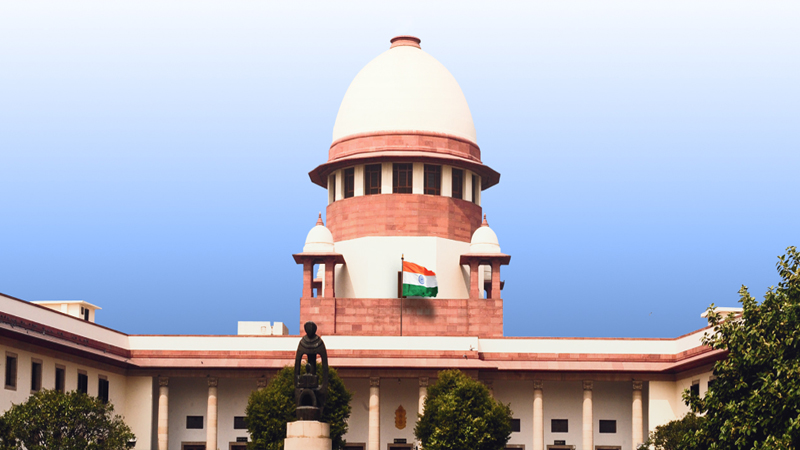
MUMBAI: When competition steps aside, the taxman must too at least in this case. In a significant ruling that redraws the tax treatment of business restraints, the Supreme Court of India has held that payments made towards non-compete agreements qualify as revenue expenditure and are deductible under Section 37(1) of the Income-tax Act, 1961.
The verdict came in Sharp Business System vs Commissioner of Income Tax, a lead matter decided alongside a clutch of appeals raising identical questions of law. The case stemmed from a payment of Rs 3 crore made by Sharp Business System to Larsen & Toubro Limited, under which L&T agreed not to enter or assist any competing electronic office products business in India for seven years.
At the heart of the dispute was whether such a non-compete fee creates a capital asset or merely smoothens the path for business operations. Tax authorities had argued that the payment yielded an “enduring benefit” and therefore belonged in the capital field, warranting depreciation at best. Sharp, however, maintained that the payment neither created a new asset nor expanded its profit-making apparatus, but only protected its business from potential competition.
The Supreme Court sided with the taxpayer. It ruled that a non-compete fee is fundamentally a commercial tool to facilitate business efficiency, not a means to acquire ownership rights or monopoly power. Merely keeping a rival out, the Court observed, does not amount to creating a capital asset especially when there is no certainty that the expected commercial benefit will even materialise.
Crucially, the Court reiterated that the test of “enduring benefit” is not decisive by itself. If an expense helps a business operate more profitably without altering its fixed capital structure, it remains revenue in nature regardless of how long the advantage may last.
By overturning the earlier Delhi High Court ruling, the apex court clarified that non-compete payments do not automatically fall within the scope of depreciable intangible assets either. A negative covenant, the Court noted, is not a right that can be “owned” or “used” in the manner envisaged under Section 32 of the Act.
For corporates, the ruling lands as a welcome relief. It brings long-awaited clarity to the tax treatment of non-compete fees, an area that has fuelled years of litigation particularly in mergers, joint ventures and strategic exits. More importantly, it aligns tax law with commercial reality, where such payments are often defensive moves rather than asset-building investments.
In short, the Supreme Court has made it clear, keeping competition at bay may be smart business but it doesn’t make it capital.