iWorld
News9 Plus special investigation reveals shockingly high lead contamination in vegetables from Yamuna Floodplains

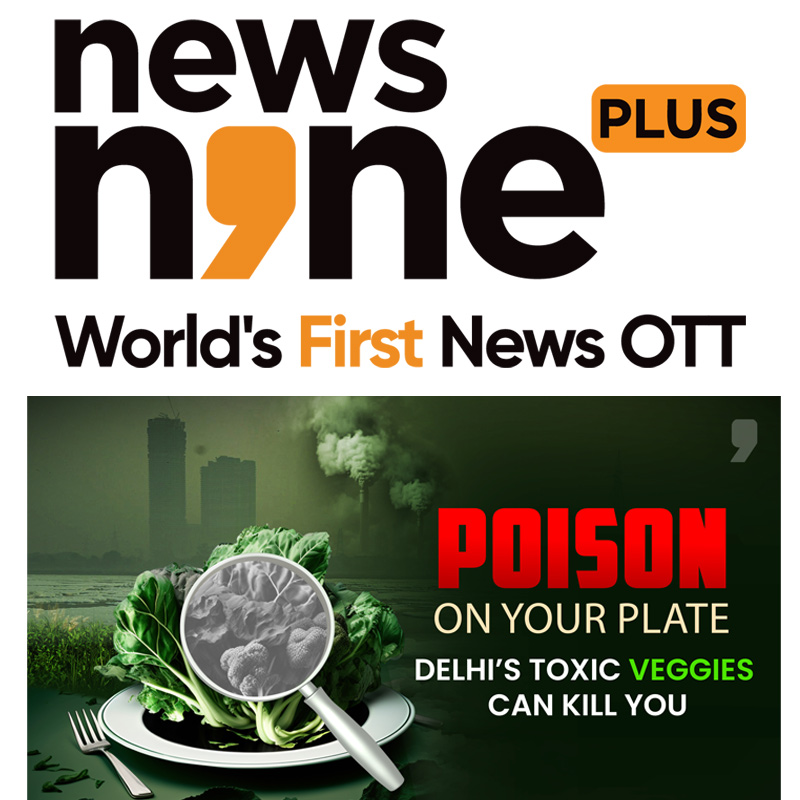
Mumbai: News9 Plus, the world’s first and only news OTT platform, has conducted an in-depth investigation to uncover alarming levels of lead contamination in vegetables sourced from the Yamuna floodplains. The story, which is now available exclusively on the News9 Plus OTT platform, raises serious concerns about the health risks associated with the consumption of these toxic vegetables, particularly for children.
The Yamuna River, spanning 52 kilometres in Delhi, houses a highly polluted stretch of 22 kilometres, extending from the Wazirabad barrage to the Kalindi Kunj barrage. Local farmers cultivate vegetables on these floodplains, utilising the Yamuna water for irrigation. Unfortunately, this practice has led to the vegetables becoming laden with toxins, including lead, a slow poison. These vegetables could make their way from the toxic floodplains to the kitchens.
Following the ground-breaking story ‘White Froth, Black Truth’, which the team uncovered in 2022, that shed light on the alarming pollution levels in the Yamuna River, News9 Plus took a step further by conducting an extensive investigation to assess the impact of this pollution on the lives of over one crore people residing in the vicinity.
To delve deeper into the subject, Nivriti Mohan of News9 Plus, the journalist uncovering the reality of the food on our plate, along with experts collected vegetable samples from the Yamuna floodplains as well as local markets and subjected them to rigorous lab testing for heavy metal contamination.
Speaking about the tests conducted at Delhi Test House, Suman Jha, the Quality Manager, highlighted the concerning results, stating, “Disturbingly, a significant 23% of the samples tested revealed shockingly high levels of lead (Pb) contamination, surpassing the permissible limit of 2.5mg/kg set by the Food Safety and Standards Authority of India. In certain cases, the concentration of lead was found to be four times higher than the approved limit.”
Disturbingly, 66 per cent of the samples with high lead contamination originated from two locations on the Yamuna floodplains: Yamuna Bank Khadar and Sarai Kale Khan. Additionally, 34 per cent of the failed samples were obtained from local markets, all of which comprised green leafy vegetables. This suggests that due to their perishable nature, locally grown vegetables from the floodplains are being supplied to the local markets without the requisite scrutiny.
The investigation features ground reportage and expert analysis by environmentalists, scientists, medical health experts, and researchers. Contributors include Chandra Bhushan, President and CEO of iForest, Diwan Singh, an Environment and Yamuna Activist, Dr. CS Seth, Assistant Professor at the Department of Botany, DU, Piyush Mohapatra, Sr. Programme Coordinator at Toxics Link, Dr Rahul Bhargava, Haematologist at Fortis Hospital Gurugram, Dr Sonia Lal Gupta, Neurologist at Metro Group of Hospitals, Dr Ajit Saxena, Paediatrician, and Dr Anshuman Kumar, Chief Cancer Surgeon at Dharmashila Narayana Superspeciality Hospital.
The perspectives of local vendors and farmers have also been included in the analysis. The investigation has sought input from institutions like The Energy and Resources Institute to provide a comprehensive understanding of the issue.
The implications of this contamination are grave, especially for children who are most vulnerable to lead poisoning. Paediatricians and neurologists emphasise the potential long-term consequences, such as impaired cognitive skills, stunted growth, and even seizures or coma in extreme cases. Lead exposure in adults can lead to behavioural changes, lethargy, fatigue, memory issues, and more serious health problems, including various cancers.
Going forward, the investigation also offers a few solutions as suggested by these experts.
The alarming findings of the News9 Plus special investigation serve as a wake-up call for authorities, farmers, and consumers alike to take urgent action to safeguard public health and ensure the availability of uncontaminated vegetables in the market.






