iWorld
Netflix turns up the volume on margins and Warner Bros

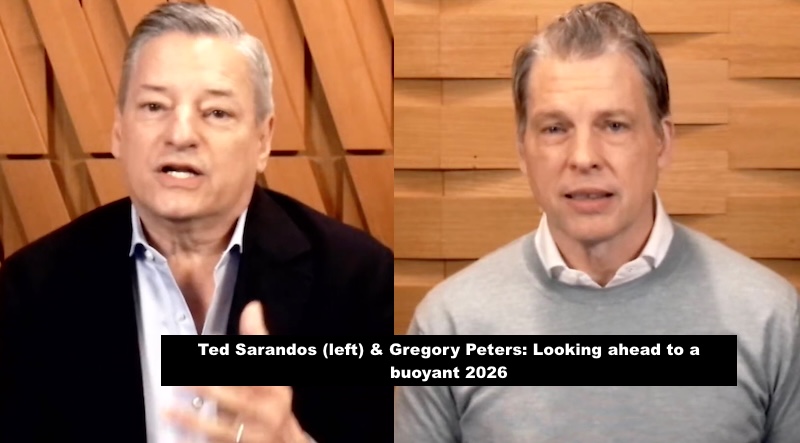
LOS ANGELES: Netflix has stopped apologising. The company that once dismissed advertising, theatrical releases and live sports with the zeal of a reformed smoker is now embracing all three—and throwing in a $50 billion acquisition for good measure. On 20 January, co-chief executives Gregory Peters and Theodore Sarandos laid out a vision that would make even the most acquisitive media mogul blush, during an investor conference call.
The numbers are intoxicating. Revenue hit 16 per cent growth in 2025, with operating profit surging 30 per cent. The streaming behemoth is guiding towards $51 billion in revenue for 2026—a 14 per cent jump—with operating margins stretching to 31.5 per cent. Free cash flow? A cool $6 billion, thank you very much. All while the company barely registers 10 per cent of television time in its major markets. There’s still blood in the water.
But the real plot twist is advertising. Netflix’s ad business, launched a mere 18 months ago, brought in 2.5 times more revenue in 2025 than the year before. Management expects it to double again in 2026, reaching roughly $3 billion. That’s not yet “primary” enough to move the needle on a $51 billion business, but it’s gaining momentum faster than a Bridgerton plot turn.

Then there’s the Warner Bros Studios and HBO acquisition—described by management as a “strategic accelerant”, which is corporate speak for “we want it badly but we’ll pretend we’re being prudent.”
The pending deal will add a century of intellectual property, a theatrical distribution engine pulling in $4 billion of global box office, and HBO’s prestige brand. Sarandos was refreshingly blunt about the company’s theatrical volte-face: “This is a business and not a religion.” Translation: we were wrong, we’ve changed our minds, and we’re not sorry about it.
The acquisition will see 85 per cent of the combined company’s revenue still flowing from Netflix’s current core business. Warner Bros films will continue their 45-day theatrical window, a compromise that would have been heresy at Netflix five years ago. Sarandos insisted the deal is “pro-consumer, pro-innovation, pro-worker, pro-creator, and pro-growth”—essentially pro-everything except perhaps pro-competition authorities, who are currently scrutinising the merger.

Live events are multiplying like rabbits. Netflix has executed over 200 live events, from Chris Rock specials to Formula One drivers playing golf with professional golfers, to the epic roast of Tom Brady. Coming attractions include a hot-dog-eating grudge match (yes, really), a Mike Tyson versus Jake Paul boxing bout, two NFL games on Christmas Day, and weekly WWE coverage. India is now the number two and number three country for paid net additions and revenue growth respectively. The company’s global content machine is humming.
Gaming and podcasts represent the next frontier. The cloud-first gaming strategy is expanding to televisions, with party games like Boggle showing “strong uptake.” Video podcasts launched this month, positioning Netflix as a modern talk-show platform with “hundreds” of shows rather than a single broad one. These are small bets for now—representing “a relatively small portion of total view hours”—but Netflix has a track record of starting small and scaling fast.
The company’s proprietary ad-tech stack is now fully operational, enabling new formats, interactive capabilities and better monetisation. Ad-supported plan revenue per member remains below ad-free tiers, but that gap is closing. Management sees this as an opportunity rather than a problem: more room to grow means more revenue upside.
Content spending will hit $17 billion in 2026, growing slower than revenue—a deliberate strategy to expand margins whilst competitors bleed cash. Netflix has secured global licensing deals with Sony (a first-of-its-kind global pay-one window), expanded its Universal partnership, and added Paramount’s slate. The content amortisation is forecast to grow roughly 10 per cent year-on-year, with the slate more evenly distributed across quarters compared with 2025’s back-heavy schedule.
Engagement remains the obsession. Total view hours grew two per cent in 2025, with branded originals up nine per cent in the second half. Management’s “primary quality metric” hit an all-time high—corporate jargon for “our shows are bloody good.”

Churn improved year-on-year, retention is “among the best in the industry,” and customer satisfaction is at record levels. Peters was careful to note that “all hours of engagement are not the same”: an hour of Stranger Things fandom is worth more than an hour of background viewing.
The basic tier is being phased out, with members migrated to higher-value plans. In the United States, that means a $6.99 ad-supported tier with two streams, higher definition and downloads—or ad-free standard and premium options. The company’s confidence in rolling this out to the US and France signals the migration is working.
YouTube remains the elephant in the room. Together, Netflix and YouTube command about 50 per cent of streaming to televisions in America. But Sarandos isn’t sweating the competition: “We’re focused on that other 80 per cent of total TV time.”
The two services feed each other, with Netflix trailers and behind-the-scenes content proving wildly popular on YouTube. Besides, YouTube’s model can’t support the big creative bets— Stranger Things, Wednesday, Bridgerton—that define Netflix’s offering.
The regulatory approval process for Warner Bros looms large. Management expressed confidence, citing the deal’s vertical nature (Netflix doesn’t currently operate theatrical distribution or a television studio) and the hyper-competitive media landscape.
Sarandos pointed out that the BBC is producing original content for YouTube, Instagram is “coming next” for television, and the Oscars now air on YouTube. “TV is not what we grew up on,” he said. “TV is now just about everything.”
The 2026 content slate is predictably stuffed: Bridgerton season four, One Piece season two, The Night Agent season three, the Stranger Things finale, and Greta Gerwig’s Narnia. There’s a Peaky Blinders film, a heist caper with Denzel Washington and Robert Pattinson, and Charlize Theron in Apex. Sarandos promised “a bunch of surprises” on top of that lot.
Netflix’s transformation from DVD-by-mail upstart to global entertainment colossus is nearly complete. The company that revolutionised binge-watching is now muscling into live events, theatre chains, advertising, gaming and podcasts. It’s acquiring HBO—perhaps the only brand with more prestige cachet than Netflix itself—and doing it whilst expanding margins and printing cash.
Peters summed it up neatly: Netflix still represents just seven per cent of the addressable market for consumer and advertising spend. “Tons of room ahead of us,” he said.
With $51 billion in revenue on the horizon, a billion viewers approaching, and Warner Bros in the bag, Netflix isn’t just streaming entertainment anymore. It’s becoming entertainment itself. The only question left is whether regulators will let them finish the show.




iWorld
Parineeti Chopra hosts new parenting series Mom Talks on Zee5 and Bullet
Celebrity parents share honest stories in 9-episode show launching 4 April 2026.

MUMBAI: Parineeti Chopra is stepping into a brand-new role not on the big screen, but as the warm, relatable host helping parents navigate the beautiful chaos of raising children. Bullet microdrama and Zee5 have announced the launch of Mom Talks, a fresh content-led IP hosted by the popular actress. The 9-episode series brings together celebrity parents including Imran Khan, Neha Dhupia, Vikrant Massey & Sheetal, and Gauahar Khan & Zaid Darbar to share candid, real-life perspectives on everyday parenting.
Positioned as a high-engagement format, Mom Talks taps into the growing demand for authentic and credible parenting content. It also offers seamless, contextual integration opportunities for brands. The series is backed by a strong lineup of partners including Johnson’s Baby, GSK, Aveeno Baby, Mini Klub, Titan Eye+ and Cordelia Cruises.
Bullet microdrama app, co-founder & chief business officer Azim Lalani said the show exemplifies how content is evolving towards more rooted, sustained engagement. “It’s about bringing content that people come back to, while creating a natural space for brands to be part of the narrative,” he noted.
Mom Talks creator Bullet head of AVOD & partnerships Munaf Merchant explained the core idea, “We wanted to build a safe, honest, one-stop destination for parents seeking real answers to everyday questions.”
The first episodes will stream for free on ee5 AVOD starting 4 April 2026, with new episodes dropping every Friday and Saturday. The series will also be available on the Bullet microdrama app.
Speaking about their association, Peeyush Unikkat from Johnson’s Baby highlighted the brand’s focus on supporting modern parenting journeys, while Aakash Mehta from GSK emphasised the show’s role in making important health conversations more relatable for new parents.
In a digital space often filled with filtered perfection, Mom Talks promises something refreshingly real honest conversations, celebrity insights, and practical wisdom, all wrapped in Parineeti Chopra’s engaging presence. For Indian parents, this could be the parenting series they’ve been waiting to binge.






