iWorld
Netflix confirms seven million subs; picks up Amazon gauntlet

MUMBAI: For all those media watchers who have been writing Netflix’s obituary in India, here’s a note of caution: take a few steps back, hold on to your fingers before banging in any other words on your keyboards. The global streaming services has come back with some smashing numbers in the latest quarter which should make the critics go red in their faces – with embarrassment, of course. And it is quite likely it will go back to the drawing board with a review of its India strategy.
The company announced over the weekend that it had added 19 million new net subs in the year 2016 as against 17.4 million in 2015, finishing the year with 93.8 million subs. Its global streaming revenue during the period: a mindboggling $8.3 billion, reflecting a 35 per cent year on year growth.
And its figures for the quarter ended 31 December 2016 are also noteworthy: it notched up its historical best Q4 net adds number at 7.05 million (against 5.20 million forecast and 5.59 million in Q42015). These net adds came both courtesy the US (1.93 million vs forecast 1.54 million) and the 190 countries it is present in (5.12 million Q4 2016 as against the 3.75 million forecast and 4.04 million achieved in the year ago quarter). The company says in a release that the contribution was broad based geographically and the impact of its content slate is likely to be felt even more in Q2 2017 as it rolls out the new shows it has commissioned and libraries it has acquired.

The Reed Hastings-Ted Sarandos team has upped Netflix’s content budget to $6 billion for 2017 – 20 per cent more than it had laid out for 2016. The company has given a guidance of 5.12 million new net adds for Q1 2017 (3.7 million of these will be from outside the US).
Estimates are that it has managed to rope in sub-100,000 subscribers in India and renewals have been tough to achieve. In fact, it sent down a team on a fact finding mission to figure out why uptake has not been blazing like in other parts of the world. And how it can appeal better to potential subscribers.
Analysts expect some pricing corrections going forward, considering the aggressive pricing that streaming services such as Hotstar, Amazon Prime, ErosNow, YuppTV, Hooq are adopting.
Then it hopes that its offline viewing mode it launched in Q42016 will also help do the trick in India where bandwidth is patchy at best, despite the speedy rollout of 4G services by Jio, Airtel, Idea and the freebie offers they are dishing out.
The Netflix offline mode allows viewers on iOS and Android devices to download content for viewing later while traveling to work on subways, buses, planes etc. The company hopes that this feature will do well in countries with limited or expensive bandwidth. Says the press release: “We are pleased with the initial results and as expected enjoyment of offline viewing is greatest where the broadband infrastructure is less than robust.”
Netflix is also banking on the appeal of Shah Rukh Khan to help do the magic in India and south Asia. Speculation is that it has invested hundreds of crores to acquire Red Chilies Entertainment’s forward and back catalogue. Then of course its first series adapted from Vikram Chandra’s Mumbai underworld thriller Sacred Games and produced by the edgy production house Phantom Films should see the light of day by mid to end 2017.
If it does anywhere as well as Netflix’s first Brazilian original series 3% did, it could catapult the SVOD service to cult status amongst India’s millenials and mobile-toting generation. The Portuguese language scifi post apocalyptic thriller premiered last year as one of the most watched originals in Brazil as well as Latin America and was also watched by millions of subscribers in the US dubbed and subtitled in English.
Netflix is quite confident that its 2016 global slate – which included award winning shows such as The Crown, Marvel’s Luke Cage, Gilmore Girls: A Year in the Life, The OA, Troll Hunters – will continue to generate traction in India.
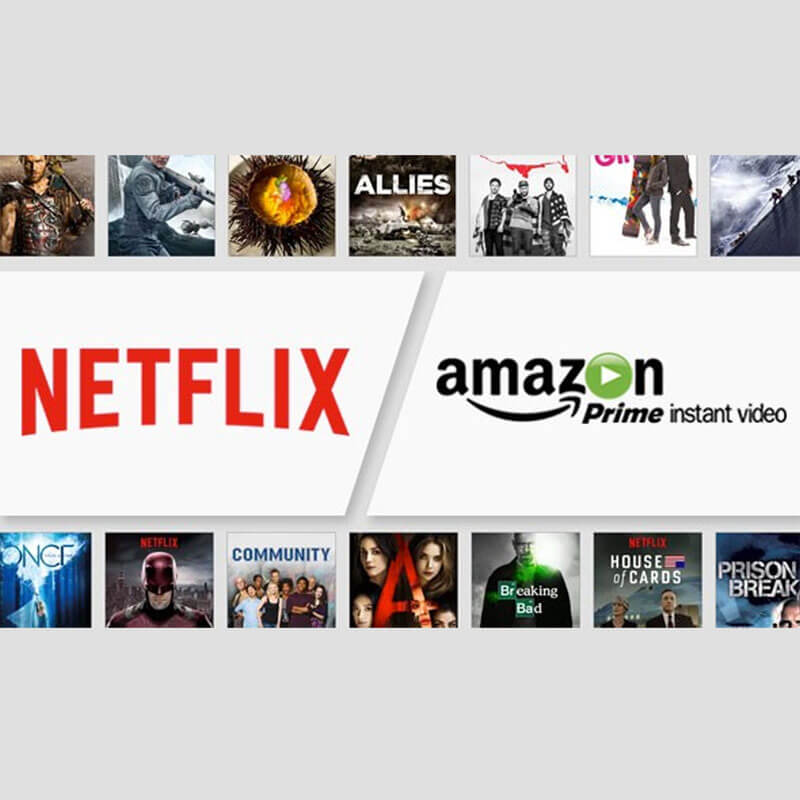
Netflix acknowledges in the investor release that Internet TV is evolving fast and becoming hyper competitive. Says the company: “Internet video is a global phenomenon. Amazon Prime Video expanded recently to match our territory footprint, while YouTube remains far larger than either of us in terms of global video enjoyment minutes. Video consumption is growing on Facebook, and Apple is rumored to be adding video to its music service. Satellite TV operators are moving to become internet MVPDs, such as ViaSat to ViaPlay in the Nordics, DISH to Sling, and DirecTV to DirecTV Now. Insurgent firms such as Molotov.tv in France and Hulu are building native-internet interfaces for TV network bundles. CBS is releasing a major original series ( Star Trek) exclusively on its domestic SVOD service (with us as international partner). Finally, the BBC has become the first major linear network to announce plans to go binge-first with new seasons, favoring internet over linear viewers. We presume HBO is not far behind the BBC. In short, it’s becoming an internet TV world, which presents both challenges and opportunities for Netflix as we strive to earn screen time. “
It additionally states that Q42016 marked the tenth anniversary of its streaming launch. And the road ahead is quite clearly laid out. “The next decade will be even more amazing and tumultuous as Internet TV supplants linear TV and we strive to remain a leader.”





iWorld
Why Peaky Blinders is one of television’s biggest hits that still deserves more attention
Six seasons, multiple awards and the release of Peaky Blinders: The Immortal Man bring the Shelby saga back into the spotlight

In the crowded universe of streaming content, only a handful of shows manage to leave a lasting cultural footprint. Peaky Blinders is overwhelmingly considered one of the biggest global hits of the past decade. Yet many viewers still haven’t fully explored the dark, gripping world of the Shelby family.
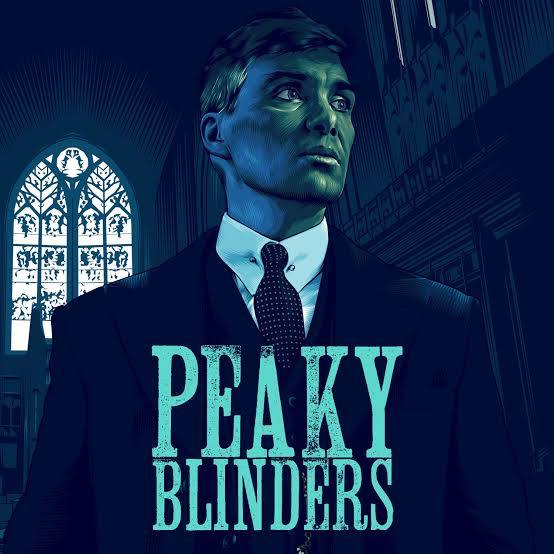
Originally produced for the UK’s BBC and later finding a massive global audience through Netflix, the series quietly grew from a British period drama into a worldwide streaming phenomenon.
Created by Steven Knight, the show follows the rise of the Shelby crime family in post-First World War Birmingham. What begins as a gritty street-gang story gradually expands into a sweeping narrative about ambition, politics, power and survival.
At the centre of the saga is Thomas Shelby, portrayed with extraordinary depth by Cillian Murphy. The casting of Murphy is widely regarded as perfect for the role. With piercing eyes, restrained dialogue and an almost hypnotic screen presence, he transforms Shelby into one of the most unforgettable characters in modern screen storytelling.
Murphy’s brilliance lies in his restraint. He rarely shouts or performs theatrically. Instead, a quiet stare, a calculated pause or a subtle shift in expression conveys the emotional storms within the character. Beneath the ruthless gang leader is a war veteran carrying trauma, guilt and loneliness. Murphy captures this complexity with remarkable precision, making Thomas Shelby both terrifying and deeply human.
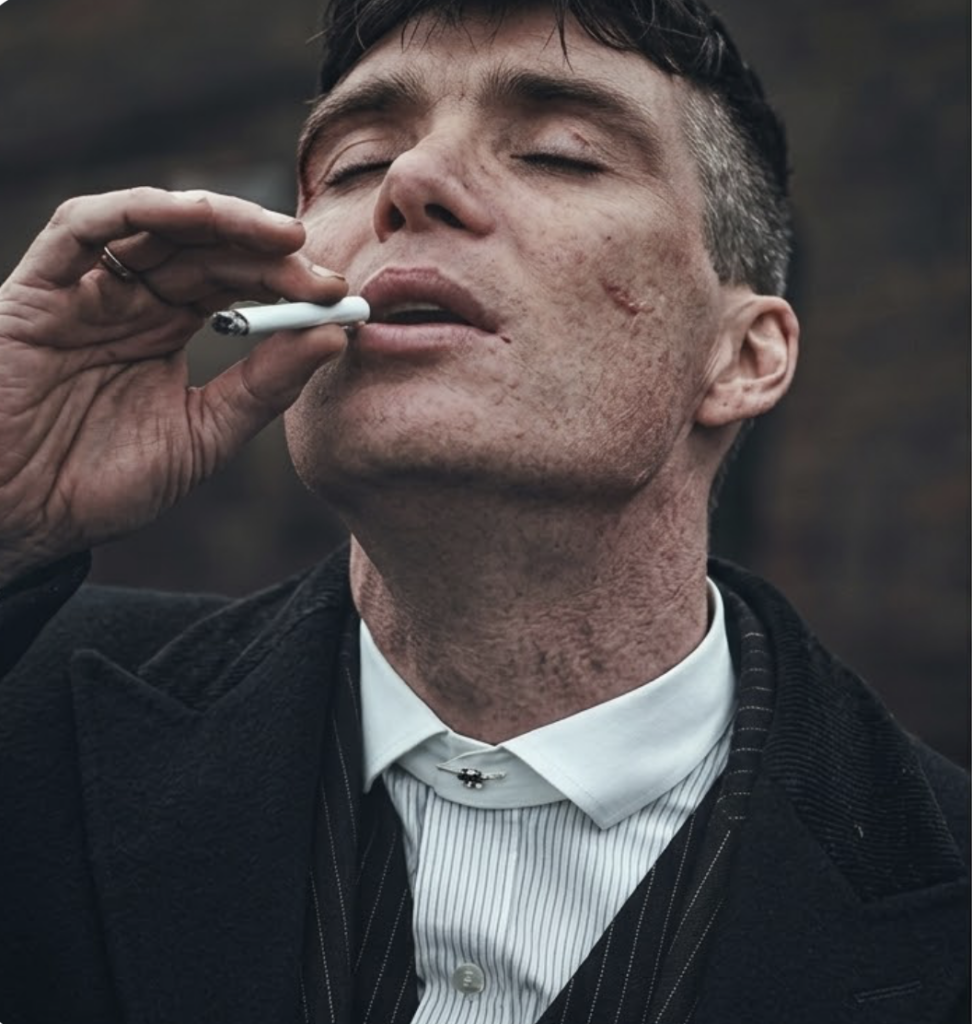
Beyond its central performance, Peaky Blinders stands out for its unfiltered portrayal of reality. The show does not romanticise crime. Instead, it exposes the harsh social conditions of early 20th-century Britain, from poverty and class struggle to political extremism and the psychological scars left by war.
The series also presents powerful female characters who hold their own within the Shelby empire. Polly Gray, played by Helen McCrory, is the strategic backbone of the family and one of the most formidable figures in the story. Women in the series shape decisions, influence power structures and challenge the rigid social norms of the time.
Across six seasons, the narrative grows dramatically in scale. What begins in the smoky streets of Birmingham evolves into a story involving political conspiracies, fascism and international criminal networks.
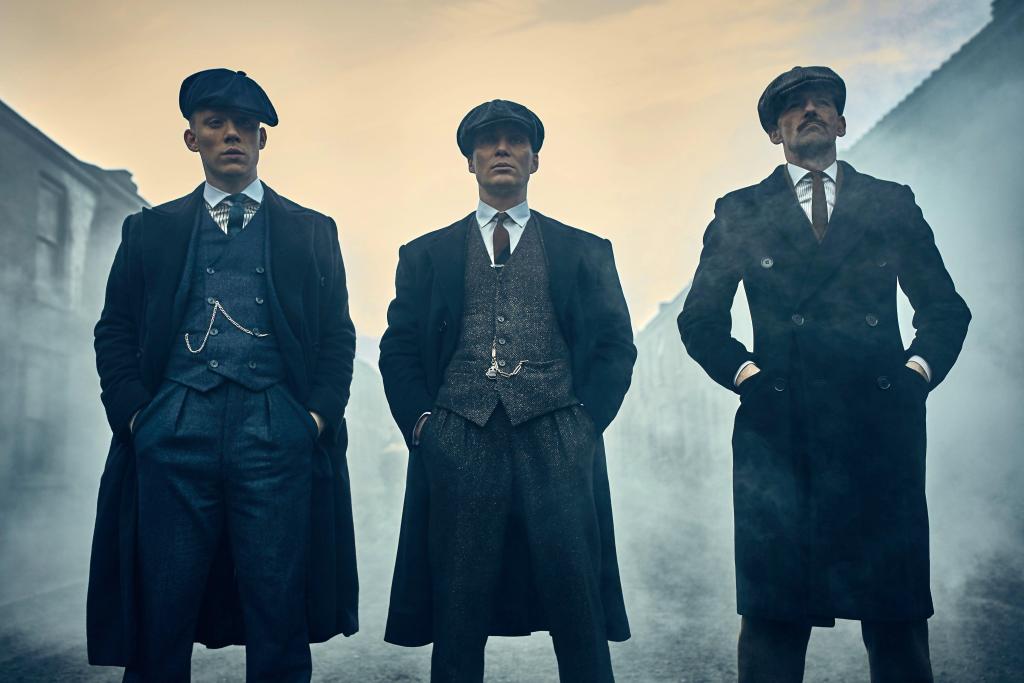
The series has also earned significant critical acclaim. It won the BAFTA Television Award for Best Drama Series in 2018 and multiple National Television Awards for Best Drama, cementing its reputation as one of Britain’s most celebrated modern shows.
Another defining feature of the series is its iconic music. The show’s opening theme, Red Right Hand by Nick Cave and the Bad Seeds, became instantly recognisable and widely associated with the Shelby universe. Combined with a powerful soundtrack featuring artists such as Arctic Monkeys and Radiohead, the music helped shape the show’s dark, stylish identity and became hugely popular among fans.
And the Shelby story is not over yet.
In fact, its legacy is unfolding right now. The long-awaited feature-length continuation, Peaky Blinders: The Immortal Man, was released on March 6, 2026, bringing the Shelby universe from streaming screens to cinemas and giving fans a new chapter in the saga.
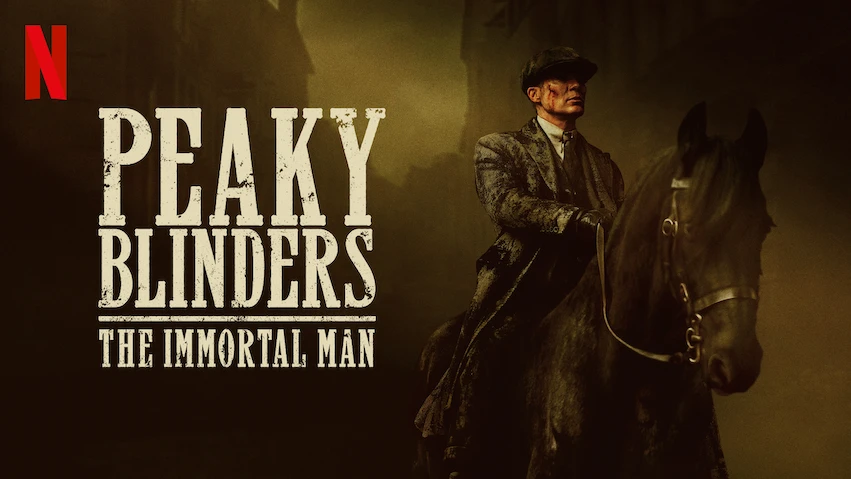
For viewers who have not yet stepped into this world, the timing could not be better.
Six gripping seasons are ready to binge on Netflix. A new film has just arrived in theatres. And at the heart of it all stands one of the most magnetic performances in modern drama by Cillian Murphy.
So if Peaky Blinders has been sitting on your watchlist for years, this weekend is your moment.
So, by order of the Peaky fookin’ Blinders, consider this your cue to finally step into the ruthless world of Thomas Shelby. Pour yourself a drink, clear your schedule and press the play button. Because when the Peaky Blinders give an order, you listen.