iWorld
Netflix, Amazon woo Indians with different business models

MUMBAI: The vast scope of Indian OTT market is undeniable. Two global streaming giants Netflix and Amazon started their endeavour in India around the same time but the latter stands at a better position. Netflix is enriching its local content library in a great momentum hooking top faces from Bollywood. While the big bosses, Jeff Bezos and Reed Hastings, both have mentioned the Indian market as an important part of their long term strategy, they are approaching the market with entirely different business models.
From the beginning Amazon Prime Video has caught the pulse of the market that being locally relevant is the necessity. Within one year of its rollout in India, it premiered its first Indian original series Inside Edge starring Richa Chada, Tanuj Virwani, Vivek Oberoi and Angad Bedi. The story revolves around a fictional T20 cricket team, Mumbai Mavericks. It continued its march in the local library with Breathe starring R Madhavan which was even dubbed in two local languages Tamil and Telugu.
Despite starting with fiction it has not limited its variety. From music reality show to standup comedy, it has touched various genres which appeal to Indian audiences easily. While in The Remix celebrity judges Sunidhi Chauhan and Amit Trivedi were big bets to woo audiences, for Comicstaan it could gather India’s rising stars of the comedy scene – Tanmay Bhat, Biswa Kalyan Rath, Kanan Gill, Kenny Sebastian, Kaneez Surka, Naveen Richard and Sapan Verma as judges.

On the other hand, while Netflix is a late entrant to the Indian original content segment, it is launching and announcing back to back originals in a short span as it did in the global market too. Starting from a romantic comedy like Love Per Square Foot to Lust Stories to its critically acclaimed first Indian original web series Sacred Games it has started offering Indian audiences high quality productions in good quantity. Netflix is also trying to tap mass audience genres including horror in Ghoul and cricket and corruption in Selection Day. “With the triplet of Raw Stories, Sacred Games, and Ghoul, we are really getting some nice momentum in our India growth,” Netflix CEO Reed Hastings said. Moreover, other than India, Sacred Games has been critically acclaimed outside the country also.
“Netflix has started taking “made in India” content to a global audience, which is a good thing to happen for India. It is time India exported its fabulous storytelling abilities, and what better platforms than these?” media and entertainment advisory services partner at Ernst & Young Ashish Pherwani said.
India, holding a vast cultural difference, makes the play tougher for international players. Only Hindi content will not be enough for the platforms to win over the streamers across the country. From this aspect, Amazon is ahead in the race not only did because of the launch of its first Amazon Exclusive in Telugu, Gang Star this June but also the library of regional movies. Even in terms of overall library of Indian movies Amazon’s streaming service is way better than Netflix. After its Q2 result, Netflix executives themselves admitted the need to scale up its regional content. “We’ve got a long way to go to expand languages and many other aspects to be able to cover the Indian market, to be a broad Indian product,” Netflix CEO commented. Especially at this moment while the next wave of OTT content consumption growth is coming from Tier II, Tier III cities, both the platforms highly needs to focus on regional content.
The basic difference lies between the business models of these two honchos. Netflix is targeting the affluent households as well as the audience that adores quality content and is ready to pay for its high pricing model. While still now Netflix is running with a niche approach, Amazon has a larger play in the country with its e-commerce business. Amazon lures streamers with its Amazon Prime services. Netflix is still experimenting with its pricing models in the country while Amazon has introduced a new monthly subscription at Rs 129 other than its yearly model.
“Both of them are trying to invest a lot in Indian market by doing two things one is obviously creating original Indian content but also getting content from overseas into India. From that perspective, as both of them are doing it from a different price point, you can never tell that one is way ahead of the other,” PricewaterhouseCoopers (PwC) partner and leader, media and entertainment Frank D’Souza said.
“Amazon has the advantage because it is offering music, prime services, the whole game. For Amazon, it is about how to keep the customer on its platform as long as possible. Whether that helps in sales of products, video consumption, audio consumption their strategy is different. Netflix is a pure video play. Hence for Netflix, the question is that is original content enough to attract customers? The answer could be yes because the economies are different,” he added.
Even so, their pricing is higher as compared to the rates offered by local DTH and cable operators who offer a huge array of channels at a low cost. For SVOD OTT platforms, a consumer has to pay for subscription on top of data prices.
However, as data prices are reducing, the launch of FTTH service by Jio creates more opportunities for entire OTT market in India. “Indian OTT subscriber base is growing on the back of some of the lowest data charges in the world. In addition, the launch of Jio Fiber will enable consumption of digital content on the larger screens. This will bode well for subscribers of Netflix and Amazon Prime, and help them meet their growth targets. We estimate a 6x growth in regular OTT paid subscribers by 2020,” Pherwani commented.
While ultimately content will be the king for both Netflix and Amazon, especially in a market where local players like Hotstar, ALTBalaji, Eros Now, ZEE5 are betting big with differentiated content including sports, regional and Bollywood movies, regional originals, partnerships like Amazon-Airtel, Netflix-Tata Sky will also help both the platforms for winning more market share in the country. However, along with the localised content, the charm of The Crown, House of Cards, Goliath never fades away!





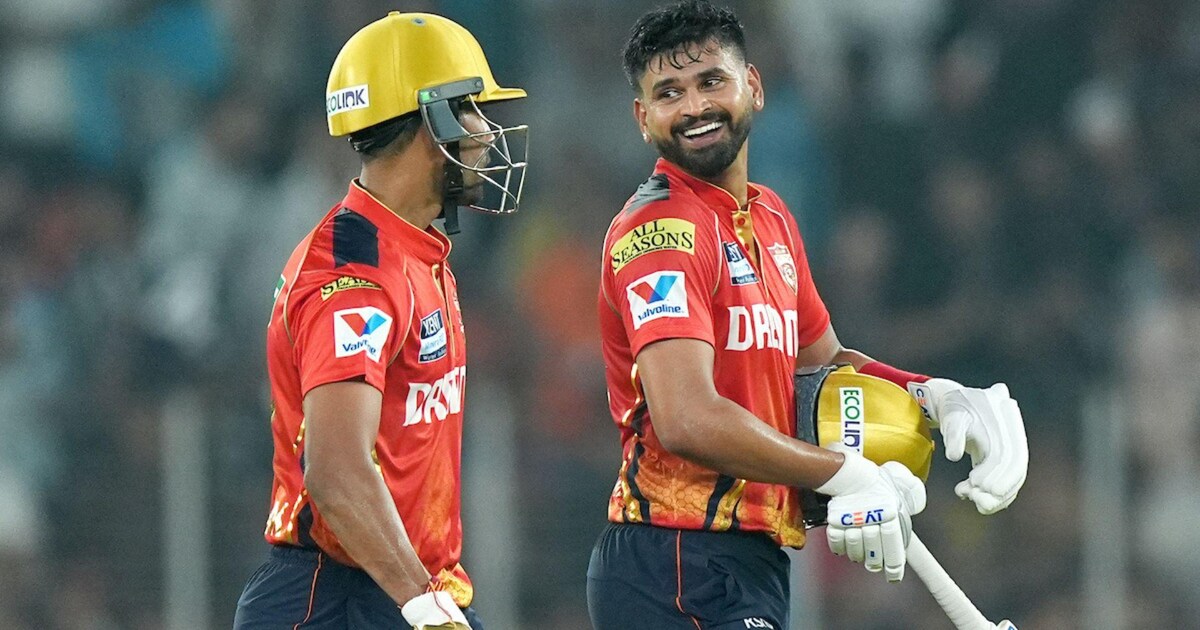
MUMBAI: If cricket were a binge-worthy series, this one just dropped its most explosive pilot yet. The opening weekend of the 2026 edition of the Indian Premier League has come out swinging, smashing records across both television and digital platforms and reaffirming the tournament’s unmatched pull in India’s sporting and media landscape.
Backed by two high-octane matches featuring 200-plus run chases, the tournament delivered a combined reach of over 515 million viewers across linear TV and digital platforms via JioStar’s broadcast ecosystem, including Star Sports and JioHotstar. More tellingly, engagement surged alongside reach, with total watch-time hitting 32.6 billion minutes, a sharp 26 per cent jump over the opening weekend of the previous season.
The numbers reveal a deeper shift in how India watches cricket. Connected TV (CTV) consumption rose by 30 per cent, while peak concurrency on digital platforms jumped 61 per cent, signalling a growing appetite for shared, big-screen streaming experiences. On traditional television, the momentum held strong, with TV ratings (TVR) climbing 24 per cent compared to earlier seasons’ opening matches.
A key driver of this spike has been the evolution of the viewing experience itself. This season introduced differentiated feeds, most notably a Hindi CTV broadcast featuring cricketing voices such as Ravichandran Ashwin, Suresh Raina, Harbhajan Singh, Virender Sehwag and Irfan Pathan. Blending expert analysis with a watch-along format, the feed has added a conversational, almost second-screen feel without requiring viewers to leave their screens.
According to JioStar CEO for Sports Ishan Chatterjee, at the opening weekend underscores not just scale but also the depth of engagement that live cricket continues to command. He noted that the combination of large-screen viewing and digital interactivity is creating a more immersive and personalised experience, while also delivering tangible outcomes for brand partners.
From the league’s perspective, the early numbers point to a tournament that continues to reinvent itself. Arun Singh Dhumal, Chairman of the IPL, said the strong start reflects how high-quality cricket paired with enhanced viewing formats is resonating with audiences nationwide, while Board of Control for Cricket in India secretary Devajit Saikia highlighted the “quality of engagement” as a key takeaway, not just the scale.
Commercially too, the opening weekend signals robust advertiser confidence. The broadcast is led by co-presenting sponsors including Google (Search AI Mode), Campa Energy, and Havells & Lloyd, alongside co-powered partners such as Birla Opus, Hero Motocorp and Amazon. A long tail of associate sponsors from OpenAI and Asian Paints to Flipkart and Amul further reflects the league’s unmatched ability to aggregate advertiser interest at scale.
Taken together, the opening weekend numbers are less a spike and more a statement. With 515 million viewers, 32.6 billion minutes of watch-time, and double-digit growth across formats, IPL 2026 has not just started strong, it has set the tone for a season that looks poised to push the boundaries of both sport and spectacle.






