Cable TV
Municipal Corp seeks to tax Bengaluru’s MSOs, ISPs


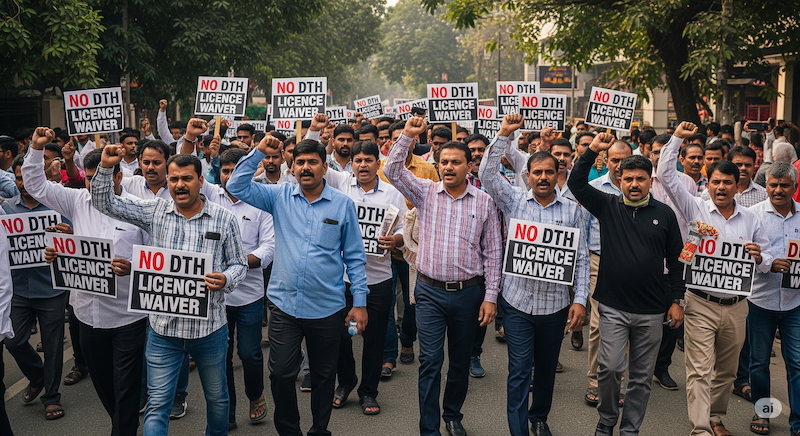
MUMBAI: The multi-system operators (MSOs) and internet service providers (ISPs) in Bengaluru will soon have to loosen their pockets and pay tax to the Bruhat Bengaluru Mahanagara Palike (BBMP) for cabling on main roads and the arterial roads of the garden city. While initially, even the local cable operators (LCOs) were in the BBMP hit list, the body, in its meeting last week has released the LCOs from paying the taxes for using its services.
BBMP has formed a committee to decide on the tax that both MSOs and ISPs will need to pay. The meeting was presided by the BBMP mayor B S Sathyanarayana and was attended by the BBMP chairman, MSOs and ISPs last week.
 |
|
In the meeting held last week, the players have been asked to file the details immediately, says Sudhish Kumar
|
“The current discussion is that the MSOs and ISPs, who use the trunk on the main road and arterial roads of Bengaluru need to make a one-time payment for using the BBMP infrastructure, which will be applicable for next 15 years,” informs Sagar E Technologies’ executive director Sudhish Kumar, who was also present during the meeting.
Almost all the national MSOs like Hathway Cable and Datacom, DEN Networks, InCable and SitiCable along with the other MSOs operating in Bengaluru will be affected by this. “Currently, there are 11 MSOs operating in the city,” informs Kumar.
Confirming the reports is Hathway Cable & Datacom MD and CEO Jagdish Kumar G. Pillai, “Yes, the BBMP is looking at imposing a fee for using its service. We have to submit a report, and I am discussing it with my team in Bengaluru.”
So far, none of the players have coughed up anything to BBMP. However, the municipal corporation is looking at generating revenue through this levy and also wants to ensure that the city is clean. “It has now asked the MSOs and ISPs to inform them of the exact number of kilometers that they are using to provide their services. This, to ensure that they can fix a price which will be paid by the MSOs and ISPs,” says he.
Earlier, the deadline for submitting the information was 28 November; but none of the players had reported to the BBMP. “In the meeting held last week, the players have been asked to file the details immediately,” informs Kumar. Those failing to comply may find their cable wires removed.
The BBMP has also suggested that several MSOs and ISPs can form their own consortium and apply for their own trunk. The body has claimed that at least 15,000 km of cabling has been done within the city.
It’s good news for the LCOs who have been exempted from paying up. “If the LCOs had to pay for using the BBMP services, the cost would increase and that would have been passed on to the subscribers. And so the mayor in the meeting clearly pointed out that the LCOs were to be kept out of this tax.”
The municipal corporation feels that since all the MSOs also provide internet services which gives them huge revenues, it should also be shared with them. In the meeting, the mayor remarked, “If it was only cable TV service, the pricing for using the trunk could still be considered. But because they are carrying internet service business through the same trunk, they should share the revenue with the municipal corporation, which gives them the infrastructure.”