Hindi
Mumbai Film Festival to feature workshops by cinematic legends
MUMBAI: In addition to the stellar lineup of over 200 movies set to be screened at this year‘s most eagerly awaited 14th Mumbai Film Festival, it promises to offer attendees with an opportunity to be audience to panel discussions and participate in workshops conducted at the National Centre for the Performing Arts (NCPA) by cinematic luminaries from around the globe.
The most enthusiastically anticipated workshop at the festival is the two-day Pitching Screenwriting and Script Development Masterclass that will commence on 17 October with a panel discussion on pitching.
Participants will benefit from invaluable inputs on the subject provided by Claire Dobbin, script consultant and chair of the Melbourne International Film Festival, renowned scriptwriter David Maggee and special guests such as successful Indian film producers Madhu Mantena (Ghajini) and Guneet Monga (Gangs of Wasseypur) as well as illustrious Indian film director Dev Benegal. The session will be followed by a seminar on How to Approach the Rewrite by Claire Dobbin.
The subsequent session on 18 October will begin with a presentation by David Maggee, scriptwriter of films such as Life of Pi and Miss Pettigrew Lives for a Day about his masterpiece Finding Neverland. This will be followed by a dissection of the developmental process of the film.
The workshop will conclude with a seminar with Claire Dobbin and celebrated Australian film producer Robyn Kershaw on how to pitch in a way that turns a no to yes, an integral part of filmmaking and knowledge that is imperative for aspiring filmmakers in Final Pitches.
The sessions on both the days are scheduled at the K. R. Cama Institute, Opp. Lions Gate, Fort, between 10 am and 5 pm.
Science fiction movie buffs attending the festival on Saturday, 20th October, 2012 will be ecstatic about the 2 – 3 pm segment featuring an open forum discussion between Gary Kurtz, legendary producer of epic Hollywood films such as Star Wars and The Steal and Anubhav Sinha, acclaimed Indian director of 2011 science fiction superhero blockbuster Ra.One, about the similarities and differences in execution from Eastern and Western points of view in the making of science fiction films.
This edition of the Mumbai Film Festival will also witness the country‘s first open forum Panel Discussion on the current state of film preservation and the challenges facing archives in future world of diminishing financial resources and rapidly evolving technologies between 1 & 2.30 pm on Sunday, 21st October, 2012. The session will involve eminent guests representing World Cinema Foundation, Film Foundation, Twentieth Century Fox Archives and Academy Film Archive of the Academy of Motion Picture Arts and Sciences as well as other highly distinguished members of the international cinematic fraternity. The session will be moderated by Ian Birnie, US Representative at the Mumbai Film Festival and Director of the Film Department at the Los Angeles County Museum.
Other workshops at the festival include the Masterclass in "Concept to Script to Film Production" conducted on Sunday, 21st October, 2012 between 3 & 5 pm by ace Filipino film director Brillante Mendoza and moderated by respected German film critic Daniel Kothenschulte, who will also groom the collegians selected for ‘Mumbai Young Critics‘ in another segment.
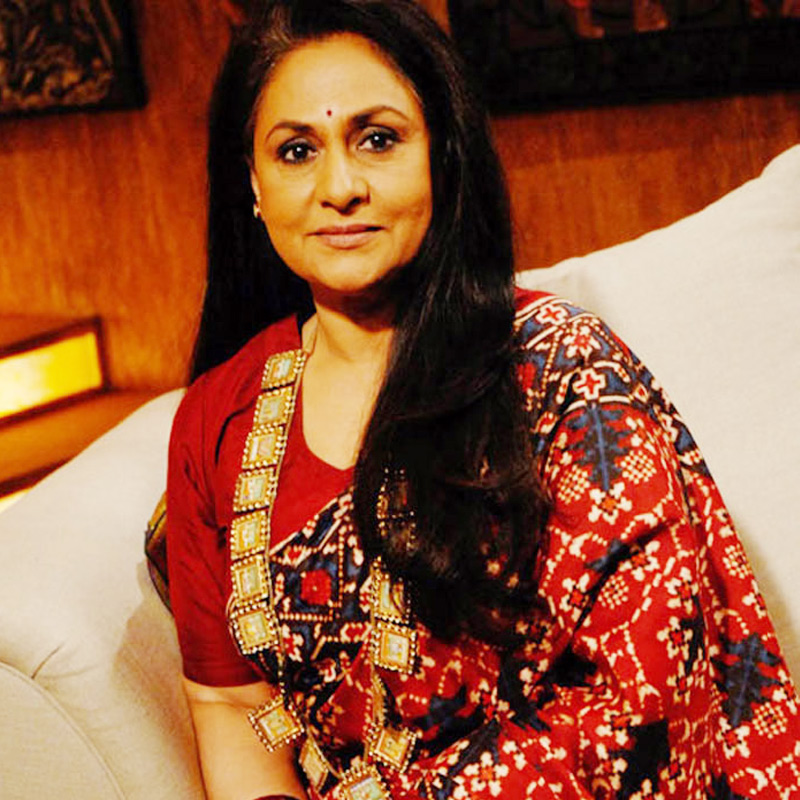
A special segment organised by WIFT (Women in Film & Television) will see veteran actor Jaya Bachchan conduct a Masterclass in Acting on Monday, 22nd October between 3 & 5 pm.
The Masterclass in Creative Production will be conducted by Gary Kurtz between 3 & 5 pm on Wednesday, 24th October, 2012 and moderated by seasoned film producer Julian Alcantara who will also moderate the Masterclass in Direction conducted by noted director Andy Tennant of ‘Fool‘s Gold‘, ‘Hitch‘ and ‘Anna and the King‘ fame on Thursday, 25th October, 2012 between 2 & 4 pm.

Hindi
GUEST COLUMN: Why film libraries & IPs are the new engines of growth
Unlocking value through catalogue strength and IP synergy
MUMBAI:In a media landscape defined by fragmentation, platform proliferation, and ever-evolving audience behavior, the economics of filmmaking are undergoing a fundamental shift. No longer confined to box office performance, a film’s true value is now measured across an extended lifecycle that spans digital platforms, syndication networks, and global markets. As content consumption becomes increasingly non-linear and algorithm-driven, film libraries and intellectual properties (IPs) are emerging as strategic assets, capable of delivering sustained, long-term returns. For Mohan Gopinath, head – bollywood business at Shemaroo Entertainment Ltd., this transformation signals a decisive move from hit-driven models to portfolio-led value creation. In this piece, Gopinath explores how legacy content, when intelligently repurposed and distributed, can unlock recurring revenue streams, why the interplay between catalogue and original IP is critical, and how media companies can build resilient, future-ready entertainment businesses.
For all these years, we thought that a film is successful if it performs well in theatres. There are opening weekend numbers, box office milestones, and distribution footprints that gave a good picture of how the movie has done commercially and also tell us about its cultural impact. However, there are multiple platforms today, always-on content ecosystem, which has caused a shift. Today, the theatrical performance is not the culmination of a film’s journey but merely the beginning of a much longer and more dynamic lifecycle.
Film libraries today are emerging as high-value, constantly evolving assets that deliver sustained returns well beyond initial release cycles. This becomes a point of great advantage for legacy content owners with diverse catalogues, to shape long-term business outcomes.
According to FICCI-EY, the media and entertainment industry of India achieved a valuation of Rs 2.78 trillion in 2025 which is expected to reach Rs 3.3 trillion by 2028 through a compound annual growth rate of approximately 7 per cent and digital media will bring in more than Rs 1 trillion to become the biggest sector which generates about 36 per cent of overall market revenues.
This shift is the expansion of distribution endpoints. We know how satellite television was once the primary secondary window but today, it coexists with YouTube, OTT platforms, Connected TV, and FAST channels. Each of these platforms caters to distinct audience demographics and consumption behaviors, helping content owners to obtain more value from the same asset across multiple formats.
For instance, films that had great reruns, now find continuous engagement across digital platforms. On YouTube, classic Hindi cinema continues to attract significant viewership, reaching audiences across generations and geographies with remarkable consistency. At Shemaroo Entertainment, this is reflected in our film library shaped over decades as part of a long association with Indian entertainment. From classics such as Amar Akbar Anthony to much-loved entertainers like Jab We Met, Welcome, Dhamaal, Phir Hera Pheri, Dhol, Golmaal, and Bhagam Bhag, many of these titles continue finding new audiences while retaining their place in popular memory. Their enduring appeal reflects how culturally resonant stories can continue creating value over time. Similarly, FAST channels have created curated, always-on environments where catalogue content can continue to thrive through star-led and genre-based programming.
This multi-platform approach has very well transformed films into long-tail IP assets which are capable of generating recurring revenue across advertising, subscription, and syndication models.
The evolution of audience behavior is equally important. Nowadays, it’s more important to find what’s more relative than what’s recent as viewers are more influenced by mood, memories, and algorithmic suggestions than by release schedules. Even if a movie was released decades ago, it can trend alongside a newly released movie, if surfaced in the right context. Thoughtful packaging, whether through festival-based playlists, actor-driven collections, or genre clusters, allows catalogue content to remain dynamic and continuously discoverable. Shemaroo Entertainment has built extensive film libraries over decades and its focus has mostly been on recontextualizing content for the consumption of newer environments. This process doesn’t just include digitization and restoration, but also re-packaging of films as per platforms.
Syndication itself has evolved into a key growth driver. In perspective, when looking at the domestic market, curated content packages continue to find strong demand across broadcast and digital platforms. Meanwhile, in the international market, especially in markets like Middle East, North America and Southeast Asia, the appetite for Indian content is opening up new monetization avenues. Here, the ability to package and position catalogue content effectively becomes as important as the content itself.
Importantly, the need to re-package catalogue content does not diminish the role of new content. In fact, originals and fresh IP are essential to sustaining the long-term value of a film library because they act as discovery engines that bring audiences into the ecosystem, while catalogue content drives depth, retention, and repeat engagement.
This interplay between the “new” and the “known” is what defines a robust content strategy today. While new films generate spikes in consumption, catalogue titles offer familiarity and comfort. These are factors that are increasingly valuable in an era of content abundance and decision fatigue. This is also shaping our strategy, drawing value from both a deep catalogue assets and a growing focus on original IPs to strengthen long-term audience engagement and build more predictable revenue streams.
There is growing recognition that long-term value in entertainment will be shaped not only by how intelligently existing content continues to live, travel and find relevance, but also by how consistently new stories are created to renew that ecosystem. In that sense, film libraries and original IP are not parallel bets, but reinforcing engines of growth. For media companies, the opportunity lies in making these two forces work together, because that is increasingly where more resilient and predictable businesses are being shaped.
Note: The views expressed in this article are solely the author’s and do not necessarily reflect our own.