Cable TV
MSOs to meet Wednesday to discuss CAS freeze response


MUMBAI: Multi systems operators – the hardest hit by the government notification yesterday putting the rollout of conditional access into indefinite deep freeze – have scheduled a meeting Wednesday to try and figure out how to respond to an edict that threatens to cripple their business.
The meeting, to be held in the capital, will see big MSOs like Hathway, InCableNet, RPG, Sumangali and SitiCable, among others, in attendance.
At stake here is a huge amount of investment that have gone into not just the purchase of set top boxes, but also the costs of headend upgrades to digital and the installation of subscriber management systems that were the key to introducing addressability into the cable broadcast business.
The government notification followed a recommendation made by the telecom Regulatory authority on Monday (23 February) that the 10 July 2003 notification on CAS in the country be either denotified or kept in abeyance for a period of three months.
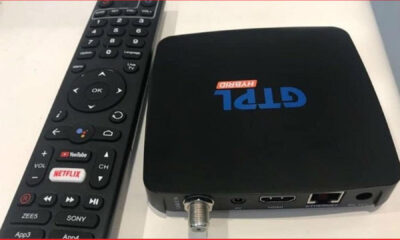
The immediate issue for the MSOs is what is to be done about the 80,000 or so set top boxes that had already been sold outright or rented out in places like South Delhi and Chennai. In South Delhi, about 40,000 boxes are estimated to have been seeded thus far while in Chennai 33,000 boxes have been seeded, industry sources say.
There is also the problem of the set tops lying with the MSOs expecting an increase in offtake in the run-up to the India-Pakistan cricket series.
As far as the course of action is concerned, one likely route would be the legal one. The MSOs have a strong case because the investments they made in infrastructure were under specific order from the information and broadcasting ministry. The I&B ministry had initially said that CAS should be implemented by 1 September, 2003.
And while the MSOs may still be reeling, the lower end of the cable business – the last mile operators – are not so unhappy.
The Chennai-based federation of Cable Operators has welcomed the notification. According to association president V. Venkatesan, the suspension of CAS has not come a moment too soon, what with the India-Pakistan cricket tour around the corner.
There is also the other side to this that the cable ops in Chennai can now hike up the rates across the Southern Indian city to what they were before CAS became effective (1 September).
As for the MSOs they are truely caught in a cleft stick. The Trai orders that cable prices be frozen at levels that existed as of 26 December 2004 coupled to the rider that this does preclude broadcasters from demanding increases in the subscription base has the MSOs in a bind. The last mile operators are unlikely to accede to any pressure to increase declarations and remain deeply suspicious of both MSOs and broadcasters. The broadcasters will be putting the squeeze on MSOs to increase connectivity.
One broadcaster in particular which will be working overtime to ramp up its paid points is Ten Sports. The fact that it has exclusive rights to the India-Pakistan cricket series offers it the best possible chance to increase its declared subscriber base.