News Headline
Movies continue to dominate TV viewership, ads skewed towards male audience, observes BARC

NEW DELHI / MUMBAI: Although the saas-bahu trend appeared to be taking over the Indian television about two decades ago, viewers have ultimately come back to the medium they love the most – cinema with song, dance and thrills.
It is therefore no surprise that feature films aired on television contribute over 28 per cent to the total television viewership. The appeal of Movies is amplified by the fact that the varying content within films ensure that there is something for everyone – right from animations for kids to youth stories and mythological.
Interestingly, though the movie channels have the largest viewership, general entertainment channels hold 17 per cent of feature film content. However, content availability on GEC channels is mainly driven by regional channels, according to a newsletter by the Broadcast Audience Research Council on ‘Decoding movies on television’.

Feature films
Feature Films are aired on nine channel genres. The genre which contributes the maximum content for Feature films is, as expected, Movie channels. This is followed by GEC channels.

The content availability on GEC channels is mainly driven by regional channels. The scenario is similar in the case of Music genre, where the content availability is driven by regional channels.
On the other hand, regional channels do not have any feature films content on youth and Infotainment. Conversely, HSM channels do not air any feature films on Kids and devotional channels.
GEC channels dominated by movies
After movie the channel genre, GEC channels have the maximum share of feature film content, as a composition on terms of channel language shows.

If one examines the language split within GEC channels, it is clear that the southern region channels drive the content availability. Even within these, Tamil and Telugu language channels have a substantial lead over the others.
Interestingly, the south market is less fragmented that HSM. Over 90 per cent of the viewership is concentrated in only three genres – Movies, GEC and Kids.
The differing viewership in HSM and South can also be explained by content availability.

Regional channels have higher content available on GEC and music channels. Additionally, unlike HSM which has no content in the kids genre, regional channels havefeature film content on kids genre.
This also reflects in the viewership data, where the South has a higher share for GEC, Kids and music genre as compared to HSM. On a zonal level, eastern and western states see a higher preference for viewership of dubbed content.
Audiences for movies in southern market are spread across movies, GEC and kids genre channels. However, in HSM it is heavily skewed towards movies.
Feature films aimed at the young
As compared to total TV viewership, audience for the feature films is skewed towards young (15 to 30 years) male audiences, especially from lower social grades(NCCS CDE), the BARC study shows.
At an All India level, movie audiences are skewed towards males, the age group of 15 to 30 years and for NCCS C, D/E, as compared to Total TV viewership.

Viewership of feature films is skewed to female only in case of two genres – GEC and devotional.
Thus movie channels have the maximum contribution to viewership of feature films, followed by GEC channels. It is interesting to note that the pattern across genres is in linewith the content availability shown previously, the study says.
The only exceptions are kids genre and youth genre, where the performance is better vis-à-vis the content availability. This could be the result of these being targeted atspecific age-groups among which they have extremely high viewership.
Feature films on kids channels have substantial co-viewership driven by parents (22 to 40 years). Movie themed content is more effective on youth genre channels thanany other genre in attracting audiences from all social grades.
Viewership across genres is in line with content availability across genres.
Holidays lead to greater viewership of movies
Extended weekends with public holidays/festivals generate better viewership than mid-week holidays.

All the spikes (high viewership points) in 2016 have occurred due to some public holiday.
The biggest peak in the year occurred on Independence Day (15-August) followed by Dussehra (11-October), Ganesh Chaturthi (5-September) and Pongal/Sankranti (15-January).
With the exception of Dussehra, all the other top holidays were either on a Monday or a Friday. This shows that while public holidays lead to a spike in viewership, the ones that fall on a long weekend show a bigger spike.
These spikes are further compounded due to special programming – the airing of a world television premiere or popular movies.
Advertising skewed towards male audience
Though Movies are skew towards male audience, advertising categories such as Food & Beverages, Personal care/Hygiene perform much better than Durables, Telecom products, etc.
This indicates the perception of male consumers increasing for female oriented advertising categories, the study shows.








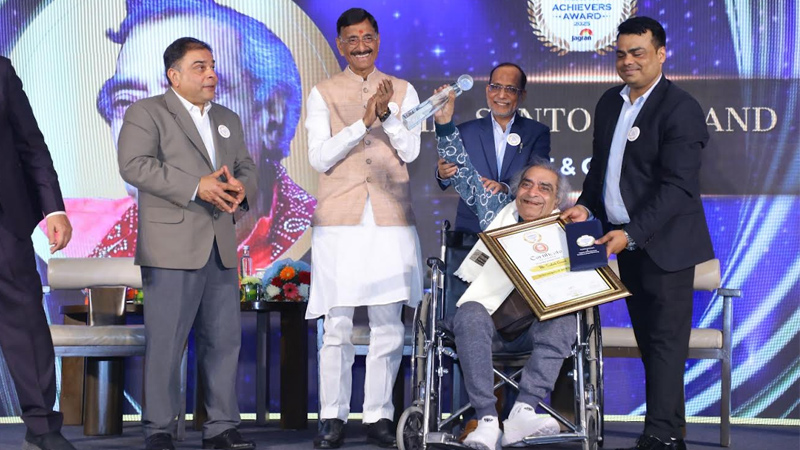
NEW DELHI: Hamdard Laboratories gathered a cross-section of India’s achievers in New Delhi on Friday, handing out the Hakeem Abdul Hameed Excellence Awards to figures who have left their mark across healthcare, education, sport, public service and the arts.
The ceremony, attended by minister of state for defence Sanjay Seth and senior officials from the ministry of Ayush, celebrated individuals whose work blends professional success with a sense of public purpose. It was as much a roll call of achievement as it was a reminder that influence is not measured only in profits or podiums, but in people reached and lives improved.
Among the headline awardees was Alakh Pandey, founder and chief executive of PhysicsWallah, recognised for turning affordable digital learning into a mass movement. On the sporting front, Arjuna Awardee and kabaddi player Sakshi Puniya was honoured for her contribution to the game and for pushing women’s participation onto bigger stages.
The cultural spotlight fell on veteran lyricist and poet Santosh Anand, whose songs have echoed across generations of Hindi cinema. At 97, Anand accepted the honour with characteristic humility, reflecting on a life shaped by perseverance and hope.
Healthcare honours spanned both modern and traditional systems. Manoj N. Nesari was recognised for strengthening Ayurveda’s place in national and global health frameworks. Padma shri Mohammed Abdul Waheed was honoured for his research-backed work in Unani medicine, while padma shri Mohsin Wali received recognition for his long-standing contribution to patient-centred care.
Education and social development also featured prominently. Padma shri Zahir Ishaq Kazi was honoured for decades of work in education, while former Meghalaya superintendent of Police T. C. Chacko was recognised for public service. Goonj founder Anshu Gupta received an award for his dignity-centred rural development initiatives, and the Hunar Shakti Foundation was honoured for empowering women and young girls through skill development.
The Lifetime Achievement Award went to former IAS officer Shailaja Chandra for her long career in public healthcare and governance, particularly in the traditional systems under Ayush.
Speaking at the event, Hamdard chairman Abdul Majeed said the awards were a tribute to those who combine excellence with empathy. “These awardees reflect Hakeem Sahib’s belief that healthcare, education and public service must ultimately serve humanity,” he said.
Minister Seth struck a forward-looking note, saying India’s young population gives the country a unique opportunity to become a global destination for learning, health and wellness by 2047.
The ceremony also featured the trailer launch of Unani Ki Kahaani, an upcoming documentary starring actor Jim Sarbh, set to premiere on Discovery on 11 February.
Instituted in memory of Unani scholar and educationist Hakeem Abdul Hameed, the awards have grown into a national platform that celebrates those building a more inclusive and resilient India. For one evening at least, the spotlight was not just on success, but on service with substance.







