DTH
Most Americans are unaware of Digital TV transition: Study


MUMBAI: The majority of US households that receive their television signals over the air are still unaware of the digital TV transition.
This is despite the fact that an estimated 22 million over-the-air homes need to make some kind of digital decision by 12 February, 2009, according to a Association of Public Television Stations (APTS) survey.
The bulk of the survey participants—61 per cent—had no idea that the DTV transition was taking place. 10 per cent said they had limited awareness, while 25 per cent said they were somewhat aware or very aware. While some respondents were aware of the digital transition, 53 per cent had no idea when analogue transmissions were scheduled to be turned off.

In order for the DTV transition to be successful, consumers must be well-informed and primed to adapt successfully to the new technology. This cannot occur unless there is a comprehensive, coordinated national consumer outreach effort. Therefore, APTS is urging Congress to designate targeted funding for consumer outreach on the switch from analog to digital. During APTS Capitol Hill Day 2007 from 13-14 February more than 200 executives and volunteer board members of local Public Television stations are scheduled to ask Congress to recognise Public Television’s unique outreach ability in the community and provide funding for those efforts.
APTS president and CEO John Lawson said, There are more than 21 million US households that get their TV exclusively free and over the air, and we know these homes are heavy viewers of Public Television. That puts us, working with our partners, in a strong position to provide information about the digital transition to the people who need it most.”
APTS is spearheading a coalition of trade and interest groups to compete for the $5 million Congress set aside for consumer education in last year’s DTV transition bill. The diverse group includes the Leadership Conference on Civil Rights, Consumer Electronics Association, American Library Association and Women Involved in Farm Economics. In addition, APTS is now a part of the DTV Transition Coalition, a separate but related effort led by the National Association of Broadcasters.
The need for vigorous outreach efforts is evident when looking at analog consumers’ attitudes and awareness toward their options for digital TV reception after the transition. Roughly 45 per cent of respondents to APTS’ survey said they will either “do nothing” or “don’t know” what option they will take to obtain digital signals. 19 per cent will purchase a converter box, 17 per cent are likely to sign up for cable TV service, and nine per cent will sign up for satellite TV. Another nine per cent indicated they would buy a digital television set so that they can continue to receive over-the-air broadcasts.
The survey also found that at least 38 per cent of analog households would “definitely not” or “probably not” select a particular video service provider if they didn’t offer Public Television channels after the DTV transition. This suggests that the lack of Public Television offerings by video providers will cause a serious barrier to these analog households in choosing cable or satellite to receive digital television.





DTH
DD Free Dish e-auction revenue dips to Rs 642 crore as slot sales fall
Revenue dips as revised norms reshape bidding in 94th round
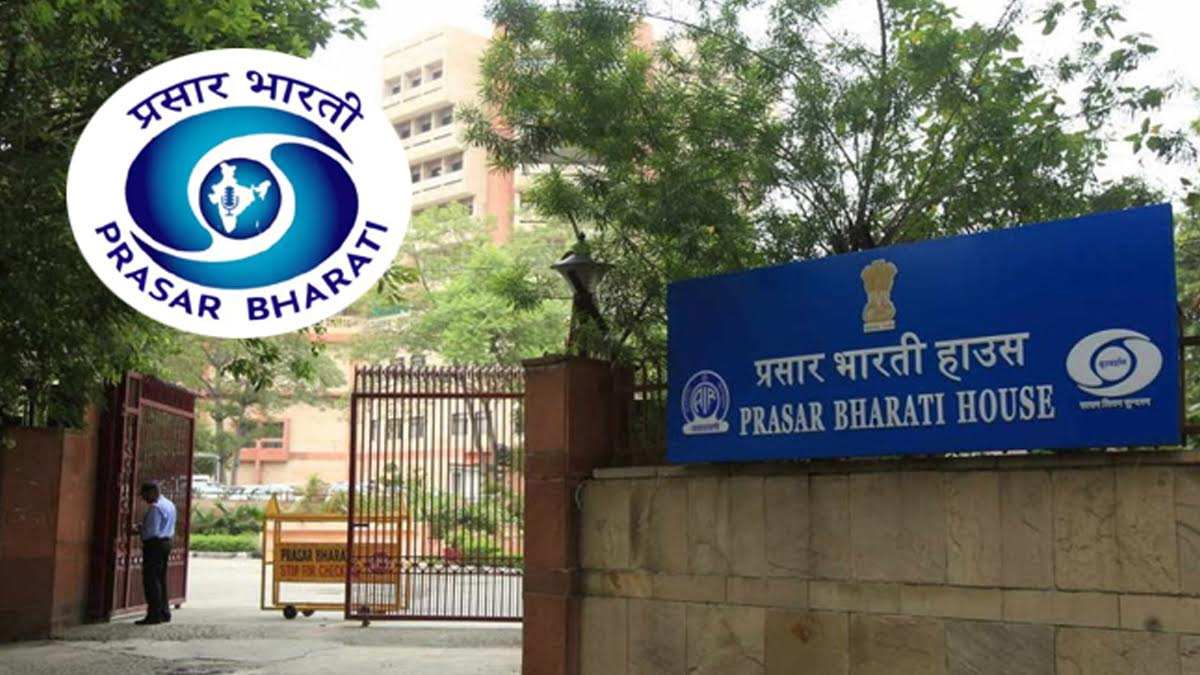
NEW DELHI: Prasar Bharati’s DD Free Dish has closed its 8th annual, and 94th overall, e-auction for MPEG-2 slots with total collections of Rs 642 crore for the period April 1, 2026 to March 31, 2027.
That is lower than last year’s Rs 780 crore haul, with 55 slots sold compared with 61 in FY25–26. The softer topline reflects both a slimmer inventory and a recalibrated auction framework.
This was the first auction conducted after amendments to the e-auction methodology, including tighter eligibility norms and a revised reserve price structure for MPEG-2 slots. The stated aim was greater transparency and more serious participation. The immediate outcome appears to be more measured bidding in certain categories.
Day one set the tone. Eight slots were sold, six in the premium Bucket A+ and two in Bucket A. The strong early action in A+, which typically houses Hindi GECs and movie channels, reaffirmed the enduring appeal of mass Hindi programming on the platform.
Among the broadcasters securing slots in the initial rounds were Zee Entertainment Enterprises, Sony Pictures Networks India, Viacom18’s Colors network, Sun Network and Shemaroo Entertainment. Their continued presence signals that, despite the pull of digital platforms, Free Dish remains a strategic must have for legacy networks chasing scale in price sensitive markets.
The final bouquet of 55 channels leans heavily towards Hindi news, movies, devotional fare, Bhojpuri and regional programming.
In Hindi news, familiar heavyweights such as Aaj Tak, ABP News, India TV, News18 India, Republic Bharat and Zee News made the cut. Entertainment and movie offerings include Colors Rishtey, Star Utsav, Dangal TV, Sony Pal, Shemaroo TV, Goldmines, B4U Movies and Zee Biskope. Devotional viewers will find Aastha, Sanskar and Sadhna Gold among the selected channels.
Regional representation includes Sun Marathi, Fakt Marathi, PTC Punjabi and GTC Punjabi.
Equally telling were the absences. Broadcasters such as Big Magic, Filamchi Bhojpuri, India News, Bharat Express, Movieplex Maithili, TV9 Marathi, Shemaroo Marathibana, Zee Chitra Mandir and Satsang did not participate. The pullback is particularly visible across Marathi, Bhojpuri, Maithili and spiritual programming. Industry observers point to the revised reserve prices, tighter eligibility norms and a reassessment of commercial viability as possible factors.
DD Free Dish continues to beam into over 40 million homes, largely in rural and semi urban India. For advertisers and broadcasters alike, it offers efficient access to Bharat markets where pay TV penetration remains uneven and OTT subscriptions are limited.
The moderation in revenue this year may be read as a pause rather than a retreat. Fewer slots, a reworked auction playbook and evolving broadcaster strategies have clearly shaped outcomes. Yet premium Hindi entertainment retains its pull, and the platform’s mass reach remains hard to ignore.
As the FY26–27 line-up settles in, the mix of winners and walkaways will define the private satellite channel landscape on DD Free Dish for the year ahead.







