News Broadcasting
Mirchi shuffles key people, adds zest to shows

MUMBAI: Music may still be the soul of FM in India, but that isn’t stopping FM stations from toying with different genres for that edge over rivals.
Radio Mirchi, which recently tried its hand at innovative programming with Ms Gonsalves and Bollywood Locha, plans to introduce a few more shows in the coming days. One will be dedicated to recounting the various legacies of Bollywood, while another will consist of interviews with Mumbai’s important people as well as Hindi film personalities.
A large scale contest is also being planned for a launch a month away, says Radio Mirchi COO Prashant Panday. Mirchi’s revamped programming, that’s being phased in gradually (notably the morning show that’s gone topical with RJ Harsh commenting on newsy topics every day) also reflects the change in management structure at the organisation.

Mirchi’s Kolkata station director Romen Sood has been elevated as senior vice president and regional director, south, while the Chennai station director of Radio Mirchi Sharat Chandra has been brought to Mumbai as senior vice president, marketing and business development. The Chennai marketing head Anand Parmeshwaran has been made station director of the Kolkata Radio Mirchi.
After the December 2003 exit of Sunil Sahjwani, who was national creative head of Entertainment Network India Limited, the Mirchi team has been working as a cohesive unit of creative heads and executive producers who report to national programming controller, Tapan Sen, who has been with Bennett, Coleman’s radio wing since the early days of Times FM.
Radio Mirchi, operational in seven cities in India, has unlike nearest competitor Radio City, which has been angling for appointment viewing with the masses, also gone aggro on the format event front. Panday says that while the station approaches the medium of radio as a topical one that should act as the platform for news on conveniences and best bargains going in their city, it also indulges heavily in brand acitivity.
The property fairs in Pune and the ongoing one in Mumbai, the food melas in Delhi and the consumer exhibition in Chennai have been ways of increasing brand awareness and developing the category. The encouraging response from the SEC A and B demographic who have thronged the ‘mela’ venues as well as the continuing leadership in the car listenership category continue to drive its programming strategy, he says.







News Broadcasting
News18 India launches Command Centre war explainer with Arya
New show shifts from debates to decoding global conflicts and impacts
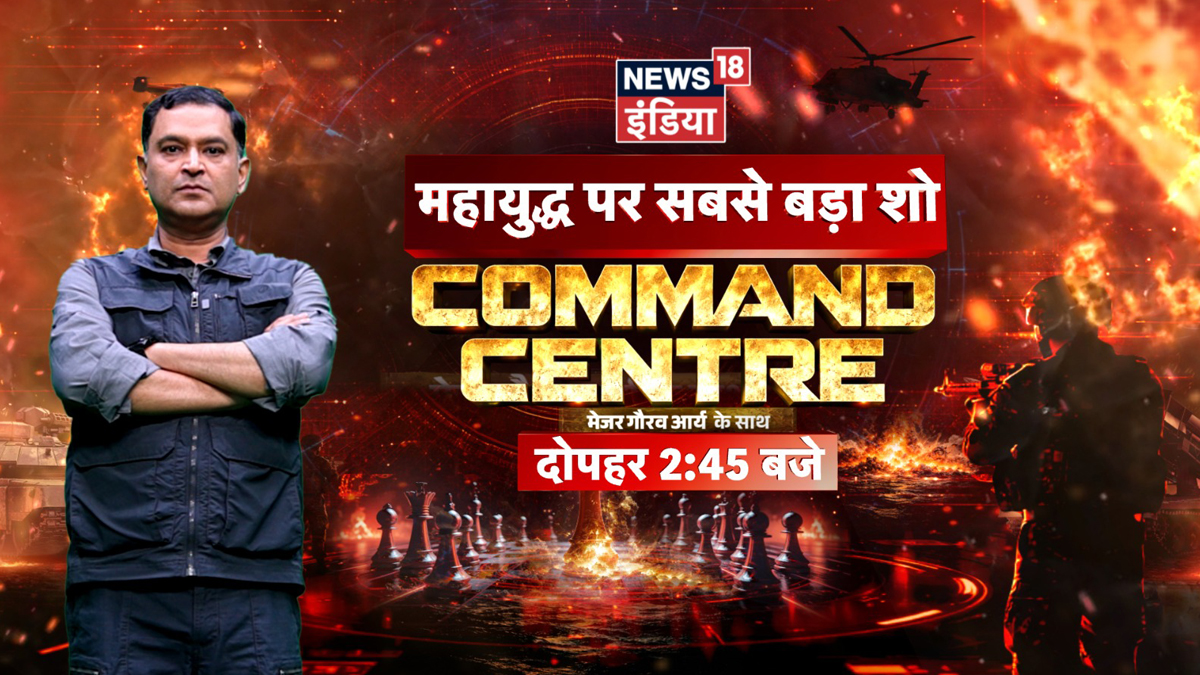
MUMBAI: News18 India has rolled out a new war-focused programme, Command Centre, featuring Gaurav Arya, as it looks to offer viewers a sharper, more grounded take on global conflicts amid rising tensions in West Asia.
Positioned as an “insider war room”, the show moves away from conventional panel debates and instead focuses on explaining military developments, decoding strategy and connecting global events to their everyday impact, from fuel prices to economic shifts.
The format leans heavily on visuals and data. The studio has been designed like a command hub, complete with large LED war maps, real-time graphics and an alert system to track developments as they unfold.
At the centre of it all is Arya, who brings his military background to simplify complex war strategies for viewers. His signature line, “Seedhi baat samjhiye”, anchors the show’s promise of clarity over noise.
News18 India managing editor Jyoti Kamal said, “Command Centre, featuring Major Gaurav Arya is designed to deliver accurate insights and a clear perspective on how evolving conflicts impact everyday life, from household budgets to national security. With expert voices analysing every development in real time, the show goes beyond headlines to decode what’s happening now, what it means, and what could come next.”
Echoing the intent, Gaurav Arya added, “In times of war, confusion is the biggest threat. With News18 India’s Command Centre, we are bringing viewers inside the war room, decoding strategies, tracking every escalation, and explaining, in the simplest terms, what it means for India and for every household. Seedhi baat samjhiye, this is where you understand not just what is happening, but what happens next.”
The weekday show will air in the afternoon slot and will also feature Gaurav Shukla, adding to its editorial depth.
With its mix of analysis, visuals and a clear focus on impact, the show reflects a broader shift in news consumption. Viewers are no longer just watching events unfold, they are looking to understand what those events mean for them.







