iWorld
Micro content makes a big play at VIDNET 2025

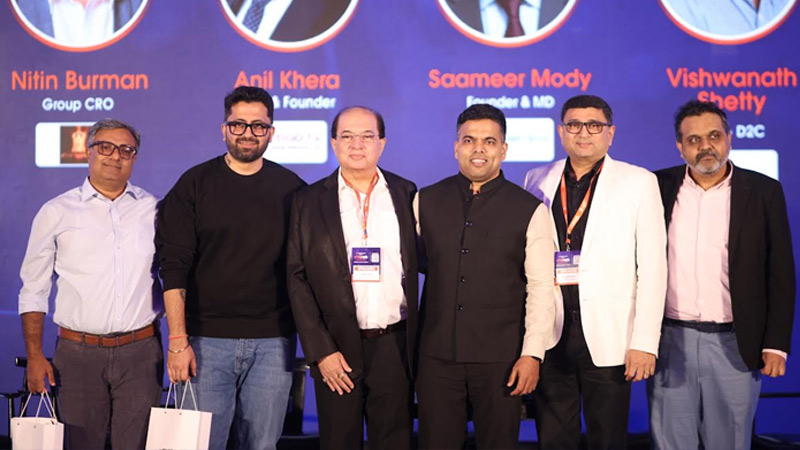
MUMBAI: If stories are shrinking, the excitement certainly is not. At VIDNET 2025, the session on micro content took centre stage as panellists unpacked how two-minute dramas are quietly rewriting India’s viewing habits.
Mautik Tolia set the tone, noting that nearly three-fourths of daily digital viewing now comes from snackable videos. With attention spans dipping to eight seconds for Gen Z, he said micro-dramas are not a fad but a force.
Bullet founder and cbo Azeem Lalani, compared the shift to cricket’s leap from test matches to T20s. He predicted the fledgling category could touch $100 million in its first year, though current projections seem inflated. He argued that India’s diversity and young skew make pay-per-view the more honest model, especially for an audience that only pays when hooked.

Balaji Telefilms group cro Nitin Burman, said micro-dramas will coexist with long-form shows. India’s mobile-first behaviour, he noted, creates fertile ground for brand spends. Balaji, instead of competing as a platform, has pivoted to production and now makes 30 to 35 micro-dramas a month.
Industry veteran, One Take Media founder and ceo Anil Khera, said the format suits viewers who cannot commit to thirty-minute episodes. However, the genre playbook remains fluid. Family sagas may not translate well to vertical screens, while thriller-flavoured romance and relationship dramas currently dominate.
For Pocket Films founder and md Sameer Mody, the format works because it merges India’s love for stories with the ease of vertical scrolling. He believes the audience is not limited by age but by mood and moment, and his platform now offers everything from episodic micro-dramas to horizontal shows in one app.
From a brand perspective, Pocket Aces svp marketing Vishwanath Shetty said the early rush is driven by the urge to be first. While views matter, brands increasingly prioritise perception shifts, especially among Gen Z and Gen Alpha. Campaigns with Myntra, IPL and NPCI have shown that vertical storytelling can build conversations, not just numbers.
As attention fragments and creativity compresses, micro-dramas appear to be carving out a cultural niche. The formats may be tiny, but the ambitions, it seems, are nothing short of cinematic.







iWorld
Meta warns 200 users after fake Whatsapp spyware attack
Italy-targeted campaign used unofficial app to deploy surveillance spyware.

MUMBAI: It looked like a message, but it behaved like a mole. Meta has warned around 200 users most of them in Italy after uncovering a targeted spyware campaign that weaponised a fake version of WhatsApp to infiltrate devices. The attack, first reported by Agenzia Nazionale Stampa Associata, relied on classic social engineering with a modern twist: persuading users to download an unofficial WhatsApp clone embedded with surveillance software. The malicious application, believed to be developed by Italian firm SIO through its subsidiary ASIGINT, was designed to mimic the real app closely enough to bypass suspicion.
Meta’s security teams identified roughly 200 individuals who may have installed the compromised version, triggering immediate countermeasures. Affected users were logged out of their accounts and issued alerts warning of potential privacy breaches, with the company describing the incident as a “targeted social engineering attempt” aimed at gaining device-level access.
The malicious app was not distributed via official app stores but circulated through third-party channels, where it was presented as a legitimate WhatsApp alternative. Once installed, it reportedly allowed external operators to access sensitive data stored on the device turning a simple download into a potential surveillance gateway.
According to Techcrunch, Meta is now preparing legal action against the spyware developers to curb further misuse. The company, however, has not disclosed details about the specific individuals targeted or the extent of data compromised.
A Whatsapp spokesperson reiterated that user safety remains the top priority, particularly for those misled into installing the fake iOS application. Meanwhile, reports from La Repubblica suggest the spyware may be linked to “Spyrtacus”, a strain previously associated with Android-based attacks that could intercept calls, activate microphones and even access cameras.
The episode underscores a growing reality in the digital age, the threat is no longer just what you download, but where you download it from. As unofficial apps become increasingly convincing, the line between communication tool and covert surveillance is getting harder to spot and far easier to exploit.






