Cable TV
MIB cracks whip on illegal analogue signals, states asked to ensure compliance
NEW DELHI: Exactly three weeks into the new era of digital addressable system for cable television in the country, the government has requested state government officers to ensure that no analogue signals are transmitted by any cable operator.
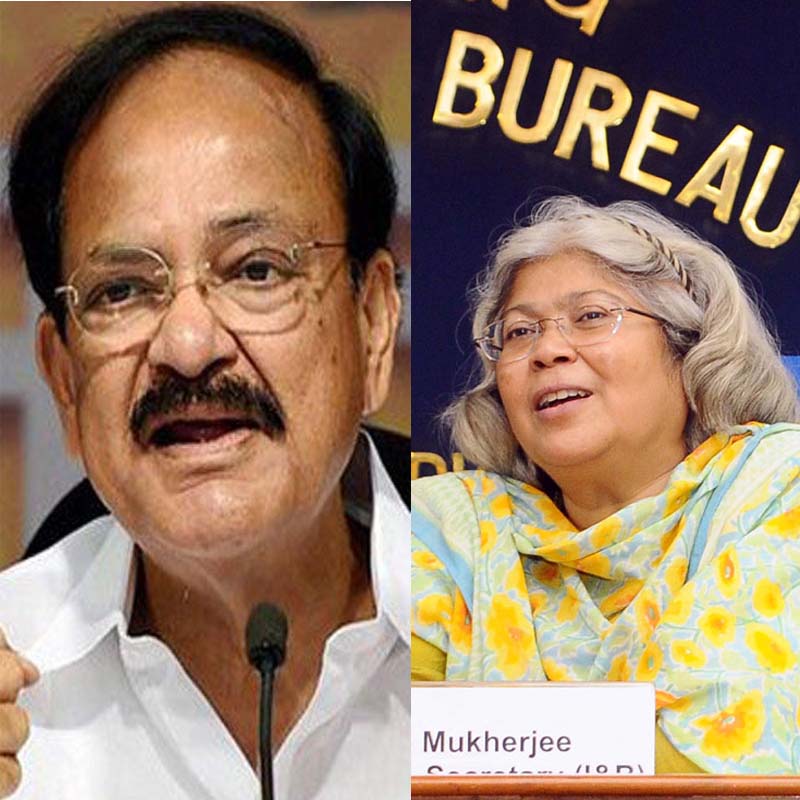
In an advisory sent to the designated officers in state governments, information and broadcasting ministry additional secretary Jayashree Mukherjee said that, in case any MSOs/cable operators is not complying with these directions/orders, action can be initiated under Section 11 of the Cable TV Networks (Regulation) Act for violating Section 4A of the Cable TV Act, under intimation to the Ministry.
She added that some complaints for carriage of analogue signals are being received in the Ministry and these are being sent to the respective Authorised officers separately for taking action.
However, conflicting reports continue to come in -particularly from Phase IV areas – of non-compliance with DAS and the continuation of analogue signals. The DTH operators have also stepped up their marketing campaigns to net the customers in these areas.
The Ministry on 23 December 2016 had extended the cut-off date of switch over to digital in Phase IV areas to 31 March 2017 and a circular was issued on 30 March 2017 to ensure switch off of analog signals in Phase IV areas by 1 April 2017.
Under Section 4A of the Cable Television Network (Regulation) Act 1995, it is obligatory for every cable operator to transmit or re-transmit programmes of any channel in an encrypted form through a digital addressable system with effect from the dates as may be specified or notified by the Ministry from time to time. Section 2 of the Act says the DM, SDM and CP are the authorised officers who have powers under Section 11 to seize the equipment used for operating Cable TV Network if there are violations of provisions of the Cable Act, including Section 4A.
Also Read :
DAS: Even official figures show cable TV digitisation is incomplete
DAS: MSOs, LCOs give low figure of STB seeding, official sources admit it’s under 80%
Analogue signals: MIB to take action against defaulters
Action to be taken against analogue-using MSOs / LCOs in urban areas

Cable TV
Hathway Cable appoints Gurjeev Singh Kapoor as CEO
Leadership change comes as cable TV faces shrinking subscriber base and modest earnings pressure
MUMBAI: Hathway Cable and Datacom has tapped industry veteran Gurjeev Singh Kapoor as chief executive officer, marking a leadership pivot at a time when India’s cable television business is under mounting strain.
Kapoor will take over from Tavinderjit Singh Panesar, who is set to retire in August after a long innings with the company. Panesar, chief executive since 2023, has held multiple leadership roles at Hathway, including his latest stint beginning in 2022.
Kapoor brings more than three decades of experience in media and entertainment. He most recently led distribution at The Walt Disney Company’s Star India business, now part of JioStar. His career spans television distribution and affiliate partnerships, with stints at Sony Pictures Networks India, Discovery Communications and Zee Entertainment.
Panesar, with over three decades in the industry, has worked across strategic planning, distribution and business development in media, broadcasting and manufacturing. His past associations include ESPN Star Sports, Star India, Apollo Tyres and JK Industries.
The transition lands as the cable sector grapples with structural disruption. Traditional operators are losing ground to streaming platforms, while telecom and broadband players tighten the squeeze with bundled offerings.
An EY report estimates India’s pay-TV base could shrink by a further 30 to 40 million households by 2030, taking the total down to 71 to 81 million. The slide follows a loss of nearly 40 million homes between 2018 and 2024, a contraction that has already wiped out more than 37,000 jobs in the local cable operator ecosystem.
Hathway’s numbers reflect the strain. The company reported a consolidated net profit of Rs 93 crore for FY25, down from Rs 99 crore a year earlier. Revenue inched up to Rs 2,040 crore from Rs 1,981 crore. As of December 2025, it had about 4.7 million cable TV subscribers and roughly 1.02 million broadband users.
Kapoor steps in with a familiar brief but a shrinking playbook. In a market where viewers are cutting cords faster than companies can reinvent them, the new chief executive inherits a business fighting to stay plugged in.