Hollywood
Mel Gibson hops on as art director on World War II movie

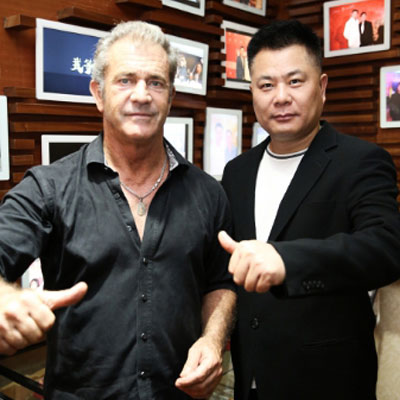
MUMBAI: Actor and filmmaker Mel Gibson has joined the crew of 3D war movie The Bombing.Speaking at a press conference at the movie’s Xiangshan production base, Gibson announced his new role as art director of the $65 million star-studded movie, which features more than 30 renowned actors and actresses including Bruce Willis.
Known to Chinese audiences for his role in Braveheart, Oscar-winning director and actor Gibson was invited to join the production of The Bombing by Chinese producer and director Dr. Shi Jianxiang, who is also the founder and CEO of Shanghai Kuailu Investment Group.
“Mel is interested in what happened during that period of time, and provided relevant suggestions on how to make the movie. He is very insightful.” said Dr. Shi.
It has been twenty years since Gibson’s last visit to China, and he spoke highly of the project at hand. “I have seen so many changes in China. The Bombing has an excellent world-class team with outstanding producers, directors, cast and crew. Our crew is marvelous, modest but enthusiastic. It has been a very interesting experience filming this movie. We share similar objectives no matter who we are, actors or directors. So I am grateful to have such opportunities to express my thought no matter how much I have contributed to the movie.”
The Bombing is based on the bombing of Chongqing by the Japanese air force in World War, and portrays the hardship suffered by Chinese people at that time. Of all the major air raids throughout WWII, the bombing of Chongqing is the only one that has not been featured on screen.
Dr. Shi stated that his reason for making the film is to demonstrate China’s national spirit against fascism, saying, “I hope audiences around the world can appreciate the cruelty of war and our courage, determination and capability to fight against it. China needs such movies that deliver hope and spirit.”
Dr. Shi further explained that he invested the movie to mark the 70th anniversary of the Allied victory over fascism in memory of that miserable period of time in Chinese history. “We cannot forget what happened in the past. History made us what we are today,” he emphasized.
His thoughts are echoed by director Xiao Feng’s expectations. “We chose a charismatic cast and crew in order to encourage more youngsters to remember history,” he said.
Therefore despite the tremendous cast including Bruce Willis and Liu Ye, behind-the-scenes productions have been a focus as well. Oscar-winners Vilmos Zsigmond and Ronald Bass were invited to join the production as photography consultant and screenplay consultant respectively. Also, sound effects and 3D special effects will be produced by multiple top teams.
Dr. Shi was optimistic about box office ratings of The Bombing and believes the movie can attract international audiences for its good quality. He also suggested that he has had other co-production movies ongoing currently and hopes that the cooperation between Hollywood and the Chinese movie industry could bring a brighter future to the domain.