I&B Ministry
Meity says no proposal presently to tap WhatsApp messages
NEW DELHI: Though the Indian government continues to explore avenues to track digital footprints of the citizens and regulations for online media, it said on Wednesday it did not plan at present to tap people’s WhatsApp messages.
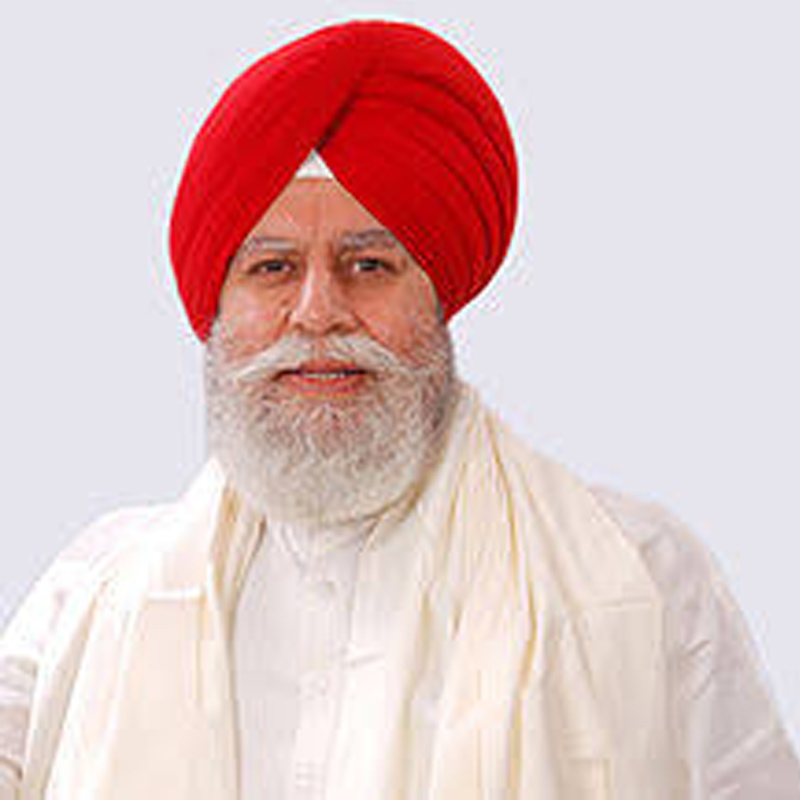
“No sir,” was the reply given by junior Minister SS Ahluwalia at the Ministry of Electronics and Information and Technology (Meity) when asked specifically whether the government planned to snoop into WhatsApp messages of individuals.
However, Ahluwalia clarified that though the government respects an individual’s human rights, as enshrined in declarations of the United Nations, it has the powers to intercept or monitor digital information under various circumstances, including security reasons.
“Section 69 of the Information Technology Act, 2000 empowers government to issue direction for interception or monitoring or decryption of information generated, transmitted, received, stored or hosted in any computer resource in the interest of (i) sovereignty and integrity of India (ii) defence of India (iii) security of the State (iv) friendly relations with foreign States (v) public order (vi) for preventing incitement to the commission of any cognizable offence relating to above, or (vii) for investigation of any offence,” the Minister stated in Parliament to a query on whether any proposed move to tap WhatsApp messages would violate global conventions set by organisations such as the UN.
To another query from a fellow parliamentarian, Ahluwalia said the Ministry doesn’t have any proposal at present to create a platform
where a citizen can identify fake news or hoaxes, which are rampant these days in the country.
The Minister, though, listed various government initiatives to make citizens aware of fake news on digital and social media. He said government agencies have been highlighting the importance of “following ethics” while using the internet and issuing general advisories against sharing rumours and fake news.
“Government has also asked WhatsApp to convey various steps taken by them to deal with fake news and also to share learning material to
educate the same,” the Minister stated.
Still, his senior at Meity who also happens to be the Law Minister, Ravi Shankar Prasad is on record favouring evolving a policy to control the spread of fake news in India.
Last month, Department of Telecoms, on a request from Meity, had written to all telecom and internet service providers , along with other industry organisations, requesting suggestions on ways that can help the government block under special circumstances social media content on platforms like the Facebook, WhatsApp and Instagram. The proposal has been criticised by many, including a chamber of commerce, Assocham.

I&B Ministry
Government sets up AI governance group to steer policy
AIGEG to align ministries, assess jobs impact, guide AI deployment.
MUMBAI: If artificial intelligence is the engine, the government is now building the dashboard and making sure everyone reads from the same screen. The Centre has constituted a new inter-ministerial body to coordinate India’s approach to AI, formalising a key recommendation from its governance framework and the Economic Survey. The AI Governance and Economic Group (AIGEG), set up by the Ministry of Electronics and Information Technology, will act as the central platform to align AI-related policy across ministries, regulators and departments, an attempt to bring coherence to what has so far been a fragmented and fast-evolving landscape.
The group will be chaired by union minister Ashwini Vaishnaw, with minister of state Jitin Prasada as vice chairperson. Its composition reflects both technological and economic priorities, bringing together the principal scientific adviser, the chief economic adviser, and the CEO of NITI Aayog, alongside key secretaries from telecommunications, economic affairs and science and technology. A representative from the National Security Council Secretariat is also part of the group, while the MeitY secretary will serve as member convenor.
At its core, AIGEG is designed to do two things: coordinate and anticipate. On the policy front, it will review existing regulatory mechanisms, issue guidance across sectors and ensure companies remain compliant with evolving legal frameworks. Beyond that, it will oversee national initiatives on AI governance, with a focus on enabling responsible innovation rather than merely regulating it.
The economic dimension is equally central. The group has been tasked with assessing how AI-driven automation could reshape jobs identifying which roles are most at risk, where those impacts may be geographically concentrated, and whether technology will augment or replace human labour. Based on these assessments, it will develop mitigation strategies and transition plans, signalling a more proactive stance on workforce disruption.
In parallel, AIGEG will work with industry stakeholders to chart a long-term roadmap for AI adoption, categorising use cases into “deploy”, “pilot” or “defer” buckets depending on readiness factors such as data availability, skill levels and regulatory clarity. The aim is to move from broad ambition to structured execution deciding not just what can be built, but what should be built now.
The group will function as the apex layer in India’s AI governance architecture, supported by a Technology and Policy Expert Committee that will track global developments, emerging risks and regulatory priorities. Together, the two bodies are expected to shape both the pace and direction of AI adoption in the country.
In a landscape where technology often outruns policy, the creation of AIGEG signals an attempt to close that gap ensuring that India’s AI journey is not just rapid, but also coordinated, accountable and economically grounded.