Hindi
‘Maximum’ stress on ones senses

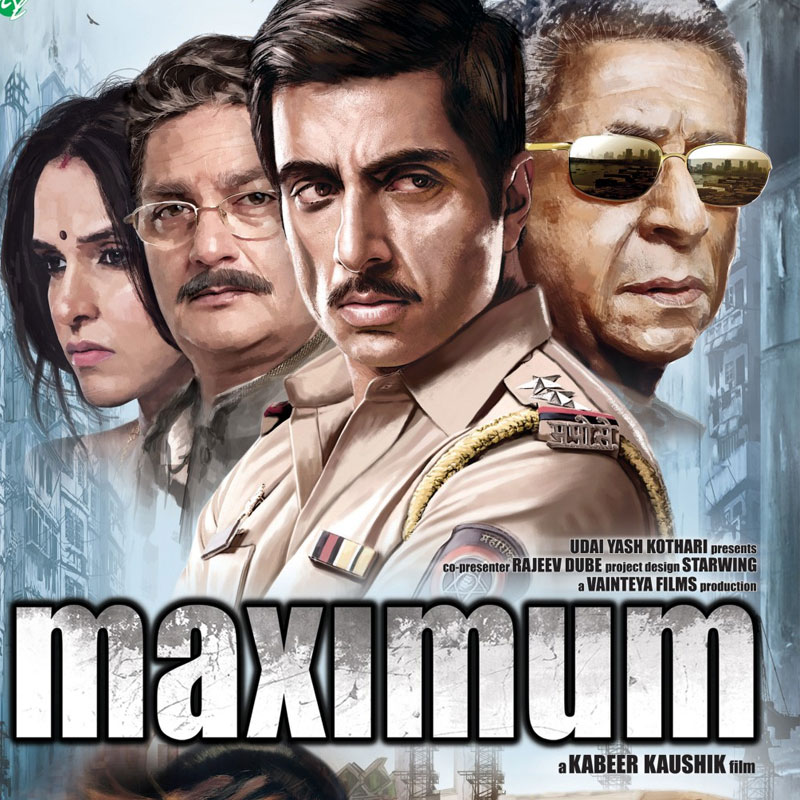
MUMBAI: In his earlier film Saher, director Kabeer Kaushik took Hindi filmmaking to Lucknow and made a reasonably plausible film. Why the film did not work should have dawned on him though. In Maximum, he imports Lucknow to Mumbai and comes up with a film which has no beginning and an end which makes no sense, with two senior policemen shooting each other in the finale!
There are no preambles, no once upon a time. As the film Maximum opens, you have this trigger happy policeman, Sonu Sood, shooting at all and sundry with glee. But all cops are normal at home, so we get to meet his family. He has a doting wife (Neha Dhupia), a daughter who can‘t manage her shoelaces and a father (Rajendra Gupta) who adds pathos and human angle to the story by suddenly collapsing of a heart attack.
Whatever one can understand of the story in the film is that Sonu Sood is a be-all and end-all of cops. He is an encounter specialist of the post-2003 police force of Mumbai and everybody, from fellow cops to politicians to underworld goons to starlets, is scared of him because he has a license to kill and no explanations are sought. He has but one adversary in Naseeruddin Shah, another senior encounter specialist, who wants to be in the place Sonu Sood enjoys. Both have a lobby supporting them, either within the police force or among politicians and builders. Finally, both end up shooting each other at, of all the places, Valsad railway station in Gujarat. The maker has a fascination with trains or probably that is how he defines the pace of life in Mumbai for a scene or sound of local trains is ubiquitous in the film.

The film is a reunion of Lucknow alumnus in Mumbai in that Sonu Sood is from Lucknow; his dad, Rajendra Gupta, is a professor from Lucknow who has dropped in on Sonu Sood to die on him; politician Vinay Pathak is from Lucknow (and conveniently an ex-student of Rajendra Gupta) and then there is a news channel reporter, also from Lucknow, who is, according to the film, the only and the star reporter on Mumbai‘s TV scene.
But, then there is a Lucknow reunion wrecker in Naseeruddin Shah. His antecedents are not deemed necessary to be established. He just pops up to spoil Sonu Sood‘s party. It seems that there is a rivalry between Sood and Shah over the body count of the encounter killings both have executed. Both cops, however, have one thing in common; they owe loyalty to opposing politicians, shooting unidentified extras in the day, mingling with big builders in the evening and dancing and making merry with nautch girls in bars at night. That, in general, is the sketch of Mumbai encounter cops for you.
There is no definite villain in the film. It is about the game of one-upmanship between two cops, two politicians and two builders and that too is given without dwelling on details. As the two cops play their games, Sood has the backing of Vinay Pathak and the news reporter, Aman Sadh, while Naseeruddin Shah has the backing of the all powerful home minister, Mohan Agashe. Someone had to give and it is Pathak who betrays Sood leading to final bloodbath culminating in both policemen killing each other in their fight for supremacy.
Maximum has no coherent script and comes across more as a live telecast of two warring cops. The story telling skill has been done away with. If the film is trying to tell two facets of a policeman when Sood is a caring husband, son and father at home, it is not relevant or of interest in any way. There is no scope for music but an item number has been forced in and wasted. Sonu Sood performs well but it is pointless as you don‘t know whether he is a hero or an antihero. Naseeruddin Shah has been miscast.
Vinay Pathak is convincing as a sweet-talking politician. Rajendra Gupta and Neha Dhupia, brought into contribute domesticity to the story, fail to do that as their parts are superficial. Neither dialogue not editing are appealing. The film, even at 106 minutes, is maximum stress on ones senses.
As for the box office prospects, Maximum has none.






Hindi
Dhurandhar the revenge storms past Rs 1,000 crore in a week, rewrites box office records
Aditya Dhar’s spy thriller sets fastest run to Rs 1,000 crore with record-breaking weekday hold

MUMBAI: The box office has a new juggernaut—and it is moving at breakneck speed. Dhurandhar the revenge has smashed past the Rs 1,000 crore mark worldwide in just a week, clocking a staggering Rs 1,088 crore and resetting the rules of the blockbuster game.
Backed by Jio Studios and B62 Studios, and directed by Aditya Dhar, the spy action sequel opened to the biggest weekend ever for an Indian film globally—and then refused to slow down. Unlike typical tentpole releases that taper off after Sunday, this one powered through the weekdays with rare muscle, posting Rs 64 crore on Monday, Rs 58 crore on Tuesday, Rs 49 crore on Wednesday and Rs 53 crore on Thursday.
The numbers stack up to a formidable first-week haul. India collections stand at Rs 690 crore nett and Rs 814 crore gross, while overseas markets have chipped in Rs 274 crore, taking the worldwide total to Rs 1,088 crore in just eight days.
The film’s opening weekend alone delivered Rs 466 crore, laying the foundation for what is now being billed as the fastest climb to the Rs 1,000 crore club in Indian cinema. Every single day of its first week has set fresh benchmarks, from the highest opening weekend to the strongest weekday hold—metrics that typically separate hits from phenomena.
A sequel to the earlier hit Dhurandhar, the film has not just built on its predecessor’s momentum but obliterated previous records, emerging as the biggest global blockbuster run by an Indian film to date.
At this pace, the film is not merely riding a wave—it is creating one.








