Hardware
Made-in-India STBs sale to witness 15% growth in DAS phase 4


NEW DELHI: With the government’s emphasis on Make in India, local manufacturing of set top boxes (STBs) that are built within the country is showing a steady increase, even as India continued to lead STB shipments for the quarter ended June 2015 accounting for about 94 per cent of the total shipments to the SAARC region (Bangladesh, Nepal, India, Pakistan and Sri Lanka).
With digitisation in India and other countries in the region propelling the demand for SD STBs to HDTV and hybrid boxes, the STB market in major South Asian Association for Regional Cooperation countries is witnessing steady and robust growth.

According to research from Dataxis, indigenous manufacturing had been merely five per cent in the Phase I and Phase II of Digital Addressable System (DAS). While this has seen a steady growth in the third phase, the sale of Made-in-India STBs is likely to witness growth up to 15 per cent in the fourth phase of digitization.
“Local manufacturing in India, which got a shot in the arm with the Indian government’s Make-in-India initiative, is slowly picking up as indigenous brands are signing deals with MSOs in third and fourth stage. The local STB brands are opting to independent, regional MSOs than the pan-India MSOs or national players,” says Dataxis analyst Sreeja VN.
STB shipments to SAARC countries have witnessed 20 per cent quarter-on-quarter growth during the second quarter of 2015. In Q2 2015, 4.38 million STBs were shipped in the SAARC region with an estimated value of $96 million.
The Dataxis research also finds that the quantity of the STB shipments in India the first half of this year has declined compared to the same period a year ago. However, the total number of STBs shipped in Q2 2015 registered an increase on quarter-on-quarter basis.
Technicolor tops the STB shipments to SAARC in the Q2 2015. The company’s recent deal to acquire Cisco’s STB unit could further bolster Technicolor’s presence in the SAARC STB market.
Airtel Digital TV, Dish TV and Videocon d2h, the three major DTH players have announced their plans to focus on deploying indigenous brands, which will give a boost to domestic manufacturing of STBs in India. The first half of the 2015 also witnessed DTH players partnering with Indian brands to source STBs manufactured indigenously.
Another notable trend, according to Dataxis Research, is the increasing demand for HD STBs in the region. Dataxis’s analysis of STB shipment for the H1 2014 and H1 2015 depicts steady growth in the volume of HD STBs shipped to India. The rise in the number of HD STBs has also contributed to a rise in the average selling price of STBs shipped in the first half of 2015 compared to the same period last year.
The report says that the key STB vendors for the quarter are: Technicolor, Skyworth, Changhong, Huawei and Coship (international vendors), and Mybox, One-eIGHT technologies, Trend Electronics, Ridsys, and Willet Communications (domestic vendors).





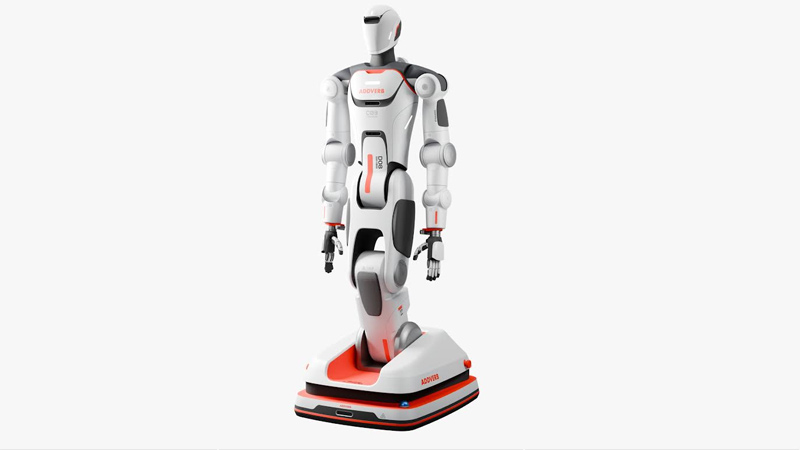
MUMBAI: Addverb has taken a decisive turn on the road to humanoid automation, unveiling its first wheeled humanoid robot, Elixis-W, at LogiMAT India 2026 in Mumbai. Built and manufactured in India, the robot signals the company’s push to make so-called physical AI a practical presence on the factory floor rather than a futuristic concept.
Unlike traditional fixed automation, Elixis-W is designed to move, think and work alongside people in dynamic industrial settings. The robot combines adaptive wheeled mobility with dual arms, each fitted with five-fingered dexterous hands, allowing it to handle tasks that demand precision as well as flexibility.
At its core sits a Physical AI-ready architecture, supported by dual Nvidia Jetson Orin and Thor computing units. This setup is intended to give the robot the ability to perceive, plan and adapt to changing environments, rather than simply follow pre-programmed routines.
According to Addverb CEO and co-founder Sangeet Kumar, the humanoid reflects the company’s long-standing belief in human-robot collaboration. He said the robot is designed to take on repetitive, risky or physically demanding tasks, freeing human workers to focus on higher-value decision-making roles.
Alongside the humanoid, Addverb also showcased two new intralogistics solutions. The Cruiser 360, a four-way pallet shuttle, is aimed at high-density storage environments where space and speed matter. The FlowT, an autonomous forklift, is designed to move materials safely in busy warehouses and factory spaces.
Visitors also saw Trakr, the company’s quadruped robot, navigating the exhibition floor, offering a glimpse of how legged machines could assist in future warehouse and industrial operations.
Addverb, which began as a warehouse automation specialist, has steadily expanded its global footprint across the United States, Europe, Australia and Asia. Its client list includes Reliance, HUL, PepsiCo, Maersk, Mondial Relay and DHL.
With the launch of Elixis-W, the company is steering towards a future where robots are not just bolted to the floor, but rolling, reasoning and working shoulder to shoulder with people on the shopfloor.