eNews
Law firm Nishith Desai & VC Tim Draper launch digital nation hackathon

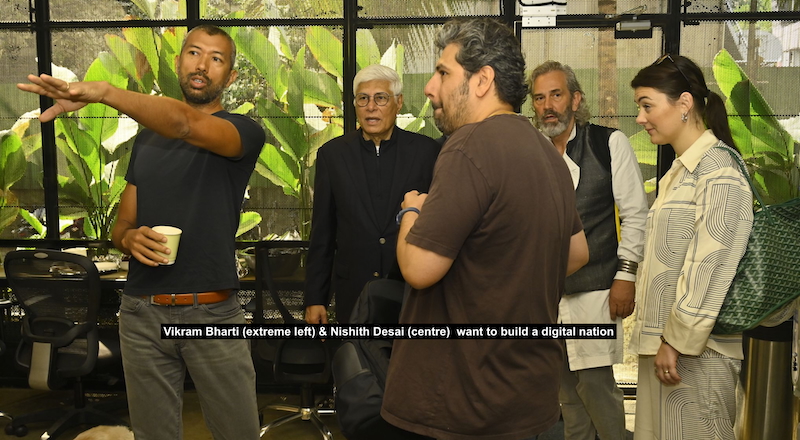
MUMBAI: The geopolitical map is getting a digital makeover, and it’s not just another crypto pipe dream. Silicon Valley venture capitalist Tim Draper and legal eagle Nishith Desai have joined forces to launch the e-Tibet Hackathon—an eyebrow-raising attempt to create the world’s first truly digital nation.
Unveiled in Bengaluru on 22 March, the initiative brings together coders, policy wonks and entrepreneurs to build what amounts to a nation-state that exists entirely in the cloud. One might call it governance without the geography.
Throughout history, humanity has continuously tinkered with the concept of statehood. The Treaty of Westphalia in 1648 gave us sovereign nation-states with their territorial obsessions. The Bretton Woods Conference in 1944 redesigned global finance while maintaining physical borders. Now Draper and Desai are betting that 2025 will be remembered as the year nations began to exist primarily as strings of ones and zeros.
The hackathon participants aren’t merely playing SimCity with higher stakes. They’re building blockchain-based governance systems, AI-driven legal frameworks, and smart contract public services. It’s like creating an entire government IT infrastructure, minus the government buildings and grumpy civil servants.
“We are witnessing a fundamental reimagination of governance and national identity,” gushes Draper Startup House founder Vikram Bharti. “Just as Westphalia formalised nation-states and Bretton Woods reshaped financial systems, Draper Nation is setting a new precedent, one that will outlive us all.”
Desai adds: “Traditionally, states are bound by geography, requiring physical land and territorial governance. But nations, built on shared values, culture, and identity, can transcend borders. This hackathon proves that digital nations can foster futuristic economic, legal, and social cohesion without physical boundaries.”
The choice of Tibet as the prototype for this digital experiment carries obvious political overtones, though the organisers have been careful to frame it as a technological rather than a geopolitical endeavour. China, which claims Tibet as its territory, may have thoughts on a virtual alternative popping up in cyberspace.
Whether e-Tibet will join the ranks of history-altering innovations or become another footnote in the long list of tech-utopian fantasies remains to be seen. But one thing is certain—the old adage about “no man’s land” might soon need updating to “no man’s bandwidth.”