Connect with us

iWorld

Lall speak about Jio Cinema’s Murder in Mahim

Published

on

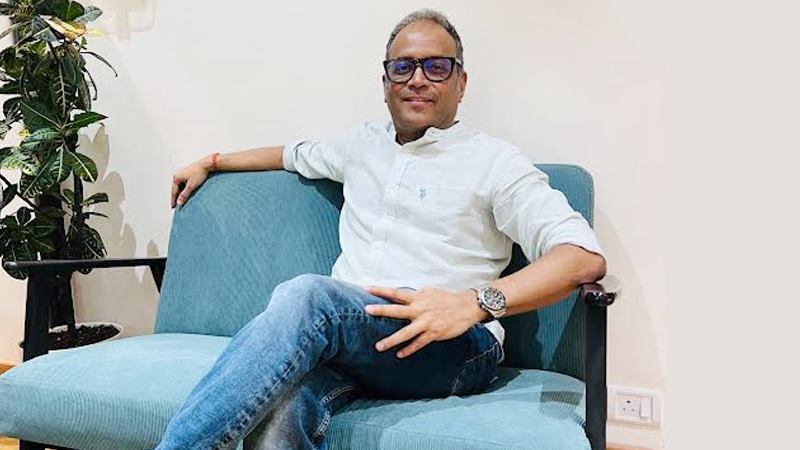
Mumbai: Jigsaw Pictures founder Rajnish Lall is pleased as punch. The former advertising professional-turned TVC and series producer’s latest production Murder in Mahim was launched on Jio Cinema on 10 May. The series has been getting good traction with most viewers binge watching all the episodes or at least four episodes at one go.

The production got the green light from Tipping Point and Voot in early 2022, and took almost two years to be completed. It’s based on journalist Jerry Pinto’s book of the same name which tracked the investigation into a bunch of gay murders in the Mumbai suburb of Mahim in the last decade just before approval for same sex relationships got the green signal from the government.

“I was attracted to it because I have an emotional attachment with Mahim. OTT has pulled off lots of thrillers and it’s a genre I love,” said Lall. “Murder in Mahim was especially interesting because of the drama and the relationships between characters. Also because of the social message it was providing about the LGBT which is still prejudiced against.”

Advertisement

Tipping Point – a Viacom and Jio owned studio – acquired the rights and Jigsaw came on as a producer. Along the way, it was collectively decided that Raj Acharya would be able to handle the script better than the director that was initially thought of.

“We had brushed up the script,” said Lall. “Our decision to bring in Raj proved right as he did magic with it and  improved on the final product.”

The production schedule was pushed forward from April to June 2022 after the approval came through from the studio.

Advertisement

“That proved challenging as we had to shoot during the monsoons. And most of our filming was outdoors., which is why we had to do a lot of improvements through post and VFX,”  explained Lall. “The budget increased, however, the studio compensated us for it.”

However, he is quick to appreciate the deftness of the director’s vision and approach. As well as Mark Benjamin, Anjali Bhushan and Mohan Bangera from Tipping Point and Manjit Sachdev from Voot.

“We worked well as a team. And we had a sorted director who brought out the best in two superb actors Ashutosh and Vijay Raaz as well as the rest of the supporting cast and the script. Our casting too was on the button and we shot for approximately 70 days,” revealed Lall.

Advertisement

According to him, what has worked well in Murder in Mahim, is the realism that the show wanted to convey. “We have not beautified or galmourised it; it is gritty as it can be,” said Lall. “The music has also been appreciated. We have a pretty decent show as everything fell into place.”


Click to comment

Leave a Reply

Your email address will not be published. Required fields are marked *

e-commerce

Visa report tracks rise of India’s affluent, experience-led spending

Affluent base doubles to 130 lakh, travel 58 per cent of elite spends.

Published

on

MUMBAI: In India’s new luxury playbook, it’s less about owning more and more about living better. A new whitepaper by Visa Consulting and Analytics (VCA) maps a decisive shift in India’s affluent economy, where spending is becoming more intentional, experience-led, and closely tied to personal identity rather than pure income growth.

Titled India’s Affluent Economy 2025–2026, the report draws on a Visa-commissioned Yougov study and VisaNet data across travel, dining, retail and lifestyle categories. The headline number is hard to miss: individuals earning over Rs 10 lakh annually have nearly doubled from 69 lakh to 130 lakh, significantly expanding the country’s discretionary spending base.

But it’s not just about scale, it’s about behaviour. As consumers move up the affluence ladder, discretionary categories are taking a larger share of credit card spends, positioning cards as key enablers of premium, lifestyle-driven consumption.

Advertisement

The geography of wealth is shifting too. Affluence is no longer confined to metros such as Mumbai, Delhi and Bengaluru, with cities like Ahmedabad, Surat, Jaipur and Lucknow increasingly mirroring metro consumption patterns.

The report highlights a clear pivot from ownership to access. More than 50 per cent of affluent consumers now use cards for elite memberships, while 7 in 10 are drawn to limited-edition drops and curated collections. Increasingly, luxury is defined by seamless access be it concierge-led travel or curated dining where time saved is as valuable as money spent.

Spending patterns reinforce this shift. Among the ultra-elite, travel accounts for 58 per cent of discretionary spends, far outpacing retail and luxury combined at 28 per cent. Cross-border spending penetration stands at 63 per cent, signalling a growing global outlook among India’s affluent.

Advertisement

Closer home, indulgence is becoming routine. Nearly 4 in 5 affluent consumers dine at premium establishments at least three times a year, while 1 in 4 visit luxury venues more than five times annually. Dining spends are also climbing, with Rs 20,000 emerging as a new entry-level benchmark per experience and Rs 50,000 marking premium territory.

Retail, meanwhile, is becoming more selective. Three in four affluent consumers make a high-end purchase at least once a quarter, while one in four shops premium every two weeks. Luxury retail intensity is also rising, with 2 in 5 consumers spending over Rs 5 lakh annually, and a smaller but significant segment exceeding Rs 10 lakh.

Technology and wellness are carving out new roles in this ecosystem. High-end gadgets now see average spends of Rs 60,000 or more per purchase, while ultra-elite consumers are eight times more likely to visit spas and show five times higher engagement with cosmetic stores than non-affluent groups.

Advertisement

The broader takeaway is structural. Affluent consumers are no longer buying products, they are buying ecosystems. Integrated experiences across travel, dining, wellness and payments are becoming central to how this segment lives and spends.

As India’s affluent base expands beyond metros and aligns more closely with global consumption patterns, the real opportunity lies not just in size, but in speed. For brands, the message is clear: relevance will be defined by how early and how seamlessly, they plug into this evolving lifestyle economy.

Advertisement
Continue Reading

Advertisement News18
Advertisement
Advertisement
Advertisement
Advertisement Whtasapp
Advertisement Year Enders

Indian Television Dot Com Pvt Ltd

Signup for news and special offers!

Copyright © 2026 Indian Television Dot Com PVT LTD