I&B Ministry
Lack of cooperation among Prasar Bharati divisions led to avoidable complications: MIB audit

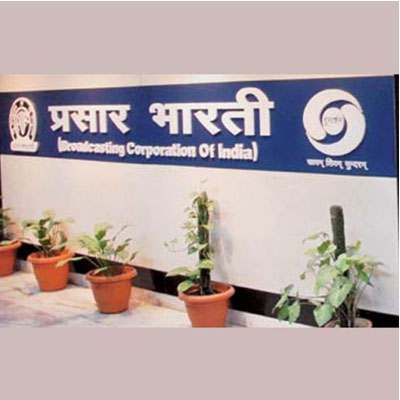
NEW DELHI: “The lack of co-operation among divisions of Prasar Bharati has led to several court cases and it is suggested that a centralised Cadre Controlling Authority may be set up to handle the service matters of the entire employees of Prasar Bharati.”
Making this observation, the Additional Secretary and Financial Advisor in the Information and Broadcasting Ministry said after a Test Audit/Check of Non-Plan expenditure under Salary and Salary-related heads against the Grants-in-Aid released by the Ministry, “Separate bank accounts may be opened for Non-Plan Grants-In-Aid (Salary) and other heads. A comprehensive audit of Prasar Bharati units may be conducted by Prasar Bharati itself to have a complete and fair picture of their accounts/ expenditures.”
The audit of amounts released for salary and salary-related expenses showed that while the grants-in-aid of Rs 5381.98 crore was given by the Ministry from 2012 to 2015, the expenditure incurred on Salary and Salary-related expenses was Rs 5694.92 crore and Rs 312.94 crore was from Prasar Bharati’s Internal and Budgetary Resources (IEBR).

In this, the grant-in-aid in 2014-15 was Rs 2001.98 crore while the money for salaries and salary-related expenses was Rs 2033.70 crore and Rs 31.72 crore came from IEBR.
The internal audit helped to save Rs 1188.14 crore under various heads including long-pending dues from other government departments.
In all, grants-in aid amounting to Rs 6640.48 crores was released in the last three years to Prasar Bharati, of which Rs 2437.98 crore was during the year 2014-15.
Of the total Rs 6640.48 crore given in the last three years, the aid in 2012-13 was Rx 2062.5 crore and in 2013-14 was Rs 2140 crore.






I&B Ministry
India turns up the heat on piracy, orders Telegram to axe 3,142 channels and blocks 800 websites
New legal teeth, nodal officers and notices to intermediaries signal that the government is done playing nice with copyright thieves

NEW DELHI: India’s war on film piracy just got significantly more aggressive. The government has ordered Telegram to remove 3,142 channels distributing pirated content, blocked access to around 800 websites through internet service providers, and put the full weight of freshly sharpened legislation behind the crackdown. The message from New Delhi is unambiguous: the free ride for copyright thieves is over.
Minister of state for information and broadcasting L. Murugan spelled out the legal architecture to the Lok Sabha on Wednesday. The Cinematograph (Amendment) Act, 2023, he said, now contains specific provisions designed to make piracy a genuinely painful proposition. Sections 6AA and 6AB prohibit unauthorised recording and transmission of films, with violations attracting a minimum of three months’ imprisonment and a fine of Rs 3 lakh. At the upper end, offenders face three years behind bars and fines of up to 5 per cent of a film’s audited gross production cost — a figure that, for a big-budget production, could run into crores.
The legislation also gives the government powers to act against intermediaries hosting infringing content, by notifying them under Section 79(3) of the Information Technology Act, 2000, and compelling takedowns and blocking actions. Under Section 79(3)(b), intermediaries are legally required to remove or disable access to unlawful content upon receiving government notice or court orders. The Information Technology (Intermediary Guidelines and Digital Media Ethics Code) Rules, 2021, add a further layer of obligation, requiring platforms to ensure their services are not used to host or distribute content that violates copyright or proprietary rights.
To put enforcement into practice, the Ministry of Information and Broadcasting has established a dedicated institutional mechanism, complete with nodal officers to receive complaints. Copyright holders, authorised representatives or individuals can report piracy through a prescribed format, after which the government issues notices to intermediaries to disable access to infringing links.
The most headline-grabbing action came on 11 March 2026, when Telegram was formally notified under Section 79(3)(b) of the IT Act and directed to remove and disable 3,142 channels found to be distributing unauthorised content belonging to OTT platforms, content owners and producers. The complaints that triggered the action came from OTT platforms including JioCinema and Amazon Prime Video, which alleged that copyrighted films, web series and other material were being shared on the platform on a massive scale. Telegram’s architecture, with its large file-sharing limits and capacity for user anonymity, has made it a favoured vehicle for exactly this kind of large-scale piracy.
The Telegram action sits within a broader pattern of escalating enforcement. Just days before the Lok Sabha statement, the ministry banned five OTT platforms for streaming obscene content: MoodXVIP, Koyal Playpro, Digi Movieplex, Feel and Jugnu. In July 2025, the Centre ordered the blocking of 25 OTT platforms accused of streaming obscene, vulgar or pornographic material, a list that included ALTT, ULLU, Big Shots App, Desiflix, Boomex, Navarasa Lite, Gulab App, Kangan App, Bull App, Jalva App, ShowHit, Wow Entertainment, Look Entertainment, Hitprime, Feneo, ShowX, Sol Talkies, Adda TV, HotX VIP, Hulchul App, MoodX, NeonX VIP, Fugi, Mojflix and Triflicks.
Rule 3(1)(b) of the IT (Intermediary Guidelines and Digital Media Ethics Code) Rules, 2021, provides the regulatory hook for those actions, prohibiting platforms from hosting content that is obscene, pornographic, invasive of privacy, gender-harassing, racially or ethnically objectionable, or that promotes hatred and violence.
For an industry that loses billions of rupees annually to piracy, the direction of travel is welcome. The question, as always, is not whether the laws exist, but whether the enforcement machinery can keep pace with the ingenuity of those determined to circumvent it. Three thousand channels down, and the pirates are already busy opening three thousand more.







