Applications
Kolkata could go completely digital by 1 February


MUMBAI: Kolkata could go completely digital by 1 February with the Information and Broadcasting (I&B) ministry, the broadcasters and most of the multi-system operators (MSOs) pressing for a blackout of analogue delivery of television channels.
The MSOs met the West Bengal state government minister to get the support for an effective implementation.
Though technically Kolkata has gone digital along with the four other metros since 1 November, analogue signals have continued amid seeding of digital set-top boxes (STBs) as the Mamata Banerjee government has refused to support a total blackout.

"The state government of West Bengal has given an unofficial nod to MSOs in Kolkata to switch-off analogue cable completely beginning 1 February," the CEO of a MSO who attended the meeting said on condition of anonymity.
There is one big MSO in Kolkata who is still waiting for digital set-top boxes (STBs) to arrive and is continuing with analogue transmission. Some cable operators are also saying that STB shortage is still there in some pockets of the city.
In the backdrop of this, the support of the state government is crucial. "The state government is fine with the analogue switch-off as long as there is no law and order problem," a senior executive representing a MSO said on condition that his identity not be revealed.
In any case, most of the MSOs have switched off most of the channels except the Bengali entertainment and news channels. The city was expected to go digital from 28 December after initial hiccups. However, an unrelenting state government had warned MSOs against complete switch off.
The MSOs had begun the process of switching off analogue signals from 16 December with English entertainment channels.
The Bengali channels were the last to be swtiched off from 27 December but the Information & broadcasting ministry‘s efforts to implement complete digitisation came to a nought due to state government‘s tough posturing.
"Kolkata should be able to go totally digital by 1 February. We have also been told by the I&B ministry verbally that they will take action if we do not switch off analogue signals," said Manthan director Gurmeet Singh.







Applications
With 57 per cent single new users, Ashley Madison rebrands as discreet dating platform
Platform says majority of new members now identify as single
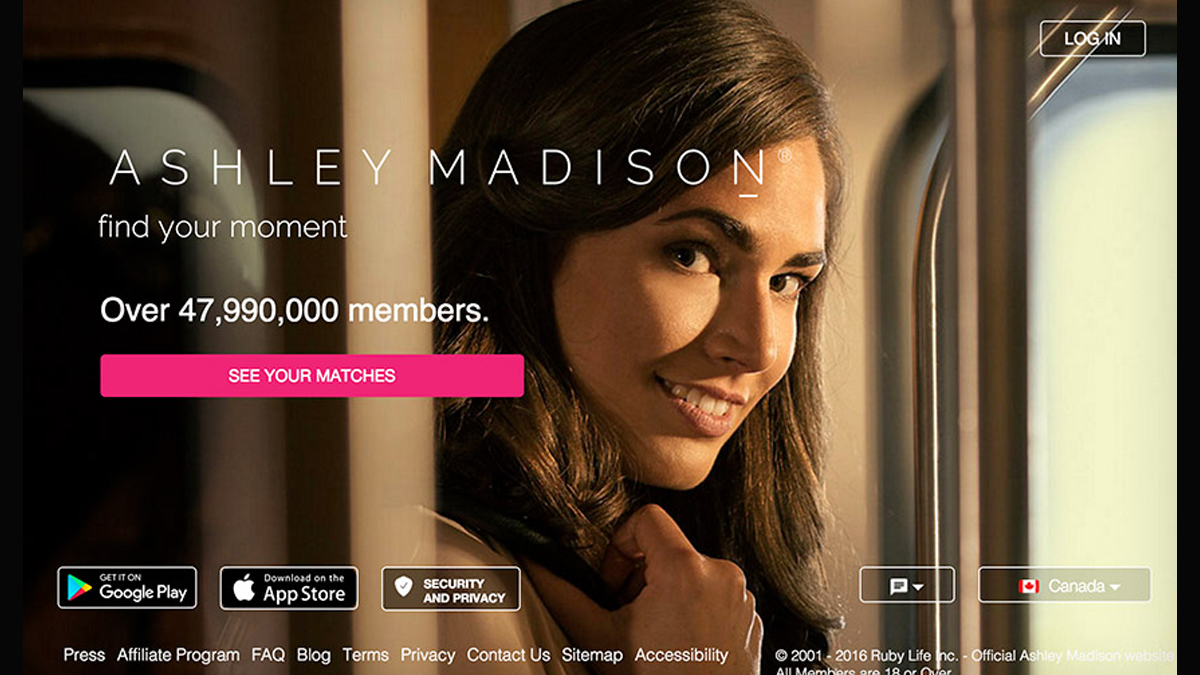
INDIA: Ashley Madison is shedding the “married-dating” label that defined it for two decades, repositioning itself as a platform for discreet dating in what it calls the post-social media age.
The rebrand, unveiled in India on 27 February, 2026, marks a structural shift in business model and identity. Once synonymous with married dating, the company now describes itself as the “premier destination for discreet dating” under a new tagline: Where Desire Meets Discretion.
The pivot is data-driven. Internal figures show that 57 per cent of global sign-ups between 1 January and 31 December, 2025 identified as single: a notable departure from the platform’s married core. The company argues that its community has already evolved beyond its original positioning.
“In an age where our lives have been constantly put on public display, privacy has become the new luxury,” said Ashley Madison chief strategy officer Paul Keable. He framed the platform’s offering as “ethical discretion” for singles, separated, divorced and non-monogamous users seeking private connections.
The shift also taps into wider digital fatigue. A global survey conducted by YouGov for Ashley Madison, covering 13,071 adults across Australia, Brazil, Canada, Germany, India, Italy, Mexico, Spain, Switzerland, the UK and the US, found mounting discomfort with hyper-public online lives.
Among dating app users, 30 per cent cited constant swiping and messaging as a source of fatigue, while 24 per cent pointed to pressure to curate public-facing profiles and early personal disclosure. Some 27 per cent said fears of screenshots or information being shared contributed to exhaustion; an equal share cited unwanted attention.
The retreat from oversharing appears broader. According to the survey, 46 per cent of adults actively try to keep most aspects of their life private online. Only 8 per cent feel comfortable sharing most aspects publicly, while 35 per cent say they are becoming more selective about what they disclose.
Ashley Madison is betting that this cultural recalibration towards controlled visibility can be monetised. By doubling down on privacy infrastructure and reframing itself around discretion rather than infidelity, the company is attempting to convert reputational baggage into a premium proposition.







