Cable TV
Kolkata cable ops to meet FM

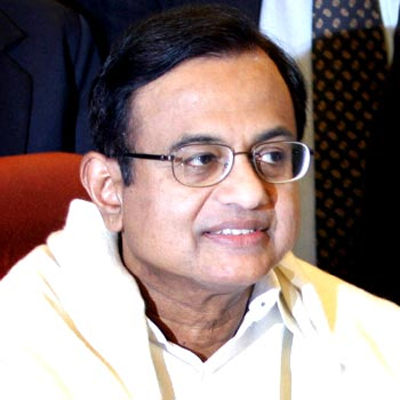
KOLKATA: With cable operators liable to pay 12.36 per cent of the subscription amount collected per month from customers as service tax to the government, 12 cable ops met the finance minister P Chidambaram in the city today to talk on Voluntary Compliance Encouragement Scheme (VCES).
Two months ago, indiantelevision.com was the first to report issuing of summons to over 350 city-based cable ops for evasion of service tax for the past five years. We had also reported how service tax officials conducted two raids to probe into alleged financial irregularities of two MSOs.

This, despite the government having introduced the VCES on 10 May. VCES is a one-time amnesty scheme for paying service tax dues for the said five-year period from 1 October 2007 to 31 December, 2012, without any interest or penalty.
Cable Operators Digitalisation Committee of the Association of Cable Operators convener Swapan Chowdhury, confirmed the news saying: “We will discuss the voluntary service tax with the minister.”
A key issue the cable ops plan to discuss is the government’s U-turn on the proposed service tax waiver for operators with turnover of less than Rs 10 lakh per annum. With authorities now saying that as cable ops are selling brands like Manthan and Siticable, they are liable to pay service tax, irrespective of the turnover shown in books, Chowdhury stressed: “We requested the government not to include operators below Rs 10 lakh turnover for service tax payment.”
As the secretary of Cable and Broadband Operators’ Welfare Association, Chowdhury also informed the finance minister that after implementation of DAS in the city, consumers have had to wait for bills and upon not receiving them, remained unwilling to pay service tax to the LCOs.
About the amnesty scheme, which Chidambaram has been urging service tax defaulters to take advantage of, tax consultant Namit Dave said: “By giving up interest, the government wants people to clear their dues.”
Meanwhile, an industry analyst opined that MSOs which have evaded service tax to the tune of Rs 15 crore to Rs 20 crore in the past four years, now have a chance to pay their dues without penalty and prosecution.







MUMBAI: When margins wobble, liquidity talks and in Q3 FY25-26, cash did most of the talking. Den Networks Limited closed the December quarter with consolidated revenue of Rs.251 crore, marginally higher than the previous quarter but down 4 per cent year-on-year, even as profitability stayed resilient on the back of strong cash reserves and disciplined cost control.
Subscription income softened to Rs.98 crore, slipping 3 per cent sequentially and 14 per cent from last year, while placement and marketing income offered some cheer, rising 15 per cent quarter-on-quarter to Rs.148 crore. Total costs climbed faster than revenue, up 7 per cent QoQ to Rs.238 crore, driven largely by higher content costs and operating expenses. As a result, EBITDA dropped sharply to Rs.13 crore from Rs.19 crore in Q2 and Rs.28 crore a year ago, pulling margins down to 5 per cent.
Yet, the bottom line refused to blink. Profit after tax stood at Rs.40 crore, up 15 per cent sequentially and only marginally lower than last year’s Rs.42 crore. A healthy Rs.57 crore in other income helped cushion operating pressure, keeping profit before tax at Rs.48 crore, broadly stable quarter-on-quarter despite the tougher cost environment.
The real headline-grabber, however, sits on the balance sheet. The company remains debt-free, with cash and cash equivalents swelling to Rs.3,279 crore as of December 31, 2025. Net worth rose to Rs.3,748 crore, while online collections accounted for 97 per cent of total receipts, underscoring strong cash discipline across operations, including subsidiaries.
In short, while Q3 showed signs of operating strain, the financial backbone remains solid. With zero gross debt, steady profits and a formidable cash war chest, the company enters the next quarter with flexibility firmly on its side proving that in uncertain markets, balance sheet strength can be the best growth strategy.






