News Headline
Kids TV genre needs to expand amid more channel launches


The media and entertainment (M&E) industry comprises several powerful vehicles – many of which are much older than television. But it is television that commands a place of pride in the business pecking order. Today, television is estimated to account for almost half of the Indian M&E revenue and is projected to be over twice the size of print media by 2015.
The kids entertainment industry although largest in viewership after general entertainment channels (GEC), saw a year like none before. The viewership pie of this genre grew by a meagre 4 per cent over 2011 but the industry saw the entrance of four channels.
With more channels in the market, the industry waited with baited breath for the overall genre to grow. But after two launches and no growth by the third quarter of 2012, competition became more aggressive. Now, as we come to the end of the year with two more channel launches, the need to expand the genre becomes dire. It has truly been a year of more of less with more channels fighting for a small share.

In an effort to grow the pie, an interesting move by broadcasters this year has been to target younger kids with preschool channels. In the year to come, the performance of these channels will pave the way for other competitors to consider investing in this new demographic of television audiences.
Personifying ‘more of less’ has been the consumption habits of kids. Over the year, a prominent trend that has emerged has been that kids prefer watching more of fewer shows as opposed to watching a bouquet of shows. It is for this reason that shows like Chhota Bheem and Doraemon dominate 60-80 per cent of their respective channel schedules and have emerged as iconic characters amongst kids.
2013 – The year of plenty
The upcoming year brings a lot of hope for broadcasters of the kids genre. With the first phase of digitisation complete, it will be interesting to see the level of set-top box (STB) penetration thereby determining reach of all genres including kids. Digitisation will also determine the effectiveness of the current revenue model. The current advertising driven model under-values and under-prices the kids genre. With a subscription based revenue model, broadcasters will hopefully receive a fair share of the revenue pie. The need of the hour, however, is to go beyond television and explore revenue optimisation from online, mobile and licensing and merchandising as well.
However, to keep the kids engaged in today’s world, the content needs to be even more engaging and relatable. Simplicity of storytelling and relatability of characters need to continue as focus from the content point of view.



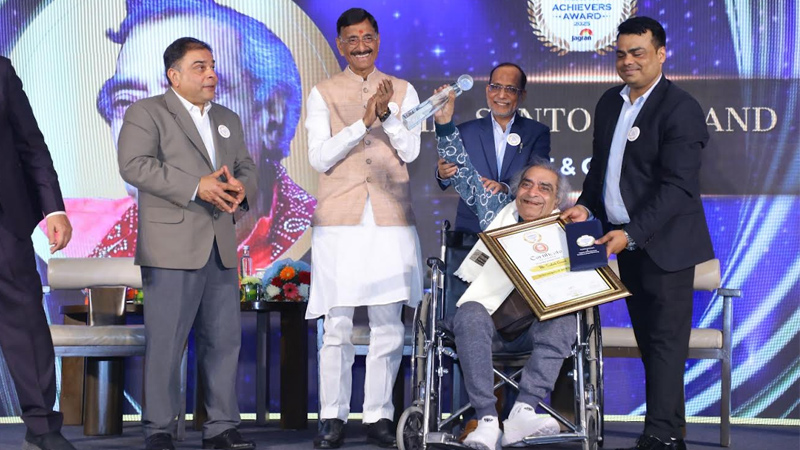
NEW DELHI: Hamdard Laboratories gathered a cross-section of India’s achievers in New Delhi on Friday, handing out the Hakeem Abdul Hameed Excellence Awards to figures who have left their mark across healthcare, education, sport, public service and the arts.
The ceremony, attended by minister of state for defence Sanjay Seth and senior officials from the ministry of Ayush, celebrated individuals whose work blends professional success with a sense of public purpose. It was as much a roll call of achievement as it was a reminder that influence is not measured only in profits or podiums, but in people reached and lives improved.
Among the headline awardees was Alakh Pandey, founder and chief executive of PhysicsWallah, recognised for turning affordable digital learning into a mass movement. On the sporting front, Arjuna Awardee and kabaddi player Sakshi Puniya was honoured for her contribution to the game and for pushing women’s participation onto bigger stages.
The cultural spotlight fell on veteran lyricist and poet Santosh Anand, whose songs have echoed across generations of Hindi cinema. At 97, Anand accepted the honour with characteristic humility, reflecting on a life shaped by perseverance and hope.
Healthcare honours spanned both modern and traditional systems. Manoj N. Nesari was recognised for strengthening Ayurveda’s place in national and global health frameworks. Padma shri Mohammed Abdul Waheed was honoured for his research-backed work in Unani medicine, while padma shri Mohsin Wali received recognition for his long-standing contribution to patient-centred care.
Education and social development also featured prominently. Padma shri Zahir Ishaq Kazi was honoured for decades of work in education, while former Meghalaya superintendent of Police T. C. Chacko was recognised for public service. Goonj founder Anshu Gupta received an award for his dignity-centred rural development initiatives, and the Hunar Shakti Foundation was honoured for empowering women and young girls through skill development.
The Lifetime Achievement Award went to former IAS officer Shailaja Chandra for her long career in public healthcare and governance, particularly in the traditional systems under Ayush.
Speaking at the event, Hamdard chairman Abdul Majeed said the awards were a tribute to those who combine excellence with empathy. “These awardees reflect Hakeem Sahib’s belief that healthcare, education and public service must ultimately serve humanity,” he said.
Minister Seth struck a forward-looking note, saying India’s young population gives the country a unique opportunity to become a global destination for learning, health and wellness by 2047.
The ceremony also featured the trailer launch of Unani Ki Kahaani, an upcoming documentary starring actor Jim Sarbh, set to premiere on Discovery on 11 February.
Instituted in memory of Unani scholar and educationist Hakeem Abdul Hameed, the awards have grown into a national platform that celebrates those building a more inclusive and resilient India. For one evening at least, the spotlight was not just on success, but on service with substance.







