iWorld
Kaivalyadhama launches a documentary on the Science behind yoga

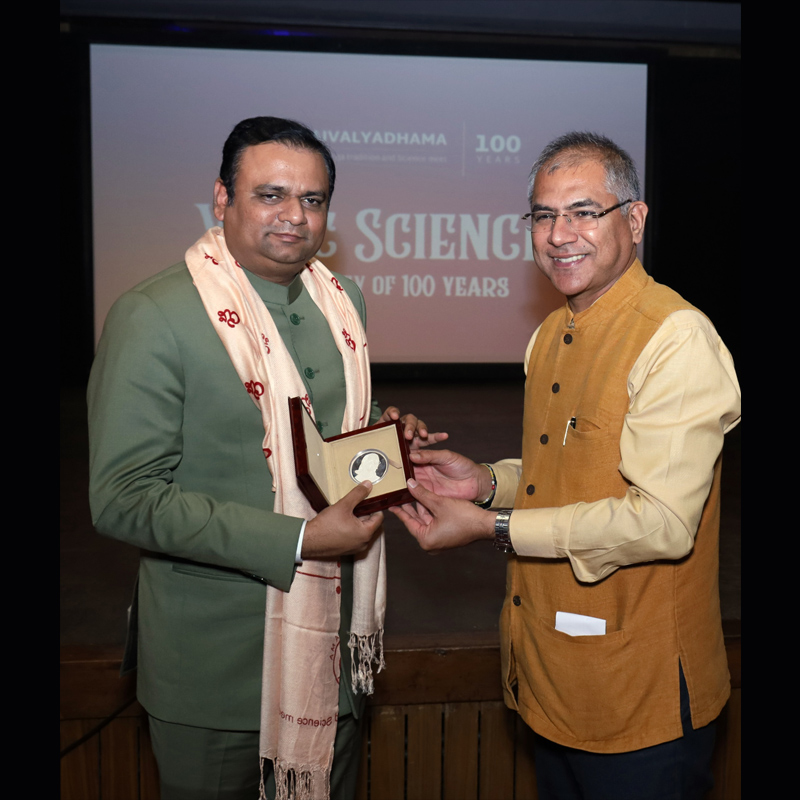
Mumbai: Is Yoga a Science? As it approaches its centennial year, Kaivalyadhama announced the launch of a documentary titled, “Yogic Science”. The documentary aims to demystify yoga, by delving into the Science behind Yoga. The film captures the evolution of Yoga over the last 100 years and breaks perceptions and common myths, through scientific experiments and validations.
The documentary was released by Rahul Nawrekar, speaker of the Maharashtra Legislative Assembly at the NCPA, Mumbai on 21 July 2023. The event was also attended by prominent personalities like Suresh Prabhu, centenary committee chairman, chancellor Rishihood University, and former cabinet minister
The documentary also captures Kaivalyadhama’s seminal work in the field of Yoga, for almost a century. It narrates the enchanting story of the evolution of this institute, nestled in the Sahyadri mountains, in Lonavala, Maharashtra. Kaivalyadhama holds the distinction of being the world’s first institution to undertake scientific research in Yoga and establish the world’s first yoga college. Throughout its history, Kaivalyadhama has propagated yoga in its purest traditional form, backed by scientific research.
At the heart of the documentary lies the indomitable spirit of Swami Kuvalayananda, the founder of Kaivalyadhama, affectionately known as the “Yogi Scientist.” It was Swami Kuvalayananda who introduced Yoga therapy to the world, revolutionising the field and bringing its therapeutic benefits to the forefront. Over the years, Kaivalyadhama has been pushing boundaries, with its groundbreaking research, in the application and benefits of Yoga in Cancer care, Gene therapy, dealing with Auto-immune disorders, and beyond.
Kaivalyadhama CEO Subodh Tiwari said: “This documentary encapsulates our commitment to preserving the authenticity of Yoga while pushing the boundaries of research and education. As we celebrate our centenary milestone, we invite audiences worldwide to join us in this cinematic exploration of our legacy and the profound impact Yoga can have on individuals and society”.
The documentary takes viewers on a captivating journey, exploring the institute’s rich heritage, its profound contributions to the field of Yoga, and the significant impact it continues to make in transforming lives. Annually, Kaivalyadhama positively impacts the lives of over 10,000 individuals worldwide. Some of the prominent personalities who have been patrons of the institute include Mahatma Gandhi, Babasaheb Ambedkar, and JRD Tata.






